May 17, 2013
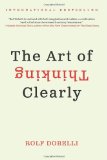
The Art of Thinking Clearly by Rolf Dobelli (Harper, 2013)
(kindle ed.), (amazon.co.uk)
Book description from the publisher:
The Art of Thinking Clearly by world-class thinker and entrepreneur Rolf Dobelli is an eye-opening look at human psychology and reasoning — essential reading for anyone who wants to avoid “cognitive errors” and make better choices in all aspects of their lives.
Have you ever: Invested time in something that, with hindsight, just wasn’t worth it? Or continued doing something you knew was bad for you? These are examples of cognitive biases, simple errors we all make in our day-to-day thinking. But by knowing what they are and how to spot them, we can avoid them and make better decisions.
Simple, clear, and always surprising, this indispensable book will change the way you think and transform your decision-making—work, at home, every day. It reveals, in 99 short chapters, the most common errors of judgment, and how to avoid them.
See also: Author’s website
Comments (0)
- cognitive science,new books,psychology
May 16, 2013
Amazon’s Big Deal is on through May 27, featuring over 500 titles at up to 85% off (“Individual books may have additional territory restrictions, and not all deals are available in all territories. Amazon may modify the selection of books offered at any time.”) including:
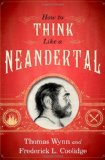
How To Think Like a Neandertal by Thomas Wynn and Frederick L. Coolidge for $3.99.
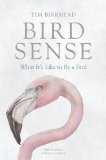
Bird Sense: What It’s Like To Be a Bird by Tim Birkhead for $2.99.
Your Brain on Food: How Chemicals Control Your Thoughts and Feelings by Gary L. Wenk for $3.99.
Or, browse, the whole Nonfiction list…
Comments (0)
- Uncategorized
May 14, 2013
Permanent Present Tense: The Unforgettable Life of the Amnesic Patient, H. M. by Suzanne Corkin (Basic Books, 2013)
(kindle ed.), (amazon.co.uk)
Book description from the publisher:
In 1953, 27-year-old Henry Gustave Molaison underwent an experimental “psychosurgical” procedure—a targeted lobotomy—in an effort to alleviate his debilitating epilepsy. The outcome was unexpected—when Henry awoke, he could no longer form new memories, and for the rest of his life would be trapped in the moment.
But Henry’s tragedy would prove a gift to humanity. As renowned neuroscientist Suzanne Corkin explains in Permanent Present Tense, she and her colleagues brought to light the sharp contrast between Henry’s crippling memory impairment and his preserved intellect. This new insight that the capacity for remembering is housed in a specific brain area revolutionized the science of memory. The case of Henry—known only by his initials H. M. until his death in 2008—stands as one of the most consequential and widely referenced in the spiraling field of neuroscience. Corkin and her collaborators worked closely with Henry for nearly fifty years, and in Permanent Present Tense she tells the incredible story of the life and legacy of this intelligent, quiet, and remarkably good-humored man. Henry never remembered Corkin from one meeting to the next and had only a dim conception of the importance of the work they were doing together, yet he was consistently happy to see her and always willing to participate in her research. His case afforded untold advances in the study of memory, including the discovery that even profound amnesia spares some kinds of learning, and that different memory processes are localized to separate circuits in the human brain. Henry taught us that learning can occur without conscious awareness, that short-term and long-term memory are distinct capacities, and that the effects of aging-related disease are detectable in an already damaged brain.
Undergirded by rich details about the functions of the human brain, Permanent Present Tense pulls back the curtain on the man whose misfortune propelled a half-century of exciting research. With great clarity, sensitivity, and grace, Corkin brings readers to the cutting edge of neuroscience in this deeply felt elegy for her patient and friend.
See also: Book website
Comments (0)
- cognitive science,new books
Tychomancy: Inferring Probability from Causal Structure by Michael Strevens (Harvard University Press, 2013)
(amazon.co.uk)
Book description from the publisher:
Tychomancy—meaning “the divination of chances”—presents a set of rules for inferring the physical probabilities of outcomes from the causal or dynamic properties of the systems that produce them. Probabilities revealed by the rules are wide-ranging: they include the probability of getting a 5 on a die roll, the probability distributions found in statistical physics, and the probabilities that underlie many prima facie judgments about fitness in evolutionary biology.
Michael Strevens makes three claims about the rules. First, they are reliable. Second, they are known, though not fully consciously, to all human beings: they constitute a key part of the physical intuition that allows us to navigate around the world safely in the absence of formal scientific knowledge. Third, they have played a crucial but unrecognized role in several major scientific innovations.
A large part of Tychomancy is devoted to this historical role for probability inference rules. Strevens first analyzes James Clerk Maxwell’s extraordinary, apparently a priori, deduction of the molecular velocity distribution in gases, which launched statistical physics. Maxwell did not derive his distribution from logic alone, Strevens proposes, but rather from probabilistic knowledge common to all human beings, even infants as young as six months old. Strevens then turns to Darwin’s theory of natural selection, the statistics of measurement, and the creation of models of complex systems, contending in each case that these elements of science could not have emerged when or how they did without the ability to “eyeball” the values of physical probabilities.
See also: Author’s website
Comments (0)
- new books,psychology