November 8, 2007
Describing Inner Experience?: Proponent Meets Skeptic (Bradford Books) is a new book from MIT Press by Russell T. Hurlburt and Eric Schwitzgebel, who announces the book’s appearance on his blog, the Splintered Mind.
This sounds really interesting both in the subject matter of introspection and the way the book is put together as a collaboration between opposing viewpoints (with a third collaborator, “Melanie,” as test subject). From the book description:
Hurlburt and Schwitzgebel recruited a subject, “Melanie,” to report on her conscious experience using Hurlburt’s Descriptive Experience Sampling method (in which the subject is cued by random beeps to describe her conscious experience). The heart of the book contains Melanie’s accounts, Hurlburt and Schwitzgebel’s interviews with her, and their subsequent discussions while studying the transcripts of the interviews. In this way the authors dispute about the general reliability of introspective reporting is steadily tempered by specific debates about the extent to which Melanie’s particular reports are believable.
The publisher’s website for the book includes the transcripts and audio files of the interviews, plus the first chapter of the book.
Comments (0)
- cognitive science,consciousness,new books
November 6, 2007
I like to browse…
Music, Language, and the Brain is due to be released tomorrow (Nov. 7) from Oxford University Press.
“In the first comprehensive study of the relationship between music and language from the standpoint of cognitive neuroscience, Aniruddh D. Patel (Senior Fellow, The Neurosciences Institute, San Diego) challenges the widespread belief that music and language are processed independently.”
The Hidden Sense: Synesthesia in Art and Science (Leonardo Books),
 is new from MIT Press: “In The Hidden Sense, Cretien van Campen explores synesthesia from both artistic and scientific perspectives, looking at accounts of individual experiences, examples of synesthesia in visual art, music, and literature, and recent neurological research.”
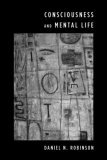 Consciousness and Mental Life
 by Daniel N. Robinson is due out on Nov. 16.
Comments (0)
- cognitive science,consciousness,new books
November 4, 2007
Wikipedia on the “conjunction fallacy”:
The conjunction fallacy is a logical fallacy that occurs when it is assumed that specific conditions are more probable than a single general one.
The most oft-cited example of this fallacy originated with Amos Tversky and Daniel Kahneman:
- Linda is 31 years old, single, outspoken, and very bright. She majored in philosophy. As a student, she was deeply concerned with issues of discrimination and social justice, and also participated in anti-nuclear demonstrations.
- Which is more likely?
- Linda is a bank teller.
- Linda is a bank teller and is active in the feminist movement.
85% of those asked chose option 2. However, mathematically, the probability of two events occurring together (in “conjunction”) will always be less than or equal to the probability of either one occurring alone.
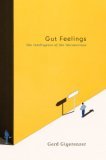 In Gut Feelings: The Intelligence of the Unconscious, researcher Gerd Gigerenzer (director at the Max Planck Institute for Human Development) criticizes this view of the conjunction fallacy, suggesting that the problem plays on ambiguities in the meaning of probable and and. When rephrased in numerical terms (ie, out of a 100 persons who fit the description above, how many are (a) bank tellers or (b) bank tellers and active in the feminist movement?) the fallacy disappears, as the number assigned to (a) is larger than the number for (b). (p. 93-97)
For further reading, the European Rationalist has posted “Reason and Rationality” an in-depth article by Richard Samuels, Stephen Stich and Luc Faucher that evaluates “the nature and plausibility of the pessimistic view of human rationality often associated with the heuristics and biases tradition.”
“Linda the bank teller” is also discussed at “Overcoming Bias.”
Comments (0)
- cognitive science,psychology
October 25, 2007
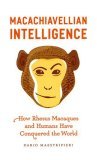 Science Daily has an article on the new book Macachiavellian Intelligence: How Rhesus Macaques and Humans Have Conquered the World
 by Dario Maestripien, while as a counterpoint Dissident Voice discusses “neuroscience and moral politics.”
Also David Chalmers announces a new online bibliography on philosophy of mind and the science of consciousness at MindPapers, with over 18000 entries! (And it appears to be very well organized too, though I haven’t had time yet to delve in there much.)
Comments (0)
- cognitive science,consciousness,new books,philosophy of mind