March 2, 2008
“When shove comes to push” in today’s Boston Globe (March 2) looks at the forthcoming book Nudge: Improving Decisions About Health, Wealth, and Happiness by economist Richard Thaler and legal scholar Cass Sunstein.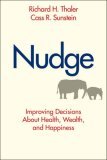
From the book description:
Thaler and Sunstein invite us to enter an alternative world, one that takes our humanness as a given. They show that by knowing how people think, we can design choice environments that make it easier for people to choose what is best for themselves, their families, and their society. Using colorful examples from the most important aspects of life, Thaler and Sunstein demonstrate how thoughtful “choice architecture” can be established to nudge us in beneficial directions without restricting freedom of choice.
Comments (0)
- cognitive science,new books
February 29, 2008
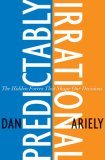
Predictably Irrational: The Hidden Forces That Shape Our Decisions by Dan Ariely is a recent book that is currently #13 at Amazon. Amazon has “Search Inside” for this book, plus some related videos.
From the book description:
In a series of illuminating, often surprising experiments, MIT behavioral economist Dan Ariely refutes the common assumption that we behave in fundamentally rational ways. Blending everyday experience with groundbreaking research, Ariely explains how expectations, emotions, social norms, and other invisible, seemingly illogical forces skew our reasoning abilities.
Not only do we make astonishingly simple mistakes every day, but we make the same types of mistakes, Ariely discovers. We consistently overpay, underestimate, and procrastinate. We fail to understand the profound effects of our emotions on what we want, and we overvalue what we already own. Yet these misguided behaviors are neither random nor senseless. They’re systematic and predictable—making us predictably irrational.
From drinking coffee to losing weight, from buying a car to choosing a romantic partner, Ariely explains how to break through these systematic patterns of thought to make better decisions. Predictably Irrational will change the way we interact with the world—one small decision at a time.
Website for the book
This would make a nice pair with another recent book – The Logic of Life.
Comments (0)
- cognitive science,new books
February 23, 2008
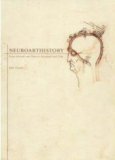
Neuroarthistory: From Aristotle and Pliny to Baxandall and Zeki by John Onians (Yale University Press, 2008)
Book description:
This provocative book offers a fascinating account of neuroarthistory, one of the newest and most exciting fields in the human sciences. In recent decades there has been a dramatic increase in our knowledge of the visual brain. Knowledge of phenomena such as neural plasticity and neural mirroring is making it possible to answer with a new level of precision some of the most challenging questions about both the creative process and the response to art.
Exploring the writings of major thinkers (among them Montesquieu, Burke, Kant, Marx and Freud), and leading art historians (including Pliny, Winckelmann, Ruskin, Pater, Gombrich and Baxandall), as well as artists such as Alberti and Leonardo and scientists from Aristotle to Zeki, John Onians shows how an understanding of the neural basis of the mind contributes to an understanding of all human behaviors—including art.
Neuroarthistory at Wikipedia
Comments (1)
- cognitive science,new books
February 20, 2008
Scientist postulates 4 aspects of ‘humaniqueness’ differentiating human and animal cognition from PhysOrg.com
Shedding new light on the great cognitive rift between humans and animals, a Harvard University scientist has synthesized four key differences in human and animal cognition into a hypothesis on what exactly differentiates human and animal thought.
[…]
Hauser presents four distinguishing ingredients of human cognition, and shows how these capacities make human thought unique. These four novel components of human thought are the ability to combine and recombine different types of information and knowledge in order to gain new understanding; to apply the same “rule” or solution to one problem to a different and new situation; to create and easily understand symbolic representations of computation and sensory input; and to detach modes of thought from raw sensory and perceptual input.
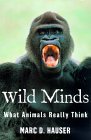
Marc Hauser’s books include Wild Minds: What Animals Really Think.
Marc Hauser at edge.org
Also this week’s NOVA (PBS) was on a related topic – “Ape Genius”.
Comments (0)
- cognitive science