May 7, 2008
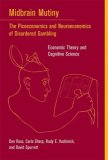
Midbrain Mutiny: The Picoeconomics and Neuroeconomics of Disordered Gambling: Economic Theory and Cognitive Science (Bradford Books) by Don Ross, Carla Sharp, Rudy E. Vuchenich and David Spurrett (MIT Press, 2008)
from the product description:
The explanatory power of economic theory is tested by the phenomenon of irrational consumption, examples of which include such addictive behaviors as disordered and pathological gambling. Midbrain Mutiny examines different economic models of disordered gambling, using the frameworks of neuroeconomics (which analyzes decision making in the brain) and picoeconomics (which analyzes patterns of consumption behavior), and drawing on empirical evidence about behavior and the brain. The authors argue that pathological gambling is a true addiction and that addictive gambling is the basic form of addiction, revealing the core character of all addiction.
The book describes addiction in neuroeconomic terms as chronic disruption of the balance between the midbrain dopamine system and the prefrontal and frontal serotonergic system, and reviews recent evidence from trials testing the effectiveness of antiaddiction drugs. The authors argue that the best way to understand disordered and addictive gambling is with a hybrid picoeconomic-neuroeconomic model, and their demonstration of this framework’s applicability to gambling provides a concrete case study for the more abstract description of picoeconomic-neuroeconomic complementarity in Don Ross’s earlier book Economic Theory and Cognitive Science: Microexplanation (MIT Press, 2005).
MIT Press information, including sample chapters
More on “picoeconomics” (micro-micro-economics)
newspaper article: “UAB researchers find gambling addiction’s wild card” (Birmingham News, May 6, 2008)
Dr. Don Ross’s webpage at UAB
Comments (0)
- cognitive science,new books
May 6, 2008
This was my garage sale find from last weekend. I thought a spare brain might come in handy, and it was a bargain at 25¢!
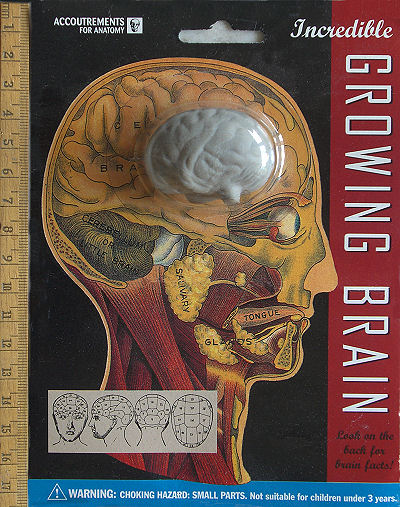
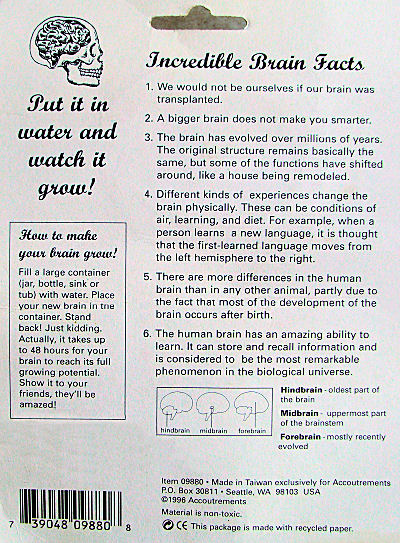
Soon I will put it in its vat to see how it grows….
Comments (0)
- cognitive science
April 16, 2008
While I was working on my taxes the last few days, there was a big “Seeds of Compassion” Conference in Seattle (April 11-15, 2008) which fortunately has a great webcast of the event, that I’ve just been watching. The Dalai Lama was there, and the opening session is a discussion of “The Scientific Basis for Compassion,” similar to the Mind and Life Institute events. The focus appears to be on compassion in child development.
There is an associated wiki with a reading list and some interesting mind-map style sketches from the conference.

Some of the participants also contributed to the 2001 book Visions of Compassion: Western Scientists and Tibetan Buddhists Examine Human Nature, one of the Mind and Life Institute books.
I also saw that the Dalai Lama is at the Mayo Clinic in Rochester, Minnesota, today (April 16) for Mind and Life XVI, Investigating the Mind-Body Connection: The Science and Clinical Applications of Meditation, which is also supposed to have a webcast, but I wasn’t able to connect to that one today.
Comments (0)
- cognitive science,meditation,mind
April 12, 2008
“Neuroaesthetics is wrong…” says Raymond Tallis in this Times Literary Supplement article (Apr 9, 2008).
Evolutionary and Neurocognitive Approaches to Aesthetics, Creativity and the Arts is cited by Tallis as an example of “the kinds of things critics get up to these days.” (‘Search Inside’ the book available at Amazon so you can get a “free taste.”) Criticizing the reductionist approach of ‘neuroaesthetics’ Tallis states:
The neuromythologist, trying to find citizens and their worlds in neurones, stuffs all that has been created by the collective of brains back into a stand-alone brain; indeed into a small part of such a brain.
Tallis’s new book The Kingdom of Infinite Space: A Portrait of Your Head (available in the UK but not until next September in the US) is discussed in this recent article in The Times.
Books by Raymond Tallis at Amazon.com
added a little later: another article about Tallis in The Independent (April 11, 2008)
Comments (0)
- cognitive science,culture