July 8, 2008
Awhile ago I posted a list of cognitive science books for 2008, based on a search of Worldcat. The Library of Congress also has closely related headings for “cognitive psychology” and “cognition” — so below are selected “cognitive psychology” books, with “cognition” coming soon.
The LC scope note for “cognitive science”: “Here are entered works on the interdisciplinary study of the mind and computers as information processing systems.”
“Cognitive psychology”: “Here are entered works on the general approach to psychology that emphasizes the role of internal, mental processes in behavior.”
“Cognition”: “Here are entered works on mental processes in general.”
Cognitive psychology books 2008
Artificial Psychology: The Quest for What It Means to Be Human by Jay Friedenberg (Psychology Press, 2008)
Brain-Based Teaching for All Subjects: Patterns to Promote Learning by Madlon T Laster (Rowman & Littlefield Education, 2008)
Cognition and Emotion: From Order to Disorder by Michael J Power; Tim Dalgleish (Psychology Press, 2008)
Emotion Science: Cognitive and Neuroscientific Approaches to Understanding Human Emotions by Elaine Fox (Palgrave Macmillan, 2008) forthcoming
Music, Language, and the Brain by Aniruddh D Patel (Oxford University Press, 2008)
Social Cognition: Development, Neuroscience and Autism ed. by Tricia Striano and Vincent Reid (Wiley-Blackwell, 2008) forthcoming
Comments (0)
- cognitive science,new books
July 2, 2008
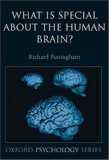
What is Special About the Human Brain? (Oxford Portraits in Science) by Richard Passingham has a prospective release date of July 15, 2008, according to Amazon, or July 4 according to Oxford University Press.
Product description:
It is plausible that evolution could have created the human skeleton, but it is hard to believe that it created the human mind. Yet, in six or seven million years evolution came up with Homo sapiens, a creature unlike anything the world had ever known. The mental gap between man and ape is immense, and yet evolution bridged that gap in so short a space of time. Since the brain is the organ of the mind, it is natural to assume that during the evolution of our hominid ancestors there were changes in the brain that can account for this gap. This book is a search for those changes.
It is not enough to understand the universe, the world, or the animal kingdom: we need to understand ourselves. Humans are unlike any other animal in dominating the earth and adapting to any environment. This book searches for specializations in the human brain that make this possible. As well as considering the anatomical differences, it examines the contribution of different areas of the brain – reviewing studies in which functional brain imaging has been used to study the brain mechanisms that are involved in perception, manual skill, language, planning, reasoning, and social cognition. It considers a range of skills unique to us – for example our ability to learn a language and pass on cultural traditions in this way, and become aware of our own thoughts through inner speech
Written in a lively style by a distinguished scientist who has made his own major contribution to our understanding of the mind, the book is a far-reaching and exciting quest to understand those things that make humans unique.
Comments (0)
- cognitive science,human evolution,new books
July 1, 2008
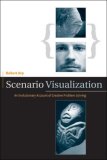
Scenario Visualization: An Evolutionary Account of Creative Problem Solving (Bradford Books) by Robert Arp (MIT Press, 2008)
Product description:
In order to solve problems, humans are able to synthesize apparently unrelated concepts, take advantage of serendipitous opportunities, hypothesize, invent, and engage in other similarly abstract and creative activities, primarily through the use of their visual systems. In Scenario Visualization, Robert Arp offers an evolutionary account of the unique human ability to solve nonroutine vision-related problems. He argues that by the close of the Pleistocene epoch, humans evolved a conscious creative problem-solving capacity, which he terms scenario visualization, that enabled them to outlive other hominid species and populate the planet. Arp shows that the evidence for scenario visualization—by which images are selected, integrated, and then transformed and projected into visual scenarios—can be found in the kinds of complex tools our hominid ancestors invented in order to survive in the ever-changing environments of the Pleistocene world.
Arp also argues that this conscious capacity shares an analogous affinity with neurobiological processes of selectivity and integration in the visual system, and that similar processes can be found in the activities of organisms in general. The evolution of these processes, he writes, helps account for the modern-day conscious ability of humans to use visual information to solve nonroutine problems creatively in their environments.
Arp’s account of scenario visualization and its emergence in evolutionary history suggests an answer to two basic questions asked by philosophers and biologists concerning human nature: why we are unique; and how we got that way.
MIT Press book information and samples
Author’s homepage
Comments (0)
- cognitive science
June 26, 2008
Dance-tech.net has produced this interview with philosopher Alva Noë. If you have any trouble playing the embedded video go here and try a different format.
Alva Noë’s most recent book is Action in Perception (MIT Press, 2005, pbk 2006)
Comments (0)
- cognitive science,philosophy of mind
June 22, 2008
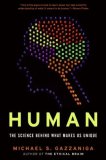 Human: The Science Behind What Makes Us Unique by neuroscientist Michael S. Gazzaniga (Ecco, 2008) has a June 24 release date according to Amazon. (This was one of the books mentioned in the Neuroanthropology post “David Brooks Bonus” on ‘Neural Buddhists.’)
From the publisher:
One of the world’s leading neuroscientists explores how best to understand the human condition by examining the biological, psychological, and highly social nature of our species within the social context of our lives.
What happened along the evolutionary trail that made humans so unique? In his widely accessible style, Michael Gazzaniga looks to a broad range of studies to pinpoint the change that made us thinking, sentient humans, different from our predecessors.
Neuroscience has been fixated on the life of the psychological self for the past fifty years, focusing on the brain systems underlying language, memory, emotion, and perception. What it has not done is consider the stark reality that most of the time we humans are thinking about social processes, comparing ourselves to and estimating the intentions of others. In Human, Gazzaniga explores a number of related issues, including what makes human brains unique, the importance of language and art in defining the human condition, the nature of human consciousness, and even artificial intelligence.
Michael Gazzaniga’s homepage at UCSB
at Edge
[update 6/26] “Neuroscientist Michael Gazzaniga awarded Humboldt Prize“
Comments (0)
- cognitive science,new books