[ View menu ]

Archive for 'cognitive science'

on ‘Embracing the Wide Sky: A Tour Across the Horizons of the Mind’

February 4, 2009
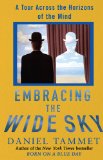
Embracing the Wide Sky

Daniel Tammet provides a window into the mind of an autistic savant in Embracing the Wide Sky: A Tour Across the Horizons of the Mind, while stressing the continuities between savant and non-savant mental abilities.

He suggests that savant abilities might be the result of “cross-talk” or hyperconnectivity between regions of the brain that are ordinarily inhibited from communicating:

Various scientists have speculated on the possibility that a range of neurological conditions, from autism and epilepsy to schizophrenia, might be related to reduced levels of inhibition in the brain, causing abnormal cross-communication between usually separate brain regions. Cognitive scientist Ed Hubbard has argued that such activity within the brain might also account for the multisensory experience of synesthesia. Reduced levels of inhibition in the brain may also play a role in savant abilities: the savant Kim Peek was born without the corpus callosum – the thick band of tissues that connects the left and right hemispheres, and which also serves as the main inhibitory pathway in the brain. …. Specifically I believe that my numerical abilities are linked to activity in the region of my brain responsible for syntactical organization. (p. 138-139)

Tammet goes on to describe the “languageness” of his numerical abilities, for example:

Just as it would be impossible to talk about the word “giraffe” without words like “neck” or “tall,” so it is impossible for me to talk meaningfully about the number 23 without referring to such relations as 529 or 989. (p. 141)

He also relates this hyperconnectivity to creativity in Chapter 6.

Unfortunately the book has no notes and the bibliography is incomplete, so there are no sources given for many of the researchers cited in the book. For example there is a quote from Peter Slezak on p. 137-138 with no reference under that name in the bibliography. (I located the source, an “All in the Mind” radio program from 22 Oct 2005.)

Coincidentally, Embracing the Wide Sky was featured in today’s VSL:Science post.

A previous post on this book has some related links.
Comments (0) - cognitive science,mind

coming soon – ‘The Empathy Gap’

February 2, 2009

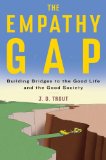
The Empathy GapThe Empathy Gap: Building Bridges to the Good Life and the Good Society by J.D. Trout (Viking, 2009) has a publication date of Feb. 5.
Publisher’s description:

A road map to a better society linking the cognitive psychology of individual and social decision making

Drawing on his sweeping and innovative research, philosopher and cognitive scientist J. D. Trout recruits the latest findings in psychology, behavioral economics, and neuroscience to answer the question: How can we make better personal decisions and design social policies that improve the lives of everyone?

Empathy prompts us to roll up our sleeves. Empathy for the risk and suffering of our fellow citizens can lead to moral outrage, more decent laws, and fairer policies. But new research on judgment and decision making has revealed that the human mind makes decisions that undermine the best interests of the individual and society alike. Empathy is an admirable impulse, but alone it is unreliable. It needs to be balanced by rationality if we are to develop a responsible social approach to decent and democratic policy making.

With penetrating insight into our cognitive and empathic limitations, Trout offers pragmatic political solutions to vault these crippling psychological barriers and outlines the best way to use our brains and our policies to improve society and the life of every individual.

See also: Author’s website

Comments (1) - cognitive science,culture,new books

two recent books on intelligence

January 22, 2009

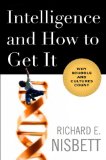
Intelligence and How to Get It

Intelligence and How to Get It: Why Schools and Cultures Count by Richard E. Nisbett (Norton, 2009).

Product Description

A bold refutation of the belief that genes determine intelligence. Who are smarter, Asians or Westerners? Are there genetic explanations for racial differences in test scores? What makes some nationalities excel in engineering and others in music? Will math and science remain a largely male preserve. From the damning research of The Bell Curve to the more recent controversy surrounding geneticist James Watson’s statements, one factor has been consistently left out of the equation: culture. In the tradition of The Mismeasure of Man by Stephen Jay Gould, world-class social psychologist Richard E. Nisbett takes on the idea of intelligence as something that is biologically determined and impervious to culture–with vast implications for the role of education as it relates to social and economic development. Intelligence and How to Get It asserts that intellect is not primarily genetic but is principally determined by societal influences. Nisbett’s commanding argument, superb marshaling of evidence, and fearless discussions of the controversial carve out new and exciting terrain in this hotly debated field.

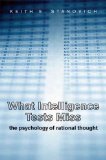
What Intelligence Tests Miss
What Intelligence Tests Miss: The Psychology of Rational Thought by Keith Stanovich (Yale University Press, 2009).

Product Description

Critics of intelligence tests—writers such as Robert Sternberg, Howard Gardner, and Daniel Goleman—have argued in recent years that these tests neglect important qualities such as emotion, empathy, and interpersonal skills. However, such critiques imply that though intelligence tests may miss certain key noncognitive areas, they encompass most of what is important in the cognitive domain. In this book, Keith E. Stanovich challenges this widely held assumption.

Stanovich shows that IQ tests (or their proxies, such as the SAT) are radically incomplete as measures of cognitive functioning. They fail to assess traits that most people associate with “good thinking,” skills such as judgment and decision making. Such cognitive skills are crucial to real-world behavior, affecting the way we plan, evaluate critical evidence, judge risks and probabilities, and make effective decisions. IQ tests fail to assess these skills of rational thought, even though they are measurable cognitive processes. Rational thought is just as important as intelligence, Stanovich argues, and it should be valued as highly as the abilities currently measured on intelligence tests.

Coming later this year: Intelligence 101 by Jonathan Plucker (Springer, August 2009).

Comments (0) - cognitive science,culture,new books

Cognitive science books coming in 2009

January 4, 2009

For “browsing into the future,” here is a list of cognitive science books coming in 2009, including related subject terms “cognition” and “cognitive psychology,” based on a search of WorldCat:


Cognitive archaeology and human evolution
ed. by Sophie A de Beaune; Frederick L Coolidge; Thomas Wynn (Cambridge; New York: Cambridge University Press, 2009). June 2009

Cognitive biology : evolutionary and developmental perspectives on mind, brain, and behavior ed. by Luca Tommasi; Mary A Peterson; Lynn Nadel (Cambridge, MA: MIT Press, 2009). July 2009

Computation, cognition, and Pylyshyn ed. by Don Dedrick; Lana Trick (Cambridge, MA : MIT Press, 2009). July 2009

Emotion and the psychodynamics of the cerebellum: a neuro-psychoanalytical analysis and synthesis by Fred Levin (London: Karnac, 2009). March 2009

Foundations in evolutionary cognitive neuroscience : introduction to the discipline ed. by Steven M Platek; Todd K Shackelford (Cambridge; New York: Cambridge University Press, 2009). March 2009

Ignorance : on the wider implications of deficient knowledge by Nicholas Rescher (Pittsburgh, Pa.: University of Pittsburgh Press, 2009. Feb 2009 (Amazon has this marked as a 2nd ed. but I couldn’t turn up an earlier edition.)

In two minds: dual processes and beyond ed. by Jonathan Evans; Keith Frankish (Oxford; New York: Oxford University Press, 2009). Sept 2009

Memory and the computational brain : why cognitive science will transform neuroscience by C R Gallistel; Adam Philip King (Chichester, West Sussex, UK; Malden, MA: Wiley-Blackwell, 2009). May 2009

On the Origins of Cognitive Science: the mechanization of mind by Jean-Pierre Dupuy (Cambridge, MA: MIT Press, 2009). April 2009

Perception and cognition : essays in the philosophy of psychology Gary C Hatfield (Oxford : Oxford University Press, 2009). Aug 2009

The philosophical baby : what children’s minds tell us about truth, love, and the meaning of life by Alison Gopnik (New York: Farrar, Straus and Giroux, 2009). Aug 2009


The rise of homo sapiens : the evolution of modern thinking
by Frederick L Coolidge; Thomas Wynn (Oxford: Wiley-Blackwell, 2009). April 2009

The sapient mind: archaeology meets neuroscience ed. by Colin Renfrew; Christopher D Frith; Lambros Malafouris (Oxford: Oxford University Press, 2009). Sept 2009

Supernatural agents: why we believe in souls, gods and buddhas by Ilkka Pyysiäinen (New York: Oxford University Press, 2009). May 2009

Wednesday is indigo blue: discovering the brain of synesthesia by Richard E Cytowic; David Eagleman (Cambridge, MA : MIT Press, 2009). April 2009

Comments (2) - cognitive science,new books

free neuroesthetics conference at University of California, Berkeley

December 28, 2008

Neuroesthetics Conference website

For any SF Bay Area readers:
The Eighth International Conference on Neuroesthetics is coming up in a few weeks, an all-day event on Sat. Jan 17, 2009, at UC Berkeley, with mirror neurons as this year’s topic. The conference is free; just fill out a brief registration form at the website.

One of the scheduled speakers is Marco Iacoboni, author of Mirroring People: The New Science of How We Connect with Others. Prof. Semir Zeki from London is one of the organizers and introducers.

Comments (0) - cognitive science