[ View menu ]

Archive for 'cognitive science'

new book on human navigation – ‘You Are Here’

July 8, 2009
You Are Here

You Are Here: Why We Can Find Our Way to the Moon, but Get Lost in the Mall (or “Where Am I?” in Canada) by Collin Ellard (Doubleday, 2009)

Product description from the publisher:

A fascinating exploration of human navigation, both feat and foible, in the age of GPS and GoogleEarth.

We live in a world crowded by street signs and arrows. With the click of a computer mouse we can find exact directions to just about anywhere on earth, and with a handheld GPS we can find our precise latitude and longitude, even in the remotest of places. But despite all our advancements, we still get lost in the mall, can’t follow directions to a friend’s house and, on camping expeditions, take wrong turns that can mean the difference between life and death.

Many other species, however, have an innate sense of direction. Ants display surprisingly sophisticated behavior, traveling great distances without wasting a step. Monarch butterflies and migrating songbirds pilot even greater expanses, thousands of kilometers in some instances, to targets that they might never even have seen before. A homing pigeon can be driven halfway across a continent in a lightproof box and then, on release, find its way—unerringly—back to its loft. What is truly amazing, though, is that humans, the only animal that has come close to understanding how some of these magnificent navigational feats are performed, are rendered helpless by dense bush or even an unexpected turn in a maze of cubicles.

In You Are Here, psychologist Colin Ellard explains how, over centuries of innovation, we have lost our instinctive ability to find our way, as we traverse vast distances in mere hours in luxurious comfort. Some cultures, such as the Inuit, retain the ability to navigate huge expanses of seemingly empty space, as their survival depends on it, but the rest of us have been so conditioned by our built-up world that we don’t really know how to get from point A to point B.

Drawing on his exhaustive research, Ellard illuminates this disconnect from our world with great clarity and explains what it means, not just for our forays into the wilderness but for how we construct our cities, our workplaces, and even our homes and virtual worlds. Architects and city planners, he suggests, need to consider human behavior when designing human environments, and we all need to recognize that we are part of, not isolated from, the space around us.

See also: author’s website
Comments (0) - cognitive science,new books

new book – ‘The Vision Revolution’

June 22, 2009

The Vision Revolution

The Vision Revolution: How the Latest Research Overturns Everything We Thought We Knew About Human Vision by Mark Changizi (BenBella Books, 2009)

Product description from the publisher:

Primates evolved binocular vision (both eyes facing forward) so that they can see in three dimensions, critical as they jumped from branch to branch. Higher primates developed color vision to better hunt out ripe fruit. Optical illusions succeed because they exploit the limitations of our visual processing. Wrong!

All of these beliefs are false, as groundbreaking research by evolutionary scientist and neurobiologist Mark Changizi now reveals. Changizi’s research centers on the “why” of human vision. Why do we have binocular vision? Why do we see in color the way we do? Why do optical illusions work? And why are we able to absorb information by reading?a very new invention from an evolutionary perspective?more readily than by hearing, which we’ve evolved to do over hundreds of thousands of years?

The Vision Revolution answers these questions, and proves, with the detailed results of Changizi’s fieldwork, that the answers are very different than traditionally believed. A radically new perspective of human vision is now emerging. The Vision Revolution is upon us.

See also: book excerpt from the Wall Street Journal

Author’s website

“The Vision Revolution” at Scientific Blogging

Comments (0) - cognitive science,new books

new book – ‘The Imprinted Brain’

June 13, 2009

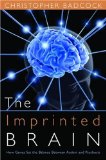
The Imprinted Brain

The Imprinted Brain: How Genes Set the Balance of the Mind Between Autism and Psychosis by Christopher Badcock (Jessica Kingsley Publishers, 2009)

Product description from the publisher:

“The Imprinted Brain” sets out a radical new theory of the mind and mental illness based on the recent discovery of genomic imprinting. Imprinted genes are those from one parent that, in that parent’s interest, are expressed in an offspring rather than the diametrically opposed genes from the other parent. For example, a higher birth weight may represent the dominance of the father’s genes in leading to a healthy child, whereas a lower birth weight is beneficial to the mother’s immediate wellbeing, and the imprint of the mother’s genes will result in a smaller baby. According to this view, a win for the father’s genes may result in autism, whereas one for the mother’s may result in psychosis. A state of equilibrium – normality – is the most likely outcome, with a no-win situation of balanced expression. Imprinted genes typically produce symptoms that are opposites of each other, and the author uses psychiatric case material to show how many of the symptoms of psychosis can be shown to be the mental mirror-images of those of autism. Combining psychiatry with insights from modern genetics and cognitive science, Christopher Badcock explains the fascinating imprinted brain theory to the reader in a thorough but accessible way. This new theory casts some intriguing new light on other topics as diverse as the nature of genius, the appeal of detective fiction, and the successes – and failures – of psychoanalysis. This thought-provoking book is a must-read for anyone with an interest in autism, psychiatry, cognitive science or psychology in general.

See also: “Imprinted Brain Theory” at Edge

Comments (0) - cognitive science,consciousness,new books,philosophy of mind

“Comedy as a mode of thought” in ‘Loopholes’

May 28, 2009

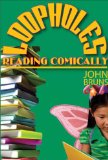
Loopholes

Loopholes: Reading Comically by John Bruns (Transaction Publishers, 2009)

Product description from the publisher:

Much writing about comedy in the last twenty years has only trivialized comedy as cheap or as temporary distraction from things that “really matter.” It has either presented exhaustive taxonomies of kinds of humor—like wit, puns, jokes, humor, satire, irony—or engaged in pointless political endgames, moral dialogues, or philosophical perceptions. Comedy is rarely presented as a mode of thought in its own right, as a way of understanding, not something to be understood. Bruns’ guiding assumption is that comedy is not simply a literary or theatrical genre, to be differentiated from tragedy or from romance, but a certain way of disclosing, perhaps undoing, the way the world is organized. When we view the world in terms of what is incompatible, we are reading comically. In this sense, comedy exists outside the alternatives of tragic and comic. It is a form of relief from the difficulties of everyday life. Loopholes argues that trivialization of comedy comes from fear that it will address our anxieties with honesty—and it is this truth that scares us. John Bruns discusses comedy as a mode of thought with a cognitive function. It is a domain of human understanding, a domain far more troubling and accessible than we care to acknowledge. To “read comically” we must accept our fears. If we do so, we will realize what Bruns refers to as the most neglected premise of comedy, that the world itself is a loophole—both incomplete and limitless.

Comments (0) - cognitive science,culture,happiness

new book – ‘On the Origin of Stories: Evolution, Cognition, Fiction’

May 12, 2009

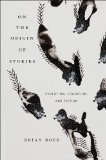
On the Origin of Stories

I just chanced across this book at Amazon: On the Origin of Stories: Evolution, Cognition, and Fiction by Brian Boyd (Belknap Press, 2009). I’d seen it mentioned over a year ago in an article by Boyd.

Product Description from the publisher

A century and a half after the publication of Origin of Species, evolutionary thinking has expanded beyond the field of biology to include virtually all human-related subjects—anthropology, archeology, psychology, economics, religion, morality, politics, culture, and art. Now a distinguished scholar offers the first comprehensive account of the evolutionary origins of art and storytelling. Brian Boyd explains why we tell stories, how our minds are shaped to understand them, and what difference an evolutionary understanding of human nature makes to stories we love.

Art is a specifically human adaptation, Boyd argues. It offers tangible advantages for human survival, and it derives from play, itself an adaptation widespread among more intelligent animals. More particularly, our fondness for storytelling has sharpened social cognition, encouraged cooperation, and fostered creativity.

After considering art as adaptation, Boyd examines Homer’s Odyssey and Dr. Seuss’s Horton Hears a Who! demonstrating how an evolutionary lens can offer new understanding and appreciation of specific works. What triggers our emotional engagement with these works? What patterns facilitate our responses? The need to hold an audience’s attention, Boyd underscores, is the fundamental problem facing all storytellers. Enduring artists arrive at solutions that appeal to cognitive universals: an insight out of step with contemporary criticism, which obscures both the individual and universal. Published for the bicentenary of Darwin’s birth and the 150th anniversary of the publication of Origin of Species, Boyd’s study embraces a Darwinian view of human nature and art, and offers a credo for a new humanism.

Comments (1) - cognitive science,fiction,new books