January 19, 2008
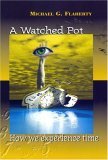 A book about time for the January Book A Month Challenge:
A Watched Pot: How We Experience Time by Michael G. Flaherty (New York University Press, 1999)
Flaherty explores variations in the perceived passage of time from a social psychological perspective, seeking to account for three paradoxical aspects and three elementary forms of time experience. The paradoxes are (1) that time seems to pass slowly in periods that are either unusually busy or unusually empty of activity; (2) the same period can be experienced as a long time while it is happening, but a short time when it is recollected, (3) some busy periods seem to pass slowly while others seem to pass quickly. The three elementary forms of variation in time perception are protracted duration, temporal compression, and synchronicity (experience synchronized with clock time).
Protracted duration is experienced in situations involving suffering or other intense emotions, violence or danger, waiting and boredom, altered states, concentration and meditation, or shock and novelty.
Flaherty arrives at the concept of “intensity of conscious information processing” to account for the variations in experience of time, so that protracted duration is associated with high density of conscious information processing; synchronicity is experienced when the density of conscious information processing is moderate; and temporal compression is correlated with low density of conscious information processing. (p. 113)
The author started out collecting examples of protracted duration, then developed a theory to account for the variations, which he then applied to cases of temporal compression. In the conclusion, cross-cultural issues are considered, as well as the possibility of deliberate “time work” — manipulation of temporal experience as a form of creativity or self-actualization.
The book was fairly interesting but did not give me much in the way of new ideas or concepts to apply to my experience of time, as I was hoping for. Lumping time perception into three broad categories might have obscured some of the more unusual aspects of temporal experience. [Next morning’s thought – Can I change the intensity of my conscious processing to slow down or speed up perceived time?]
Comments (0)
- Book A Month Challenge,psychology
January 10, 2008
Recently issued by MIT Press: Folk Psychological Narratives: The Sociocultural Basis of Understanding Reasons (Bradford Books) by Daniel C. Hutto.

From the book description:
Established wisdom in cognitive science holds that the everyday folk psychological abilities of humans–our capacity to understand intentional actions performed for reasons–are inherited from our evolutionary forebears. In Folk Psychological Narratives, Daniel Hutto challenges this view (held in somewhat different forms by the two dominant approaches, “theory theory” and simulation theory) and argues for the sociocultural basis of this familiar ability. He makes a detailed case for the idea that the way we make sense of intentional actions essentially involves the construction of narratives about particular persons. Moreover he argues that children acquire this practical skill only by being exposed to and engaging in a distinctive kind of narrative practice.
Hutto calls this developmental proposal the narrative practice hypothesis (NPH). Its core claim is that direct encounters with stories about persons who act for reasons (that is, folk psychological narratives) supply children with both the basic structure of folk psychology and the norm-governed possibilities for wielding it in practice. In making a strong case for the as yet underexamined idea that our understanding of reasons may be socioculturally grounded, Hutto not only advances and explicates the claims of the NPH, but he also challenges certain widely held assumptions. For example, he targets the idea that the primary function of folk psychology is to enable us to predict the behaviors of others. In this way, Folk Psychological Narratives both clears conceptual space around the dominant approaches for an alternative and offers a groundbreaking proposal.
Amazon has “Search Inside the Book” for this title.
Comments (0)
- cognitive science,culture,new books,philosophy of mind,psychology
January 6, 2008
The Emotional Construction of Morals by Jesse Prinz (Oxford University Press, Dec. 28, 2007).
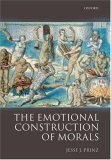 From the book description: “Jesse Prinz argues that recent work in philosophy, neuroscience, and anthropology supports two radical hypotheses about the nature of morality: moral values are based on emotional responses, and these emotional responses are inculcated by culture, not hard-wired through natural selection.”
author’s website, University of North Carolina, Chapel Hill
excerpts (24 p pdf draft)
article “The Emotional Basis of Moral Judgments,” Philosophical Explorations, March 2006 (16 p pdf)
Comments (2)
- culture,new books,philosophy of mind,psychology
November 4, 2007
Wikipedia on the “conjunction fallacy”:
The conjunction fallacy is a logical fallacy that occurs when it is assumed that specific conditions are more probable than a single general one.
The most oft-cited example of this fallacy originated with Amos Tversky and Daniel Kahneman:
- Linda is 31 years old, single, outspoken, and very bright. She majored in philosophy. As a student, she was deeply concerned with issues of discrimination and social justice, and also participated in anti-nuclear demonstrations.
- Which is more likely?
- Linda is a bank teller.
- Linda is a bank teller and is active in the feminist movement.
85% of those asked chose option 2. However, mathematically, the probability of two events occurring together (in “conjunction”) will always be less than or equal to the probability of either one occurring alone.
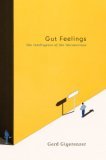 In Gut Feelings: The Intelligence of the Unconscious, researcher Gerd Gigerenzer (director at the Max Planck Institute for Human Development) criticizes this view of the conjunction fallacy, suggesting that the problem plays on ambiguities in the meaning of probable and and. When rephrased in numerical terms (ie, out of a 100 persons who fit the description above, how many are (a) bank tellers or (b) bank tellers and active in the feminist movement?) the fallacy disappears, as the number assigned to (a) is larger than the number for (b). (p. 93-97)
For further reading, the European Rationalist has posted “Reason and Rationality” an in-depth article by Richard Samuels, Stephen Stich and Luc Faucher that evaluates “the nature and plausibility of the pessimistic view of human rationality often associated with the heuristics and biases tradition.”
“Linda the bank teller” is also discussed at “Overcoming Bias.”
Comments (0)
- cognitive science,psychology
October 19, 2007
 I’ll have to give up on the Amazon slideshow widget at least for now. I thought I had it figured out earlier today; it worked in Internet Explorer but I found out that it didn’t work in Firefox at all. So here is a selection of books on emotion that would have been in the slideshow… (and I apologize for any problems that occurred with the feed):
Emotional Intelligence: Why It Can Matter More Than IQ by Daniel Goleman
Three by Antonio Damasio:
Emotions Revealed, Second Edition: Recognizing Faces and Feelings to Improve Communication and Emotional Life by Paul Ekman
Emotion and Consciousness ed. by Lisa Feldman Barrett, Paula M. Niedenthal, and Piotr Winkielman
The Private Life of the Brain: Emotions, Consciousness, and the Secret of the Self by Susan Greenfield
Destructive Emotions: A Scientific Dialogue with the Dalai Lama by Daniel Goleman
The Emotional Brain: The Mysterious Underpinnings of Emotional Life by Joseph Ledoux
What Is an Emotion?: Classic and Contemporary Readings ed, by Robert C. Solomon
Comments (0)
- alphabet,mind,psychology