[ View menu ]

Archive for 'psychology'

new book: ‘Embracing the Wide Sky: A Tour Across the Horizons of the Mind’ by Daniel Tammet

December 24, 2008

Embracing the Wide Sky: A Tour Across the Horizons of the Mind by Daniel Tammet (Free Press, 2009).
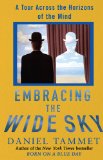
Embracing the Wide Sky
Tammet’s previous book is Born On A Blue Day: Inside the Extraordinary Mind of an Autistic Savant.

Here is the product description for Embracing the Wide Sky:

Owner of “the most remarkable mind on the planet,” (according to Entertainment Weekly) Daniel Tammet captivated readers and won worldwide critical acclaim with the 2007 New York Times bestselling memoir, Born On A Blue Day, and its vivid depiction of a life with autistic savant syndrome. In his fascinating new book, he writes with characteristic clarity and personal awareness as he sheds light on the mysteries of savants’ incredible mental abilities, and our own.

Tammet explains that the differences between savant and non-savant minds have been exaggerated; his astonishing capacities in memory, math and language are neither due to a cerebral supercomputer nor any genetic quirk, but are rather the results of a highly rich and complex associative form of thinking and imagination. Autistic thought, he argues, is an extreme variation of a kind that we all do, from daydreaming to the use of puns and metaphors.

Embracing the Wide Sky combines meticulous scientific research with Tammet’s detailed descriptions of how his mind works to demonstrate the immense potential within us all. He explains how our natural intuitions can help us to learn a foreign language, why his memories are like symphonies, and what numbers and giraffes have in common. We also discover why there is more to intelligence than IQ, how optical illusions fool our brains, and why too much information can make you dumb.

Many readers will be particularly intrigued by Tammet’s original ideas concerning the genesis of genius and exceptional creativity. He illustrates his arguments with examples as diverse as the private languages of twins, the compositions of poets with autism, and the breakthroughs, and breakdowns, of some of history’s greatest minds. Embracing the Wide Sky is a unique and brilliantly imaginative portrait of how we think, learn, remember and create, brimming with personal insights and anecdotes, and explanations of the most up-to-date, mind-bending discoveries from fields ranging from neuroscience to psychology and linguistics. This is a profound and provocative book that will transform our understanding and respect for every kind of mind.

Tammet’s blog has book excerpts and links to a great video for the book that I’m embedding here:
Comments (1) - mind,new books,psychology

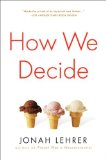
‘How We Decide’ by Jonah Lehrer – coming in February

December 14, 2008

How We Decide
How We Decide by Jonah Lehrer (Proust Was a Neuroscientist, The Frontal Cortex) is already a popular pre-order at Amazon, though not due out until next February.

Product Description:

From the acclaimed author of Proust Was a Neuroscientist, a fascinating look at the new science
of decision-making—and how it can help us make better choices.
Since Plato, philosophers have described the decisionmaking process as either rational or emotional: we carefully deliberate or we “blink” and go with our gut. But as scientists break open the mind’s black box with the latest tools of neuroscience, they’re discovering that this is not how the mind works. Our best decisions are a finely tuned blend of both feeling and reason—and the precise mix depends on the situation. When buying a house, for example, it’s best to let our unconscious mull over the many variables. But when we’re picking a stock, intuition often leads us astray. The trick is to determine when to lean on which part of the brain, and to do this, we need to think harder (and smarter) about how we think.
Jonah Lehrer arms us with the tools we need, drawing on cutting-edge research by Daniel Kahneman, Colin Camerer, and others, as well as the real-world experiences of a wide range of “deciders”—from airplane pilots and hedge fund investors to serial killers and poker players. Lehrer shows how people are taking advantage of the new science to make better television shows, win more football games, and improve military intelligence. His goal is to answer two questions that are of interest to just about anyone, from CEOs to firefighters: How does the human mind make decisions? And how can we make those decisions better?

Comments (0) - new books,psychology

Gladwell’s ‘Outliers’ is out

November 20, 2008

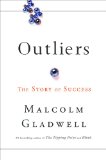
I mentioned Gladwell’s new book Outliers: The Story of Success awhile ago, but it seems worth mentioning again, now that the book has been released and there are lots of related links. The Amazon page has a short video from Gladwell introducing his book.

At Gladwell.com there is a Q&A about the book and some excerpts; also an announcement on Gladwell’s blog.

See also:

  • Social Capital Blog post
  • Google News search
  • excerpt at The Guardian
  • New York Times review by Michiko Kakutani

Comments (0) - culture,new books,psychology

top books from ‘An Authoritative Guide to Self-Help Books’ (1994)

November 11, 2008

Usually this blog focuses on keeping up with all the new books coming out but recently I came across The Authoritative Guide to Self-Help Books by John W. Santrock, Ann M. Minnett, and Barbara D. Campbell (Guilford Press, 1994), which provided an opportunity to look back at some classic self-help titles.

The book is based on a US survey of 500 mental health professionals who rated over 1000 books in 32 categories. Most of the book reviews the titles by category, rating them from “strongly recommended” to “strongly not recommended.” At the end there is a list of “the twenty-five best self-help books,” those highest rated overall (linked to most current edition at Amazon):

1. The Courage to Heal by Ellen Bass and Laura Davis
2. Feeling Good by David Burns
3. Infants and Mothers by T. Berry Brazelton
4. What Every Baby Knows by T. Berry Brazelton
5. Dr. Spock’s Baby and Child Care by Benjamin Spock [8th ed. coauthor is Robert Needlman]
6. How to Survive the Loss of a Love by Melba Colgrove, Harold Bloomfield, and Peter McWilliams
7. To Listen to a Child by T. Berry Brazelton
8. The Boys and Girls Book About Divorce by Richard Gardner
9. The Dance of Anger by Harriet Lerner
10. The Feeling Good Handbook by David Burns
11. Toddlers and Parents by T. Berry Brazelton
12. Your Perfect Right by Robert Alberti and Michael Emmons
13. Between Parent and Teenager by Haim Ginott
14. The First Three Years of Life by Burton White
15. What Color Is Your Parachute? by Richard Bolles
16. Between Parent and Child by Haim Ginott
17. The Relaxation Response by Herbert Benson
18. The New Aerobics by Kenneth Cooper
19. Learned Optimism by Martin Seligman
20. Man’s Search for Meaning by Victor Frankl
21. Children: The Challenge by Rudolph Dreikurs
22. You Just Don’t Understand by Deborah Tannen
23. The Dance of Intimacy by Harriet Lerner
24. Beyond the Relaxation Response by Herbert Benson
25. The Battered Woman by Lenore Walker

More recently, Authoritative Guide to Self-Help Resources in Mental Health, Revised Edition came out in 2003 with some overlap in authors, but going beyond self-help books to include autobiographies, films, online resources and support groups. It will be interesting to see if this edition has a comparable list of top books or top resources.

Comments (2) - psychology

new book – Obsession: A History

October 15, 2008

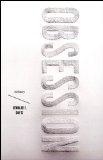
Obsession: A History by Lennard J. Davis (University of Chicago Press, 2008).

Product Description
We live in an age of obsession. Not only are we hopelessly devoted to our work, strangely addicted to our favorite television shows, and desperately impassioned about our cars, we admire obsession in others: we demand that lovers be infatuated with one another in films, we respond to the passion of single-minded musicians, we cheer on driven athletes. To be obsessive is to be American; to be obsessive is to be modern.
But obsession is not only a phenomenon of modern existence: it is a medical category—both a pathology and a goal. Behind this paradox lies a fascinating history, which Lennard Davis tells in Obsession. Beginning with the roots of the disease in demonic possession and its secular successors, Davis traces the evolution of obsessive behavior from a social and religious fact of life into a medical and psychiatric problem. From obsessive aspects of professional specialization to obsessive sex and nymphomania, no variety of obsession eludes Davis’s graceful analysis. Obsession also considers the clinical definition of the condition: Davis investigates the huge increase (estimates suggest up to 600-fold) in diagnosis of obsessive-compulsive disorder over the past thirty years. Surveying the many ways in which doctors today treat OCD, he points out the limitations of and contradictions within the biological definitions of the disease.
Impassioned, witty, and learned, Obsession is for anyone—from compulsive hand washers to professional psychologists—who has been fascinated by, struggled with, or cultivated obsession.

Comments (0) - new books,psychology