[ View menu ]

Archive for 'psychology'

new book – ‘Why Music Moves Us’

April 30, 2009

Why Music Moves Us

Why Music Moves Us by Jeanette Bicknell (Palgrave MacMillan, 2009)

Product information from the publisher:

Surely you’ve experienced it before: you’re listening to a piece of music and all of a sudden you find a lump in your throat, a tear in your eye, or a chill down your spine. Whether it’s Beethoven’s Choral Symphony or The Verve’s ‘Bittersweet Symphony’, a bit of blues or a bit of baroque, music has the power to move us. It’s a language which we all speak. But why does it have this effect on us? What is going on, emotionally, physically and cognitively when listeners have strong emotional responses to music? What, if anything, do such responses mean? Can they tell us anything about ourselves? Jeanette Bicknell uses research in philosophy, psychology, neuroscience, and anthropology to address these questions, ultimately showing us that the reason why some music tends to arouse powerful experiences in listeners is inseparable from the reason why any music matters at all. Musical experience is a social one, and that is fundamental to its attractions and power over us.

The author’s website has a chapter-by-chapter synopsis.

Comments (0) - culture,new books,philosophy of mind,psychology
new book – ‘Bozo Sapiens: Why to Err Is Human’

April 11, 2009

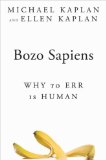
Bozo Sapiens

Bozo Sapiens: Why to Err is Human by Michael Kaplan and Ellen Kaplan (Bloomsbury Press, 2009) is due out next week (4/14) according to Amazon, but was available in my local bookstore today, joining the crowd of recent books on this popular topic of human error.

Product description from the publisher:

A dazzling new work of popular science and psychology for readers who enjoyed Blink, Stumbling on Happiness, or The Black Swan.

The New York Times called the Kaplans’ look at probability in everyday life, Chances Are, “a dizzying, exhilarating ride.” Now they take readers on a new fun-house tour, exploring the burgeoning science of why humans make mistakes.

Our species, it appears, is hardwired to get things wrong in myriad different ways. Why did recipients of a loan offer accept a higher rate of interest when a pretty woman’s face was printed on the flyer? Why did one poll on immigration find the most despised aliens were ones from a group that did not exist? What made four of the air force’s best pilots fly their planes, in formation, straight into the ground? Why does giving someone power make him more likely to chew with his mouth open and pick his nose? And why is your sister going out with that biker dude?

In fact, our cognitive, logical, and romantic failures may be a fair price for our extraordinary success as a species; they are the necessary cost of our adaptability. Michael and Ellen Kaplan swoop effortlessly across neurochemistry, behavioral economics, and evolutionary biology, among other disciplines, to answer, with both clarity and wit, the questions above, and larger ones about what it means to be human.

Comments (1) - cognitive science,new books,psychology

coming soon – ‘Play: How It Shapes the Brain, Opens the Imagination and Invigorates the Soul’

March 3, 2009

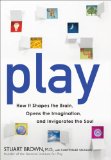
play

Play: How It Shapes the Brain, Opens the Imagination, and Invigorates the Soul by Dr. Stuart Brown and Christopher Vaughan (Avery, 2009) should be available on March 5.

Product Description
From a leading expert, a groundbreaking book on the science of play, and its essential role in fueling our intelligence and happiness throughout our lives.

We’ve all seen the happiness in the face of a child while playing in the school yard. Or the blissful abandon of a golden retriever racing with glee across a lawn. This is the joy of play. By definition, play is purposeless and all-consuming. And, most important, it’s fun.

As we become adults, taking time to play feels like a guilty pleasure—a distraction from “real” work and life. But as Dr. Stuart Brown illustrates, play is anything but trivial. It is a biological drive as integral to our health as sleep or nutrition. In fact, our ability to play throughout life is the single most important factor in determining our success and happiness.

Dr. Brown has spent his career studying animal behavior and conducting more than six thousand “play histories” of humans from all walks of life—from serial murderers to Nobel Prize winners. Backed by the latest research, Play explains why play is essential to our social skills, adaptability, intelligence, creativity, ability to problem solve, and more. Play is hardwired into our brains—it is the mechanism by which we become resilient, smart, and adaptable people.

Beyond play’s role in our personal fulfillment, its benefits have profound implications for child development and the way we parent, education and social policy, business innovation, productivity, and even the future of our society. From new research suggesting the direct role of three-dimensional-object play in shaping our brains to animal studies showing the startling effects of the lack of play, Brown provides a sweeping look at the latest breakthroughs in our understanding of the importance of this behavior. A fascinating blend of cutting-edge neuroscience, biology, psychology, social science, and inspiring human stories of the transformative power of play, this book proves why play just might be the most important work we can ever do.

Dr. Stuart Brown is the founder of the National Institute for Play. A sample chapter is available at the book’s website.

Thanks to Eric from Open Learning for the book suggestion!

Comments (0) - cognitive science,culture,new books,psychology

new book – ‘Why We Make Mistakes’

February 16, 2009

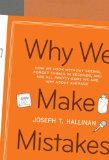
Why We Make Mistakes

Why We Make Mistakes: How We Look Without Seeing, Forget Things in Seconds, and Are All Pretty Sure We Are Way Above Average by Joseph T. Hallinan (Broadway, 2009).

According to Amazon, this book is being released tomorrow, but my local Barnes & Noble had it on the shelves yesterday.

Book Description
We forget our passwords. We pay too much to go to the gym. We think we’d be happier if we lived in California (we wouldn’t), and we think we should stick with our first answer on tests (we shouldn’t). Why do we make mistakes? And could we do a little better?

We human beings have design flaws. Our eyes play tricks on us, our stories change in the retelling, and most of us are fairly sure we’re way above average. In Why We Make Mistakes, journalist Joseph T. Hallinan sets out to explore the captivating science of human error–how we think, see, remember, and forget, and how this sets us up for wholly irresistible mistakes.

In his quest to understand our imperfections, Hallinan delves into psychology, neuroscience, and economics, with forays into aviation, consumer behavior, geography, football, stock picking, and more. He discovers that some of the same qualities that make us efficient also make us error prone. We learn to move rapidly through the world, quickly recognizing patterns–but overlooking details. Which is why thirteen-year-old boys discover errors that NASA scientists miss—and why you can’t find the beer in your refrigerator.

Why We Make Mistakes is enlivened by real-life stories–of weathermen whose predictions are uncannily accurate and a witness who sent an innocent man to jail–and offers valuable advice, such as how to remember where you’ve hidden something important. You’ll learn why multitasking is a bad idea, why men make errors women don’t, and why most people think San Diego is west of Reno (it’s not).

Why We Make Mistakes will open your eyes to the reasons behind your mistakes–and have you vowing to do better the next time.

The book’s website has excerpts, links, and a blog.

Here’s a review, from Cheryl Truman on books.

Comments (1) - cognitive science,new books,psychology

books and sites for New Year’s resolutions (or plain old goals)

January 3, 2009

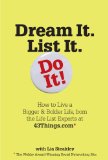
Dream It. List It. Do It!
This post was prompted when I saw that the website 43Things has put out a new book: Dream It. List It. Do It!: How to Live a Bigger & Bolder Life, from the Life List Experts at 43Things.com. (More about the book at 43Things)

For example at 43Things, “10,016 people want to read more books”!

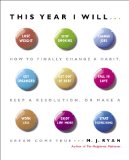
Another book to check out for help in following through on goals and resolutions is This Year I Will…: How to Finally Change a Habit, Keep a Resolution, or Make a Dream Come True by M.J. Ryan (Broadway, 2006). This Year I Will...

From the author’s website:

Why do people find it so hard to change? The secret is that everyone has their own formula for making changes that stick, but most people don’t know what theirs is. They think there is one way to lose five pounds, and another way to stay on top of their email, but they don’t realize that for all changes, there is one system that works best for each individual. This Year I Will helps you lock on to your unique formula for planning, implementing, and seeing a life change through, so you can use it again and again to tackle anything else you’d like to do.

Joe’s Goals, a free online habit tracker, is one of the sites featured in Lifehacker’s tips on how to “Set and track New Year’s Resolutions with free software.”

Comments (0) - new books,psychology