[ View menu ]

Archive for 'psychology'

‘The Upside of Irrationality’ by Dan Ariely – available 6/1/10

May 31, 2010
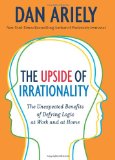
The Upside of Irrationality

The Upside of Irrationality: The Unexpected Benefits of Defying Logic at Work and at Home by Dan Ariely (Harper, 2010) has a release date of June 1, according to Amazon.

(kindle ed)

(already available at amazon.co.uk)

Product description from the publisher:

The provocative follow-up to the New York Times bestseller Predictably Irrational

  • Why can large bonuses make CEOs less productive?
  • How can confusing directions actually help us?
  • Why is revenge so important to us?
  • Why is there such a big difference between what we think will make us happy and what really makes us happy?

In his groundbreaking book Predictably Irrational, social scientist Dan Ariely revealed the multiple biases that lead us into making unwise decisions. Now, in The Upside of Irrationality, he exposes the surprising negative and positive effects irrationality can have on our lives. Focusing on our behaviors at work and in relationships, he offers new insights and eye-opening truths about what really motivates us on the job, how one unwise action can become a long-term habit, how we learn to love the ones we’re with, and more.

Drawing on the same experimental methods that made Predictably Irrational one of the most talked-about bestsellers of the past few years, Ariely uses data from his own original and entertaining experiments to draw arresting conclusions about how—and why—we behave the way we do. From our office attitudes, to our romantic relationships, to our search for purpose in life, Ariely explains how to break through our negative patterns of thought and behavior to make better decisions. The Upside of Irrationality will change the way we see ourselves at work and at home—and cast our irrational behaviors in a more nuanced light.

See also: author’s website

video intro for the book:
Comments (0) - cognitive science,new books,psychology

new book – ‘How Pleasure Works’ by Paul Bloom

May 28, 2010

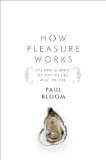
How Pleasure Works

How Pleasure Works: The New Science of Why We Like What We Like by Paul Bloom (W.W. Norton)

(Kindle ed.)
(link for UK)

Product description from the publisher:

Yale psychologist Paul Bloom presents a striking new vision of the pleasures of everyday life. The thought of sex with a virgin is intensely arousing for many men. The average American spends over four hours a day watching television. Abstract art can sell for millions of dollars. Young children enjoy playing with imaginary friends and can be comforted by security blankets. People slow their cars to look at gory accidents, and go to movies that make them cry.

In this fascinating and witty account, Paul Bloom examines the science behind these curious desires, attractions, and tastes, covering everything from the animal instincts of sex and food to the uniquely human taste for art, music, and stories. Drawing on insights from child development, philosophy, neuroscience, and behavioral economics, How Pleasure Works shows how certain universal habits of the human mind explain what we like and why we like it.

See also: Webpage for the book, Bloom’s Introduction to Psychology video course at Open Yale Courses

Comments (0) - new books,psychology

two recent titles – ‘The Winner’s Brain’ & ‘Making Ideas Happen’

May 8, 2010

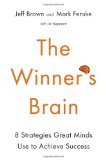
The Winner's Brain

The Winner’s Brain: 8 Strategies Great Minds Use to Achieve Success by Jeff Brown and Mark Fenske with Liz Neporent (Da Capo Lifelong Books, 2010)

(Kindle edition)

(link for UK)
Product description from the publisher:

Ever wonder why some people seem blessed with success? In fact, everyone is capable of winning in life—you just need to develop the right brain for it.

In The Winner’s Brain, Drs. Jeffrey Brown and Mark J. Fenske use cutting-edge neuroscience to identify the secrets of those who succeed no matter what—and demonstrate how little it has to do with IQ or upbringing. Through simple everyday practices, Brown and Fenske explain how to unlock the brain’s hidden potential, using:

• Balance: Make emotions work in your favor
• Bounce: Create a failure-resistant brain
• Opportunity Radar: Spot hot prospects previously hidden by problems
• Focus Laser: Lock into what’s important
• Effort Accelerator: Cultivate the drive to win

Along the way, meet dozens of interesting people who possess “win factors” (like the inventor of Whac-A-Mole™) and glean fascinating information (like why you should never take a test while wearing red). Compulsively readable, The Winner’s Brain will not only give you an edge, but also motivate you to pursue your biggest dreams.

See also: Website for the book, where an excerpt is available, plus a link to the authors’ blog and more; Article from Harvard Mental Health Letter

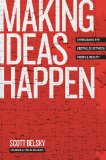
Making Ideas Happen

Making Ideas Happen: Overcoming the Obstacles Between Vision and Reality by Scott Belsky (Portfolio Hardcover, 2010)

(link for UK)

Product description from the publisher:

How the world’s leading innovators push their ideas to fruition again and again

Edison famously said that genius is 1 percent inspiration, 99 percent perspiration. Ideas for new businesses, solutions to the world’s problems, and artistic breakthroughs are common, but great execution is rare.

According to Scott Belsky, the capacity to make ideas happen can be developed by anyone willing to develop their organizational habits and leadership capability. That’s why he founded Behance, a company that helps creative people and teams across industries develop these skills.

Belsky has spent six years studying the habits of creative people and teams that are especially productive-the ones who make their ideas happen time and time again. After interviewing hundreds of successful creatives, he has compiled their most powerful-and often counterintuitive-practices, such as:

•Generate ideas in moderation and kill ideas liberally
•Prioritize through nagging
•Encourage fighting within your team

While many of us obsess about discovering great new ideas, Belsky shows why it’s better to develop the capacity to make ideas happen-a capacity that endures over time.

See also: Website for the book, where an excerpt is available, and more.

Here’s a “summary preview” from readitfor.me:

Comments (0) - cognitive science,new books,psychology

new book – Jerome Kagan’s ‘Temperamental Thread: How Genes, Culture, Time and Luck Make Us Who We Are’

May 2, 2010

The Temperamental Thread

The Temperamental Thread: How Genes, Culture, Time and Luck make Us Who We Are by Jerome Kagan (Dana Press, 2010)

(link for UK)

Product description from the publisher:

Temperament is the single most pervasive aspect of us and our fellow human beings. We notice it; we gossip about it; we make judgments based on it; we unconsciously shape our lives around it.
In The Temperamental Thread, developmental psychologist Jerome Kagan draws on decades of research to describe the nature of temperament—the in-born traits that underlie our responses to experience. Along the way he answers such questions as, How does the temperament we are born with affect the rest of our lives? Are we set at birth on an irrevocable path of optimism or pessimism? Must a fussy baby always become an anxious adult?
Kagan paints a picture of temperament as a thread that, when woven with those of life experiences, forms the whole cloth of an individual’s personality. He presents solid evidence to show how genes, gender, culture, and chance interact with temperament and influence a mature personality. He explains how temperament sets the stage for the many personality variations that we see all around us.
Research into temperament, powered by the new tools of neuroscience and psychological science, is enriching our understanding of others in every context, from our closest relationships to those in workplaces, schools, and even casual encounters. Jerome Kagan shows us how.

See also: New Scientist review, author interview, more on the book at Integral Options Cafe

Comments (0) - new books,psychology,self

‘Bursts’ on the scene

April 29, 2010

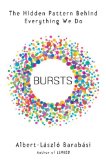
Bursts

Bursts: The Hidden Pattern Behind Everything We Do by Albert-László Barabási (author of ‘Linked‘) (Dutton, 2010).

(link for UK)

Product description from the publisher:

Can we scientifically predict our future? Scientists and pseudoscientists have been pursuing this mystery for hundreds and perhaps thousands of years. But now, amazing new research is revealing that patterns in human behavior, previously thought to be purely random, follow predictable laws.

Albert-László Barabási, already the world’s preeminent researcher on the science of networks, describes his work on this profound mystery in Bursts, a stunningly original investigation into human behavior. His approach relies on the way our lives have become digital. Mobile phones, the Internet, and e-mail have made human activities more accessible to quantitative analysis, turning our society into a huge research laboratory. All those electronic trails of time- stamped texts, voice mails, and searches add up to a previously unavailable massive data set that tracks our movements, our decisions, our lives. Analysis of these trails is offering deep insights into the rhythm of how we do everything. His finding? We work and fight and play in short flourishes of activity followed by next to nothing. Our daily pattern isn’t random, it’s “bursty.” Bursts uncovers an astonishing deep order in our actions that makes us far more predictable than we like to think.

Illustrating this revolutionary science, Barabási artfully weaves together the story of a sixteenth-century burst of human activity-a bloody medieval crusade launched in his homeland, Transylvania-with the modern tale of a contemporary artist hunted by the FBI through our post-9/11 surveillance society. These narratives illustrate how predicting human behavior has long been the obsession, sometimes the duty, of those in power. Barabási’s wide range of examples from seemingly unrelated areas includes how dollar bills move around the United States, the pattern everyone follows in writing e-mail, the spread of epidemics, and even the flight patterns of albatross. In all these phenomena a virtually identical bursty pattern emerges, a reflection of the universality of human behavior.

Bursts reveals where individual spontaneity ends and predictability in human behavior begins. The way you think about your own potential to do something truly extraordinary will never be the same.

See also: Author’s website

“Adopt” a word from the book to reveal the text at www.brsts.com.

Comments (0) - mind,new books,psychology