[ View menu ]

Archive for 'psychology'

upcoming titles from Oliver Sacks and Antonio Damasio

July 16, 2010

Besides new books by David Chalmers and Douglas Hofstadter mentioned in an earlier post, there are also new books coming later this year by Oliver Sacks and Antonio Damasio.

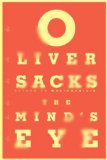
The Mind's Eye

Coming in October – The Mind’s Eye by Oliver Sacks (Knopf, 2010). (link for amazon.co.uk)

Product description from the publisher:

From the author of the best-selling Musicophilia (hailed as “luminous, original, and indispensable” by The American Scholar), an exploration of vision through the case histories of six individuals—including a renowned pianist who continues to give concerts despite losing the ability to read the score, and a neurobiologist born with crossed eyes who, late in life, suddenly acquires binocular vision, and how her brain adapts to that new skill. Most dramatically, Sacks gives us a riveting account of the appearance of a tumor in his own eye, the strange visual symptoms he observed, an experience that left him unable to perceive depth.

In The Mind’s Eye, Oliver Sacks explores some of the most fundamental facets of human experience—how we see in three dimensions, how we represent the world internally when our eyes are closed, and the remarkable, unpredictable ways that our brains find new ways of perceiving that create worlds as complete and rich as the no-longer-visible world.

Damasio’s book is coming in November from Pantheon: Self Comes to Mind: Constructing the Conscious Brain. (link for amazon.co.uk)

Product description from the publisher:

One of the most important and original neuroscientists at work today tackles a question that has confounded neurologists, philosophers, cognitive scientists, and psychologists for centuries: how consciousness is created.

Antonio Damasio has spent the past thirty years studying and writing about how the brain operates, and his work has garnered acclaim for its singular melding of the scientific and the humanistic. In this revelatory work, he debunks the long-standing idea that consciousness is somehow separate from the body, presenting astounding new scientific evidence that consciousness—what we think of as “self”—is in fact a biological process created by the brain. Besides the three traditional perspectives used to study the mind (the personal, the behavioral, and the neurological), Damasio introduces the evolutionary perspective, which entails a radical change in the way the history of conscious minds is viewed and told.

Self Comes to Mind is a groundbreaking investigation of consciousness as a dynamic, unpredictable faculty that is instrumental in defining and explaining who we understand ourselves to be.

Comments (0) - cognitive science,consciousness,new books,psychology,self

psychological essentialism – 4 books

June 19, 2010

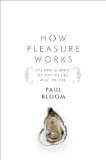
How Pleasure Works

Psychological essentialism has been getting some attention lately as a result of Paul Bloom’s recent book How Pleasure Works. See, for example, Jonah Lehrer on essentialism in ‘How Pleasure Works’ at the Frontal Cortex, or the discussion between Bloom and Peter D. Kramer at Slate.
(How Pleasure Works at amazon.co.uk)

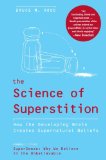
When I saw Lehrer’s review I happened to be reading another book that draws on essentialism, this time to explain irrational beliefs: SuperSense: Why We Believe in the Unbelievable by Bruce M. Hood. (Supersense at amazon.co.uk) A paperback edition is to be issued later this month with the title The Science of Superstition: How the Developing Brain Creates Supernatural Beliefs.

The Science of Superstition

Here is an excerpt from SuperSense (p246-247):

Throughout this book I have been arguing that beliefs in the supernatural are a consequence of reasoning processes about natural properties and events in our world. This includes a mind design for detecting patterns and inferring structures where there may be none. Our naive theories form the basis of our supernatural beliefs, and culture and experience simply work to reinforce what we intuitively hold to be correct. This is why the sense of being stared at is such an interesting model for the origin and development of supernaturalism. Children are not told that humans can detect unseen gaze. In fact, it’s not something they readily report that they can do. Nevertheless, young children and many adults think that vision works by something leaving the eyes. So when they experience episodes of seeming to detect unseen gaze, this belief simply emerges naturally as an unquestioned ability. It is not even considered supernatural by most people. Children were not told to think this. This model shows how the combination of intuitive theories, pattern detecting, and eventual support from culture produces a universal supernatural belief.
I think that something very similar may be going on for other supernatural beliefs. The notion of psychological contamination we examined in earlier chapters emerges naturally out of psychological essentialism, which has its roots in our naive biological reasoning. Again, this way of thinking is not something that we teach our children. Intuitive dualism and the idea that the mind can exist independently of the body is another. All of these ways of thinking are both naturally emerging and yet supernatural in their explanations of the world.
… We may put away childish things, as Corinthians suggests, but we never entirely get rid of them. Education can give us a new understanding and even progress to a scientific viewpoint, but development, distress, damage, and disease show that we keep many skeletons in our mental closet. If those misconceptions involve our understanding of the properties and limits of the material world, the living world, and the mental world, there is a good chance that they can form the basis of adult supernatural beliefs.

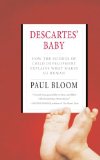
Bloom’s earlier book is Descartes’ Baby: How the Science of Child Development Explains What Makes Us Human, originally published by Basic Books in 2004. (Descartes’ Baby at amazon.co.uk)

Descartes' Baby

Product description from the publisher:

All humans see the world in two fundamentally different ways: even babies have a rich understanding of both the physical and social worlds. They expect objects to obey principles of physics, and they’re startled when things disappear or defy gravity. Yet they can also read emotions and respond with anger, sympathy, and joy.

In Descartes’ Baby, Bloom draws on a wealth of scientific discoveries to show how these two ways of knowing give rise to such uniquely human traits as humor, disgust, religion, art, and morality. How our dualist perspective, developed throughout our lives, profoundly influences our thoughts, feelings, and actions is the subject of this richly rewarding book.

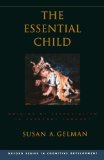
Another book on psychological essentialism is The Essential Child: Origins of Essentialism in Everyday Thought (Oxford in Cognitive Development) by Susan Gelman (Oxford University Press, 2005). (The Essential Child at amazon.co.uk)

Essential Child

Product description from the publisher:

Essentialism is the idea that certain categories, such as “dog,” “man,” or “intelligence,” have an underlying reality or true nature that gives objects their identity. Where does this idea come from? In this book, Susan Gelman argues that essentialism is an early cognitive bias. Young children’s concepts reflect a deep commitment to essentialism, and this commitment leads children to look beyond the obvious in many converging ways: when learning words, generalizing knowledge to new category members, reasoning about the insides of things, contemplating the role of nature versus nurture, and constructing causal explanations. Gelman argues against the standard view of children as concrete or focused on the obvious, instead claiming that children have an early, powerful tendency to search for hidden, non-obvious features of things. She also attacks claims that children build up their knowledge of the world based on simple, associative learning strategies, arguing that children’s concepts are embedded in rich folk theories. Parents don’t explicitly teach children to essentialize; instead, during the preschool years, children spontaneously construct concepts and beliefs that reflect an essentialist bias. Essentialist accounts have been offered, in one form or another, for thousands of years, extending back at least to Aristotle and Plato. Yet this book is the first to address the issues surrounding essentialism from a psychological perspective. Gelman synthesizes over 15 years of empirical research on essentialism into a unified framework and explores the broader lessons that the research imparts concerning, among other things, human concepts, children’s thinking, and the ways in which language influences thought. This volume will appeal to developmental, cognitive, and social psychologists, as well as to scholars in cognitive science and philosophy.

Comments (0) - cognitive science,mind,psychology

new book – ‘The Twenty-Four Hour Mind’

June 17, 2010

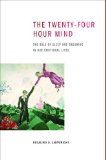
The Twenty-Four Hour Mind

The Twenty-four Hour Mind: The Role of Sleep and Dreaming in Our Emotional Lives by Rosalind Cartwright (Oxford University Press, 2010)

(link for UK)

Product description from the publisher:

In January of 1999, an otherwise nonviolent man under great stress at work brutally murdered his wife in their backyard. He then went back to bed, awakening only when police entered his home. He claimed to have no memory of the event because, while his body was awake at the time, his mind was not. He had been sleepwalking.

In The Twenty-four Hour Mind, sleep scientist Rosalind Cartwright brings together decades of research into the bizarre sleep disorders known as parasomnias to propose a new theory of how the human mind works consistently throughout waking and sleeping hours. Thanks to increasingly sophisticated EEG and brain imaging technologies, we now know that our minds do not simply “turn off” during sleep. Rather, they continue to be active, and research has indicated that one of the primary purposes of sleep is to aid in regulating emotions and processing experiences that occur during preceding waking hours. As such, when sleep is neurologically or genetically impaired or just too short, the processes that good sleep facilitates–those that usually have a positive effect on our mood and performance–can short circuit, with negative results that occasionally reach tragic proportions. Examining the interactions between conscious and unconscious forms of thinking as they proceed throughout the cycles of sleeping, dreaming, and waking, Cartwright demystifies the inner workings of the human mind that trigger sleep problems, how researchers are working to control them, and how they can apply what they learn to further our understanding of the brain. Along the way, she provides a lively account of the history of sleep research and the birth of sleep medicine that will initiate readers into this fascinating field of inquiry and the far-reaching implications it will have on the future of neuroscience. The Twenty-four Hour Mind offers a unique look at a relatively new area of study that will be of interest to those with and without sleep problems, as well as anyone captivated by the mysteries of the brain–and what sleep continues to teach us about the waking mind.

See also: Author’s website

Comments (0) - cognitive science,mind,new books,psychology

evolutionary psychology books, 2008-2010

June 12, 2010

Here is a list of books on evolutionary psychology published 2008-2010 (had some catching up to do), based on a search of WorldCat.

2010
Adaptive Origins: Evolution and Human Development by Peter LaFreniere (Hove: Psychology Press) forthcoming Aug 2010. (amazon.co.uk – Sept. 2010)

The Evolution of Personality and Individual Differences by David M Buss, Patricia H Hawley (New York: Oxford University Press) forthcoming Nov 2010. (amazon.co.uk – Dec. 2010)

Evolutionary Psychology by Viren Swami (Oxford: Wiley-Blackwell) forthcoming July 2010 (amazon.co.uk – June 2010)

Evolutionary Psychology (The International Library of Essays on Evolutionary Thought), ed. by Stefan Paul Linquist; Neil Levy; (Farnham: Ashgate) forthcoming Aug 2010. (amazon.co.uk – July 2010)

Evolutionary Psychology and Information Systems Research: A New Approach to Studying the Effects of Modern Technologies on Human Behavior (Integrated Series in Information Systems) ed. by Ned F Kock (New York; London: Springer) forthcoming July 2010. (amazon.co.uk – Aug 2010)

Getting Darwin Wrong: Why evolutionary psychology won’t work (Societas) by Brendan Wallace (Exeter: Imprint Academic) forthcoming Aug 2010. (amazon.co.uk – Aug 2010)

Human Morality and Sociality: Evolutionary and Comparative Perspectives ed. by Henrik Høgh-Olesen (Basingstoke; New York: Palgrave Macmillan, 2010) (amazon.co.uk)

In the Name of God: The Evolutionary Origins of Religious Ethics and Violence (Blackwell Public Philosophy Series) by John Teehan (Malden, MA: Wiley-Blackwell, 2010). (amazon.co.uk)

Selected: Why Some People Lead, Why Others Follow, and Why It Matters by Anjana Ahuja; Mark Van Vugt (London: Profile, 2010). forthcoming Jan 2011 (amazon.co.uk – Aug 2010)

Social Brain, Distributed Mind (Proceedings of the British Academy) by R I M Dunbar; Clive Gamble; John Gowlett (Oxford: Oxford University Press, 2010). (amazon.co.uk)

The Solitary Self: Darwin and the Selfish Gene (Heretics) by Mary Midgley (Montreal: McGill-Queen’s University Press) forthcoming Sept 2010. (amazon.co.uk – Acumen, Sept 2010)
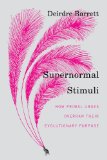
Supernormal Stimuli

Supernormal Stimuli: How Primal Urges Overran Their Evolutionary Purpose by Deirdre Barrett (New York: W.W. Norton & Co., 2010). (amazon.co.uk)

2009
The Art Instinct: Beauty, Pleasure, and Human Evolution by Denis Dutton (Oxford: Oxford University Press, 2009). (amazon.co.uk)

The Biological Evolution of Religious Mind and Behavior (The Frontiers Collection) ed. by Eckart Voland; Wulf Schiefenhövel; (Dordrecht; New York: Springer, 2009). (amazon.co.uk)

Essential Evolutionary Psychology by Simon Hampton (Los Angeles; London: SAGE, 2009, 2010). (amazon.co.uk)

Evolution and Genetics for Psychology by Daniel Nettle (Oxford; New York: Oxford University Press, 2009). (amazon.co.uk)

Evolution, Culture, and the Human Mind ed. by Mark Schaller; et al (Hove: Psychology, 2009). (amazon.co.uk)

The Evolution of Obesity by Michael L Power; Jay Schulkin (Baltimore: Johns Hopkins University Press, 2009). (amazon.co.uk)

Evolutionary Neuroscience ed. by Jon H Kaas (Oxford ; San Diego: Academic Press ; Amsterdam; Boston: Elsevier, 2009). (amazon.co.uk)

The Evolutionary Origin Of Human Behavior: How Play And Evolution Carried Us From Our Reptile Predecessors To The Storytellers We Are by Keith C M Glegg (Bloomington, IN: iUniverse, Inc., 2009).

Foundations in Evolutionary Cognitive Neuroscience ed. by Steven M Platek; Todd K Shackelford (Cambridge, UK ; New York: Cambridge University Press, 2009). (amazon.co.uk)

The Moral Brain: Essays on the Evolutionary and Neuroscientific Aspects of Morality ed. by Jan Verplaetse; et al (Dordrecht; New York: Springer, 2009). (amazon.co.uk)

Philosophy after Darwin: Classic and Contemporary Readings by Michael Ruse (Princeton : Princeton University Press, 2009). (amazon.co.uk)

The Rise of Homo sapiens: The Evolution of Modern Thinking by Frederick L Coolidge; Thomas Grant Wynn (Chichester, U.K. ; Malden, MA: Wiley-Blackwell, 2009). (amazon.co.uk)

The Sapient Mind: Archaeology meets neuroscience ed. by Colin Renfrew; Christopher D Frith; Lambros Malafouris (Oxford: Oxford University Press, 2009). (amazon.co.uk)

2008

Evolution and Human Behavior: Darwinian Perspectives on Human Nature, 2nd Edition (Bradford Books) by John Cartwright (Cambridge, Mass.: MIT Press, 2008). (amazon.co.uk)

Evolutionary Forensic Psychology ed. by Joshua Duntley; Todd K Shackelford (Oxford; New York: Oxford University Press, 2008). (amazon.co.uk)
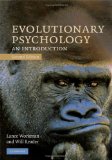
Evolutionary Psychology

Evolutionary Psychology: An Introduction, 2nd ed. by Lance Workman; Will Reader (Cambridge; New York: Cambridge University Press, 2008). (amazon.co.uk)

An Evolutionary Psychology of Leader-Follower Relations by Patrick McNamara; David Trumbull (New York: Nova Science Pub Inc 2008) (amazon.co.uk)

Foundations of Evolutionary Psychology, 2nd ed., ed. by Charles Crawford; Dennis Krebs (New York: Psychology Press, 2008). (amazon.co.uk)

Healing The Unhappy Caveman: Why The Human Mind Was Not Designed For Happiness And What YOU Can Do About It by Chris Wilson (Atlanta: Libertas Press, 2008).

How Sadness Survived: The Evolutionary Basis of Depression by Paul Keedwell (Oxford; New York: Radcliffe Pub., 2008). (amazon.co.uk)

Inhuman Thoughts: Philosophical Explorations of Posthumanity by Asher Seidel (Lanham, MD: Lexington Books, 2008). (amazon.co.uk)

Origins of the Social Mind: Evolutionary and Developmental Views ed. by Shoji Itakura; Kazuo Fujita (Tokyo: Springer, 2008). (amazon.co.uk)

Textbook of Evolutionary Psychiatry: The origins of psychopathology by Martin Brüne (Oxford; New York: Oxford University Press, 2008). (amazon.co.uk)

What is Special About the Human Brain? (Oxford Psychology) by Richard Passingham; (Oxford: Oxford University Press, 2008). (amazon.co.uk)
Comments (1) - psychology

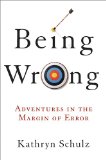
new book – ‘Being Wrong: Adventures in the Margin of Error’

June 8, 2010

Being Wrong
A new book out today, Being Wrong: Adventures in the Margin of Error by journalist Kathryn Schulz (published by Ecco) received a starred review from Publisher’s Weekly. (link for UK)

Product description from the publisher:

To err is human. Yet most of us go through life assuming (and sometimes insisting) that we are right about nearly everything, from the origins of the universe to how to load the dishwasher. If being wrong is so natural, why are we all so bad at imagining that our beliefs could be mistaken, and why do we react to our errors with surprise, denial, defensiveness, and shame?

In Being Wrong, journalist Kathryn Schulz explores why we find it so gratifying to be right and so maddening to be mistaken, and how this attitude toward error corrodes relationships—whether between family members, colleagues, neighbors, or nations. Along the way, she takes us on a fascinating tour of human fallibility, from wrongful convictions to no-fault divorce; medical mistakes to misadventures at sea; failed prophecies to false memories; “I told you so!” to “Mistakes were made.” Drawing on thinkers as varied as Augustine, Darwin, Freud, Gertrude Stein, Alan Greenspan, and Groucho Marx, she proposes a new way of looking at wrongness. In this view, error is both a given and a gift—one that can transform our worldviews, our relationships, and, most profoundly, ourselves.

Being Wrong (UK edition)

In the end, Being Wrong is not just an account of human error but a tribute to human creativity—the way we generate and revise our beliefs about ourselves and the world. At a moment when economic, political, and religious dogmatism increasingly divide us, Schulz explores with uncommon humor and eloquence the seduction of certainty and the crises occasioned by error. A brilliant debut from a new voice in nonfiction, this book calls on us to ask one of life’s most challenging questions: what if I’m wrong?

See also: Website for the book, NPR interview

Comments (0) - new books,psychology