[ View menu ]

Archive for 'psychology'

new book – ‘Attention Is Cognitive Unison’

January 8, 2011
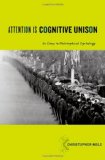
Attention Is Cognitive Unison

Something I haven’t experienced in awhile…

Attention Is Cognitive Unison: An Essay in Philosophical Psychology (Philosophy of Mind Series) by Christopher Mole (Oxford University Press, USA, 2011)

(kindle),
(amazon.co.uk)

Product description from the publisher:

Some psychological phenomena can be explained by identifying and describing the processes that constitute them. Others cannot be explained in that way. In Attention is Cognitive Unison Christopher Mole gives a precise account of the metaphysical difference that divides these two categories and shows that, when current psychologists attempt to explain attention, they assign it to the wrong one.

Having rejected the metaphysical approach taken by our existing theories of attention Mole then develops a new theory. According to this theory the question of whether someone is paying attention is not settled by the facts about which processes are taking place. It is settled by the facts about whether the processes that serve that person’s task– whichever processes those happen to be–are processes that operate in unison. This theory gives us a new account of the problems that have dogged debates about the psychology of attention since the middle of the twentieth century. It also gives us a new way to understand the explanatory importance of cognitive psychology’s empirical findings. The book as whole shows that metaphysical questions have a foundational role to play in the explanatory project of cognitive psychology.

This volume is of interest to anyone engaged in current debates in the philosophy of mind and perception, and in cognitive science generally.

See also: Author’s homepage

Preview via Google Books:

Comments (0) - cognitive science,philosophy of mind,psychology
new – ‘Book of Symbols: Reflections on Archetypal Images’

November 27, 2010

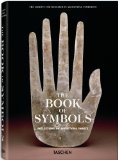
The Book of Symbols

This would make a wonderful gift for anyone interested in Jungian psychology, dreams, or symbolism:

The Book Of Symbols: Reflections On Archetypal Images by the Archive for Research in Archetypal Symbolism (Tarcher, 2010)

(link for amazon.co.uk)

Product description from the publisher:

Reflections on symbols and symbolic imagery
The Book of Symbols combines original and incisive essays about particular symbols with representative images from all parts of the world and all eras of history.The Book of Symbols combines original and incisive essays about particular symbols with representative images from all parts of the world and all eras of history. The highly readable texts and almost 800 beautiful full-color images come together in a unique way to convey hidden dimensions of meaning. Each of the c. 350 essays examines a given symbol’s psychic background, and how it evokes psychic processes and dynamics. Etymological roots, the play of opposites, paradox and shadow, the ways in which diverse cultures have engaged a symbolic image—all these factors are taken into consideration.

Authored by writers from the fields of psychology, religion, art, literature and comparative myth, the essays flow into each other in ways that mirror the psyche’s unexpected convergences. There are no pat definitions of the kind that tend to collapse a symbol; a still vital symbol remains partially unknown, compels our attention and unfolds in new meanings and manifestations over time. Rather than merely categorize, The Book of Symbols illuminates how to move from the visual experience of a symbolic image in art, religion, life, or dreams, to directly experiencing its personal and psychological resonance.

The Book of Symbols sets new standards for thoughtful exploration of symbols and their meanings, and will appeal to a wide range of readers: artists, designers, dreamers and dream interpreters, psychotherapists, self-helpers, gamers, comic book readers, religious and spiritual searchers, writers, students, and anyone curious about the power of archetypal images.

See also: A nice 12-page pdf preview is available through the ARAS website. (Click on “See More” by the book cover.)

Better yet, at the publisher’s website, you can “leaf through” the first 100 pages!

Comments (0) - culture,new books,psychology

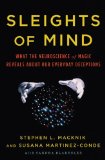
coming soon – ‘Sleights of Mind: What the Neuroscience of Magic Reveals about Our Everyday Deceptions’

November 4, 2010

Sleights of Mind

This book is featured in the current issue of Scientific American Mind and due out next Tues, Nov. 9:
Sleights of Mind: What the Neuroscience of Magic Reveals about Our Everyday Deceptions by Stephen L. Macknik, Susana Martinez-Conde and Sandra Blakeslee (Henry Holt & Co, 2010)

(link for amazon.co.uk)

Product description from the publisher:

“This book doesn’t just promise to change the way you think about sleight of hand and David Copperfield—it will also change the way you think about the mind.” —Jonah Lehrer, author of How We Decide and Proust Was A Neuroscientist

Stephen Macknik and Susana Martinez-Conde, the founders of the exciting new discipline of neuromagic, have convinced some of the world’s greatest magicians to allow scientists to study their techniques for tricking the brain. This book is the result of the authors’ yearlong, world-wide exploration of magic and how its principles apply to our behavior. Magic tricks fool us because humans have hardwired processes of attention and awareness that are hackable—a good magician uses your mind’s own intrinsic properties against you in a form of mental jujitsu.

Now magic can reveal how our brains work in everyday situations. For instance, if you’ve ever bought an expensive item you’d sworn you’d never buy, the salesperson was probably a master at creating the “illusion of choice,” a core technique of magic. The implications of neuromagic go beyond illuminating our behavior; early research points to new approaches for everything from the diagnosis of autism to marketing techniques and education. Sleights of Mind makes neuroscience fun and accessible by unveiling the key connections between magic and the mind.

See also: Book website

Comments (0) - cognitive science,mind,new books,psychology

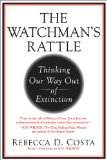
new book – ‘The Watchman’s Rattle: Thinking Our Way Out of Extinction’

October 11, 2010

The Watchman's Rattle

The Watchman’s Rattle: Thinking Our Way Out of Extinction by Rebecca Costa (Vanguard Press, 2010).

(link for amazon.co.uk)

Product description from the publisher:

Why can’t we solve our problems anymore? Why do threats such as the Gulf oil spill, worldwide recession, terrorism, and global warming suddenly seem unstoppable? Are there limits to the kinds of problems humans can solve?

Rebecca Costa confronts—and offers a solution to—these questions in her highly anticipated and game-changing book, The Watchman’s Rattle.

Costa pulls headlines from today’s news to demonstrate how accelerating complexity quickly outpaces the rate at which the human brain can develop new capabilities. With compelling evidence based on research into the rise and fall of the Mayan, Khmer, and Roman empires, Costa shows how the tendency to find a quick fix to problems by focusing on symptoms—instead of searching for permanent solutions—leads to frightening long-term consequences: society’s ability to solve its most challenging, intractable problems becomes gridlocked, progress slows, and collapse ensues.

A provocative new voice in the tradition of thought leaders Thomas Friedman, Jared Diamond, and Malcolm Gladwell, Costa reveals how we can reverse the downward spiral. Part history, part social science, part biology, The Watchman’s Rattle is sure to provoke, engage, and incite change.

See also: Author’s website

Comments (1) - culture,new books,psychology

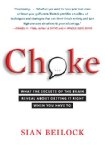
new book – ‘Choke: What the Secrets of the Brain Reveal About Getting It Right When You Have To’

September 17, 2010

Choke

Choke: What the Secrets of the Brain Reveal About Getting It Right When You Have To by Sian Beilock (Free Press, 2010)

(link for amazon.co.uk)

Product description from the publisher:

Why do the smartest students often do poorly on standardized tests? Why did you tank that interview or miss that golf swing when you should have had it in the bag? Why do you mess up when it matters the most—and how can you perform your best instead? It happens to all of us. You’ve prepared for days, weeks, even years for the big day when you will finally show your stuff—in academics, in your career, in sports—but when the big moment arrives, nothing seems to work. You hit the wrong note, drop the ball, get stumped by a simple question. In other words, you choke. It’s not fun to think about, but now there’s good news: This doesn’t have to happen. Dr. Sian Beilock, an expert on performance and brain science, reveals in Choke the astonishing new science of why we all too often blunder when the stakes are high. What happens in our brain and body when we experience the dreaded performance anxiety? And what are we doing differently when everything magically “clicks” into place and the perfect golf swing, tricky test problem, or high-pressure business pitch becomes easy? In an energetic tour of the latest brain science, with surprising insights on every page, Beilock explains the inescapable links between body and mind; reveals the surprising similarities among the ways performers, students, athletes, and business people choke; and shows how to succeed brilliantly when it matters most. In lively prose and accessibly rendered science, Beilock examines how attention and working memory guide human performance, how experience and practice and brain development interact to create our abilities, and how stress affects all these factors. She sheds new light on counter-intuitive realities, like why the highest performing people are most susceptible to choking under pressure, why we may learn foreign languages best when we’re not paying attention, why early childhood athletic training can backfire, and how our emotions can make us both smarter and dumber. All these fascinating findings about academic, athletic, and creative intelligence come together in Beilock’s new ideas about performance under pressure—and her secrets to never choking again. Whether you’re at the Olympics, in the boardroom, or taking the SAT, Beilock’s clear, prescriptive guidance shows how to remain cool under pressure—the key to performing well when everything’s on the line.

See also: Book website

Comments (0) - new books,psychology