[ View menu ]

Archive for 'psychology'

new book – ‘Sex, Murder, and the Meaning of Life’

April 13, 2011

Sex, Murder and the Meaning of Life

Sex, Murder, and the Meaning of Life: A Psychologist Investigates How Evolution, Cognition, and Complexity are Revolutionizing our View of Human Nature by Douglas T. Kenrick (Basic Books, 2011)

Product description from the publisher:

What do sex and murder have to do with the meaning of life? Everything.

In Sex, Murder, and the Meaning of Life, social psychologist Douglas Kenrick exposes the selfish animalistic underside of human nature, and shows how it is intimately connected to our greatest and most selfless achievements. Masterfully integrating cognitive science, evolutionary psychology, and complexity theory, this intriguing book paints a comprehensive picture of the principles that govern our lives. As Kenrick divulges, beneath our civilized veneer, human beings are a lot like howling hyenas and barking baboons, with heads full of homicidal tendencies and sexual fantasies. But, in his view, many ingrained, apparently irrational behaviors—such as inclinations to one-night stands, racial prejudices, and conspicuous consumption—ultimately manifest what he calls “Deep Rationality.”

Although our heads are full of simple selfish biases that evolved to help our ancestors survive, modern human beings are anything but simple and selfish cavemen. Kenrick argues that simple and selfish mental mechanisms we inherited from our ancestors ultimately give rise to the multifaceted social lives that we humans lead today, and to the most positive features of humanity, including generosity, artistic creativity, love, and familial bonds. And out of those simple mechanisms emerge all the complexities of society, including international conflicts and global economic markets. By exploring the nuance of social psychology and the surprising results of his own research, Kenrick offers a detailed picture of what makes us caring, creative, and complex—that is, fully human.

Illuminated with stories from Kenrick’s own colorful experiences — from his criminally inclined shantytown Irish relatives, his own multiple high school expulsions, broken marriages, and homicidal fantasies, to his eventual success as an evolutionary psychologist and loving father of two boys separated by 26 years — this book is an exploration of our mental biases and failures, and our mind’s great successes. Idiosyncratic, controversial, and fascinating, Sex, Murder, and the Meaning of Life uncovers the pitfalls and promise of our biological inheritance.

See also: Author’s blog at Psychology Today

Comments (0) - cognitive science,culture,new books,psychology
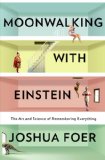
new book – ‘Moonwalking with Einstein: The Art and Science of Remembering Everything’ by Joshua Foer

March 3, 2011

Moonwalking with Einstein

Moonwalking with Einstein: The Art and Science of Remembering Everything by Joshua Foer (Penguin, 2011)

(Kindle edition), (amazon.co.uk)

Product description from the publisher:

Foer’s unlikely journey from chronically forgetful science journalist to U.S. Memory Champion frames a revelatory exploration of the vast, hidden impact of memory on every aspect of our lives.

On average, people squander forty days annually compensating for things they’ve forgotten. Joshua Foer used to be one of those people. But after a year of memory training, he found himself in the finals of the U.S. Memory Championship. Even more important, Foer found a vital truth we too often forget: In every way that matters, we are the sum of our memories.

Moonwalking with Einstein draws on cutting-edge research, a surprising cultural history of memory, and venerable tricks of the mentalist’s trade to transform our understanding of human remembering. Under the tutelage of top “mental athletes,” he learns ancient techniques once employed by Cicero to memorize his speeches and by Medieval scholars to memorize entire books. Using methods that have been largely forgotten, Foer discovers that we can all dramatically improve our memories.

Immersing himself obsessively in a quirky subculture of competitive memorizers, Foer learns to apply techniques that call on imagination as much as determination-showing that memorization can be anything but rote. From the PAO system, which converts numbers into lurid images, to the memory palace, in which memories are stored in the rooms of imaginary structures, Foer’s experience shows that the World Memory Championships are less a test of memory than of perseverance and creativity.

Foer takes his inquiry well beyond the arena of mental athletes-across the country and deep into his own mind. In San Diego, he meets an affable old man with one of the most severe case of amnesia on record, where he learns that memory is at once more elusive and more reliable than we might think. In Salt Lake City, he swaps secrets with a savant who claims to have memorized more than nine thousand books. At a high school in the South Bronx, he finds a history teacher using twenty- five-hundred-year-old memory techniques to give his students an edge in the state Regents exam.

At a time when electronic devices have all but rendered our individual memories obsolete, Foer’s bid to resurrect the forgotten art of remembering becomes an urgent quest. Moonwalking with Einstein brings Joshua Foer to the apex of the U.S. Memory Championship and readers to a profound appreciation of a gift we all possess but that too often slips our minds.

Comments (0) - cognitive science,new books,psychology

new book – ‘World Wide Mind: The Coming Integration of Humanity, Machines, and the Internet’

February 20, 2011

World Wide Mind

World Wide Mind: The Coming Integration of Humanity, Machines, and the Internet by Michael Chorost (Free Press, 2011)

(Kindle edition) (amazon.co.uk)

Product description from the publisher:

What if digital communication felt as real as being touched?

This question led Michael Chorost to explore profound new ideas triggered by lab research around the world, and the result is the book you now hold. Marvelous and momentous, World Wide Mind takes mind-to-mind communication out of the realm of science fiction and reveals how we are on the verge of a radical new understanding of human interaction.

Chorost himself has computers in his head that enable him to hear: two cochlear implants. Drawing on that experience, he proposes that our Paleolithic bodies and our Pentium chips could be physically merged, and he explores the technologies that could do it.

He visits engineers building wearable computers that allow people to be online every waking moment, and scientists working on implanted chips that would let paralysis victims communicate. Entirely new neural interfaces are being developed that let computers read and alter neural activity in unprecedented detail.

But we all know how addictive the Internet is. Chorost explains the addiction: he details the biochemistry of what makes you hunger to touch your iPhone and check your email. He proposes how we could design a mind-to-mind technology that would let us reconnect with our bodies and enhance our relationships. With such technologies, we could achieve a collective consciousness – a World Wide Mind. And it would be humankind’s next evolutionary step.

With daring and sensitivity, Chorost writes about how he learned how to enhance his relationships by attending workshops teaching the power of touch. He learned how to bring technology and communication together to find true love, and his story shows how we can master technology to make ourselves more human rather than less.

World Wide Mind offers a new understanding of how we communicate, what we need to connect fully with one another, and how our addiction to email and texting can be countered with technologies that put us – literally – in each other’s minds.

See also: Book excerpt in The New York Times

Comments (1) - culture,mind,new books,psychology

new book – ‘The Belief Instinct’ by Jesse Bering

January 17, 2011

The Belief Instinct

The Belief Instinct: The Psychology of Souls, Destiny, and the Meaning of Life by Jesse Bering (W.W. Norton, 2011)

(kindle)

(UK ed. ‘The God Instinct’ at amazon.co.uk)

Product description from the publisher:

A surprising new take on why we believe in God—and how this belief ensured the survival of the human species.

God is not merely an idea to be entertained or discarded based on the evidence. Nor is God a cultural invention, an existential Band-Aid, or an opiate of the masses. Instead, Jesse Bering argues, belief in God evolved in the human species as an “adaptive illusion.” Drawing on groundbreaking research in cognitive science, The Belief Instinct unravels the evolutionary mystery of why we grapple for meaning, purpose, and destiny in our everyday lives. Bering argues that the strangely deep-rooted sense that some intentional agent created us as individuals, wants us to behave in particular ways, observes our otherwise private actions, and intends to meet us after we die would also have been felt by our ancestors, leading them to behave in ways that favored their reputations—and thus saved their genes. But in today’s world, these psychological illusions have outlasted their evolutionary purpose, and Bering draws our attention to a whole new challenge: escaping them.

See also: Author’s website

Comments (0) - culture,new books,psychology

new book – ‘Why Everyone (Else) Is a Hypocrite: Evolution and the Modular Mind’

January 16, 2011

Why Everyone (Else) Is a Hypocrite

Why Everyone (Else) Is a Hypocrite: Evolution and the Modular Mind by Robert Kurzban (Princeton University Press, 2011)
(kindle)
(at amazon.co.uk)

We’re all hypocrites. Why? Hypocrisy is the natural state of the human mind.

Robert Kurzban shows us that the key to understanding our behavioral inconsistencies lies in understanding the mind’s design. The human mind consists of many specialized units designed by the process of evolution by natural selection. While these modules sometimes work together seamlessly, they don’t always, resulting in impossibly contradictory beliefs, vacillations between patience and impulsiveness, violations of our supposed moral principles, and overinflated views of ourselves.

This modular, evolutionary psychological view of the mind undermines deeply held intuitions about ourselves, as well as a range of scientific theories that require a “self” with consistent beliefs and preferences. Modularity suggests that there is no “I.” Instead, each of us is a contentious “we”–a collection of discrete but interacting systems whose constant conflicts shape our interactions with one another and our experience of the world.

In clear language, full of wit and rich in examples, Kurzban explains the roots and implications of our inconsistent minds, and why it is perfectly natural to believe that everyone else is a hypocrite.

See also: Author’s webpage, “Modularity of mind” at Wikipedia

Comments (0) - mind,new books,psychology