[ View menu ]

Archive for 'psychology'

new book – ‘The Bodhisattva’s Brain: Buddhism Naturalized’ by Owen Flanagan

August 18, 2011
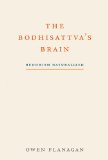
The Bodhisattva's Brain

The Bodhisattva’s Brain: Buddhism Naturalized by Owen Flanagan (MIT Press)

(amazon.co.uk – 21 Oct)

Product description from the publisher:

If we are material beings living in a material world–and all the scientific evidence suggests that we are–then we must find existential meaning, if there is such a thing, in this physical world. We must cast our lot with the natural rather than the supernatural. Many Westerners with spiritual (but not religious) inclinations are attracted to Buddhism–almost as a kind of moral-mental hygiene. But, as Owen Flanagan points out in The Bodhisattva’s Brain, Buddhism is hardly naturalistic. Atheistic when it comes to a creator god, Buddhism is otherwise opulently polytheistic, with spirits, protector deities, ghosts, and evil spirits. Its beliefs include karma, rebirth, nirvana, and nonphysical states of mind. What is a nonreligious, materially grounded spiritual seeker to do? In The Bodhisattva’s Brain, Flanagan argues that it is possible to subtract the “hocus pocus” from Buddhism and discover a rich, empirically responsible philosophy that could point us to one path of human flourishing. “Buddhism naturalized,” as Flanagan constructs it, contains a metaphysics, epistemology, and ethics; it is a fully naturalistic and comprehensive philosophy, compatible with the rest of knowledge. Some claim that neuroscience is in the process of validating Buddhism empirically, but Flanagan’s naturalized Buddhism does not reduce itself to a brain scan showing happiness patterns. Buddhism naturalized offers instead a tool for achieving happiness and human flourishing–a way of conceiving of the human predicament, of thinking about meaning for finite material beings living in a material world.

See also: Author’s website, “Bodhisattva’s Brain” podcast
Comments (0) - happiness,new books,psychology

new book – ‘A First-Rate Madness: Uncovering the Links Between Leadership and Mental Illness’

August 4, 2011

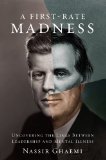
A First-Rate Madness

A First-Rate Madness: Uncovering the Links Between Leadership and Mental Illness by Nassir Ghaemi (Penguin, 2011)

(kindle ed.), (amazon.co.uk – 4 Aug)

Product description from the publisher:

An investigation into the surprisingly deep correlation between mental illness and successful leadership, as seen through some of history’s greatest politicians, generals, and businesspeople.

In A First-Rate Madness, Nassir Ghaemi, who runs the Mood Disorders Program at Tufts Medical Center, draws from the careers and personal plights of such notable leaders as Lincoln, Churchill, Gandhi, Martin Luther King, Jr., JFK, and others from the past two centuries to build an argument at once controversial and compelling: the very qualities that mark those with mood disorders- realism, empathy, resilience, and creativity-also make for the best leaders in times of crisis. By combining astute analysis of the historical evidence with the latest psychiatric research, Ghaemi demonstrates how these qualities have produced brilliant leadership under the toughest circumstances.

Take realism, for instance: study after study has shown that those suffering depression are better than “normal” people at assessing current threats and predicting future outcomes. Looking at Lincoln and Churchill among others, Ghaemi shows how depressive realism helped these men tackle challenges both personal and national. Or consider creativity, a quality psychiatrists have studied extensively in relation to bipolar disorder. A First-Rate Madness shows how mania inspired General Sherman and Ted Turner to design and execute their most creative-and successful-strategies.

Ghaemi’s thesis is both robust and expansive; he even explains why eminently sane men like Neville Chamberlain and George W. Bush made such poor leaders. Though sane people are better shepherds in good times, sanity can be a severe liability in moments of crisis. A lifetime without the cyclical torment of mood disorders, Ghaemi explains, can leave one ill equipped to endure dire straits. He also clarifies which kinds of insanity-like psychosis-make for despotism and ineptitude, sometimes on a grand scale.

Ghaemi’s bold, authoritative analysis offers powerful new tools for determining who should lead us. But perhaps most profoundly, he encourages us to rethink our view of mental illness as a purely negative phenomenon. As A First-Rate Madness makes clear, the most common types of insanity can confer vital benefits on individuals and society at large-however high the price for those who endure these illnesses.

See also: Author’s website

Comments (0) - new books,psychology

new book – ‘Lip Service: Smiles in Life, Death, Trust, Lies, Work, Memory, Sex, and Politics’

August 3, 2011

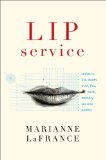
Lip Service

Lip Service: Smiles in Life, Death, Trust, Lies, Work, Memory, Sex, and Politics by Marianne LaFrance (W.W. Norton & Co., 2011)

(kindle ed.), (amazon.co.uk)

Product description from the publisher:

An expert in nonverbal communication tackles the science of smiles and their extraordinary social impact.
When someone smiles, the effects are often positive: a glum mood lifts; an apology is accepted; a deal is struck; a flirtation begins. But not all smiles are equally benign: a rival grins to get under your skin; a bully’s smirk unsettles his mark. Who flashes more fake smiles, popular kids or unpopular kids? Is it good or bad when a bereaved person smiles? Much more than cheerful expressions, smiles are social acts with powerful consequences. Drawing on her research conducted at Yale University and Boston College as well as the latest studies in psychology, medicine, anthropology, biology, and computer science, Marianne LaFrance explores the compelling science behind the smile, revealing that this familiar expression is not as simple as it first may seem. Her groundbreaking work shows how the smile says much more than we realize—or care to admit. To read this book is to learn just how much the smile influences our lives and our relationships. 38 black-and-white illustrations

See also: Author’s website

Comments (0) - new books,psychology

$1.99 kindle book – ‘Why We Read Fiction: Theory of Mind and the Novel’ by Lisa Zunshine

July 27, 2011

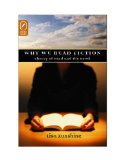
Why We Read Fiction

Why We Read Fiction: Theory of Mind and the Novel by Lisa Zunshine (2006) doesn’t appear to be part of the soon-ending “Big Deal” kindle book sale, but currently has a digital list price of $1.99. (Compare to Amazon’s price of $20.67 for the paperback edition.)

(amazon.co.uk – £1.43 on kindle)

Product description from the publisher:

Why We Read Fiction offers a lucid overview of the most exciting area of research in contemporary cognitive psychology known as “Theory of Mind” and discusses its implications for literary studies. It covers a broad range of fictional narratives, from Richardson’s Clarissa, Dostoyevski’s Crime and Punishment, and Austen’s Pride and Prejudice to Woolf’s Mrs. Dalloway, Nabokov’s Lolita, and Hammett’s The Maltese Falcon. Zunshine’s surprising new interpretations of well-known literary texts and popular cultural representations constantly prod her readers to rethink their own interest in fictional narrative. Written for a general audience, this study provides a jargon-free introduction to the rapidly growing interdisciplinary field known as cognitive approaches to literature and culture.

See also: Author’s homepage

Comments (0) - fiction,psychology

new book – ‘Such Stuff as Dreams: The Psychology of Fiction’

July 26, 2011

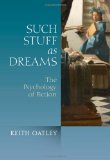
Such Stuff as Dreams

Such Stuff as Dreams: The Psychology of Fiction by Keith Oatley (Wiley 2011)

(kindle ed.), (amazon.co.uk)

Product description from the publisher:

Such Stuff as Dreams: The Psychology of Fiction explores how fiction works in the brains and imagination of both readers and writers.

    Demonstrates how reading fiction can contribute to a greater understanding of, and the ability to change, ourselves
    Informed by the latest psychological research which focuses on, for example, how identification with fictional characters occurs, and how literature can improve social abilities
    Explores traditional aspects of fiction, including character, plot, setting, and theme, as well as a number of classic techniques, such as metaphor, metonymy, defamiliarization, and cues
    Includes extensive end-notes, which ground the work in psychological studies
    Features excerpts from fiction which are discussed throughout the text, including works by William Shakespeare, Jane Austen, Kate Chopin, Anton Chekhov, James Baldwin, and others

From the back cover:

When we read fiction, we mentally create events and scenes from the words offered on the page by the author. Why is this such a pleasurable experience?

Such Stuff as Dreams: The Psychology of Fiction explores how fiction works in the brains and imagination of both readers and writers. Drawing on an idea originally developed by a variety of historical literary figures including William Shakespeare, in this ground–breaking work Oatley richly illustrates how fiction is not simply a slice of life, pure entertainment, or an escape from everyday reality. While it does indeed incorporate many of these elements, at its core fiction represents a guided dream, a model that readers construct in collaboration with the writer. This waking dream not only enables us to see ourselves and others more clearly, but offers us revealing glimpses beneath the surface of the everyday world.

The book considers topics such as fiction’s ability to create vividly emotive experiences; issues of empathy and identification; creativity and externalizations of the mind utilized by writers of prose fiction; and the various effects of fiction on individual readers. Throughout the book, excerpts from fiction are also featured and discussed, including works by William Shakespeare, Jane Austen, Kate Chopin, Anton Chekhov, and James Baldwin. Informed by deep scholarly rigor, Such Stuff as Dreams is an illuminating and thought–provoking analysis of the transformative power of fiction to enter and engage the mind into revealing profound insights about ourselves and those around us.

See also: New Scientist review, Author’s Psychology Today blog

Comments (0) - fiction,new books,psychology,reading