[ View menu ]

Archive for 'psychology'

new book – ‘Dirty Minds: How Our Brains Influence Love, Sex, and Relationships’

January 4, 2012
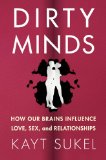
Dirty Minds

Dirty Minds: How Our Brains Influence Love, Sex, and Relationships by Kayt Sukel (Free Press, 2012)

(kindle ed.), (amazon.co.uk)

Product description from the publisher:

Philosophers, theologians, artists, and boy bands have waxed poetic about the nature of love for centuries. But what does the brain have to say about the way we carry our hearts? In the wake of a divorce, science writer and single mother Kayt Sukel made herself a guinea pig in the labs of some unusual love experts to find out.

In each chapter of this edgy romp through the romantic brain, Sukel looks at a different aspect of love above the belt. What in your brain makes you love someone—or simply lust after them? (And is there really a difference?) Why do good girls like bad boys? Is monogamy practical? How thin is that line between love and hate? Do mothers have a stronger bond with their children than their fathers do? How do our childhood experiences affect our emotional control? Should you be taking an oxytocin supplement to improve your luck in love? Who is most at risk for love addiction? In her search for truth, Sukel also has an fMRI during orgasm, ponders a cure for heartbreak, and samples a pheromone spray called Boarmate.

As science allows us a more focused examination on the intricate dance between the brain and our environments, we can use it to shed new light on humanity’s oldest question: What is love and why does it torture, delight, and transform us so?

Fiercely honest and wonderfully funny, Sukel can offer no simple solutions for the curveballs love throws our way. But after reading this gimlet-eyed look at love, sex, and the brain, you’ll never look at romance the same way again.

See also: Author’s website
Comments (0) - cognitive science,new books,psychology

new book – ‘New: Understanding Our Need for Novelty and Change’ by Winifred Gallagher

December 29, 2011

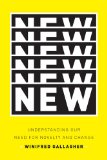
New

New: Understanding Our Need for Novelty and Change by Winifred Gallagher (Penguin, 2011)

(kindle ed.), (amazon.co.uk)

Product description from the publisher:

Exploring our unique human genius for responding to the new with curiosity and creativity, the bestselling author of Rapt shows us how to embrace our changing world while living a fuller, saner life.

In today’s fast-paced world, it’s easy to feel overwhelmed by the mind-boggling number of new things-whether products, ideas, or bits of data-bombarding us daily. But adapting to new circumstance is so crucial to our survival that “love of the new,” or neophilia, is hardwired into our brains at the deepest levels. Navigating between our innate love of novelty and the astonishingly new world around us is the task of New: helping us adapt to, learn about, and create new things that matter, while dismissing the rest as distractions.

With wit and clarity, acclaimed behavioral science writer Winifred Gallagher takes us to the archaeological sites and neuroscience laboratories exploring our species’ special affinity for novelty. All of us are attuned to things that are new or unfamiliar because they convey vital information about potential threats and resources. As individuals, however, we vary in how we balance the sometimes conflicting needs to avoid risk and approach rewards.

Some 15 percent of us are die-hard “neophiliacs” who are biologically predisposed to passionately pursue new experiences, and another 15 percent are “neophobes” who adamantly resist change.

Most of us fall squarely in the spectrum’s roomy middle range. Whether we love change, avoid change, or take the middle path, neophilia plays a crucial role in all of our lives. No matter where we sit on neophilia’s continuum, New shows us how to use it more skillfully to improve our lives.

At this time of unprecedented change- when the new information we handle daily has quadrupled in the past thirty years, with no sign of slowing-we must look beyond such secondary issues as voracious consumerism, attention problems, and electronics addiction to refocus on neophilia’s true purpose: to learn about and create the new things that really matter. This big-picture perspective has long been missing, and New will jump-start that discussion by offering the tools we need to control our love of the new-rather than letting it control us.

Google Books preview:

See also: three-part series of excerpts at Bloomberg.com

Comments (0) - new books,psychology

recent book – ‘Your Emotional Type: Key to the Therapies That Will Work for You’

December 16, 2011

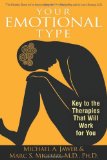
Your Emotional Type

Your Emotional Type: Key to the Therapies That Will Work for You by Michael A. Jawer and Marc S. Micozzi (Healing Arts Press, 2011)

(kindle ed.), (amazon.co.uk)

Product description from the publisher:

Your emotional type as the means to finding the right treatment for your chronic illness or pain

• Provides an easy questionnaire to find your emotional type

• Identifies the connections between emotional type and 12 common chronic ailments: asthma, allergies, chronic fatigue, depression, fibromyalgia, hypertension, irritable bowel, migraines, PTSD, psoriasis, rheumatoid arthritis, and ulcers

• Explains which of 7 mind/body healing therapies works best for each emotional type

Different people process their feelings in different ways–your emotional style is a fundamental aspect of who you are. It affects more than just your outlook on life; it can affect your well-being as well. Many chronic ailments are not the result of germs or genes but are rooted in our emotional biology. The link between emotional type and health explains why modern medicine–which views treatment as “one size fits all”–often fails to successfully treat chronic pain and illness.

Examining the interplay of emotions, chronic illness and pain, and treatment success, Michael Jawer and Dr. Marc Micozzi reveal how chronic conditions are intrinsically linked to certain emotional types and how these ailments are best treated by choosing a healing therapy in line with your type. Explaining the emotional ties behind the 12 most common chronic illnesses–asthma, allergies, chronic fatigue, depression, fibromyalgia, hypertension, irritable bowel syndrome, migraines, post-traumatic stress disorder, psoriasis, rheumatoid arthritis, and ulcers–the authors provide an easy assessment survey that allows you to identify your emotional type as well as the ailments you are susceptible to. Extending this connection between mind and body, they assess 7 alternative healing therapies–acupuncture, hypnosis, biofeedback, meditation, yoga, guided imagery, and relaxation techniques–and indicate which methods work best for each emotional type. Empowering you as a patient to seek out the therapies that will work best for you, this book offers a welcome path to effective pain relief and sustainable health.

See also: Book website

Comments (0) - mind,psychology

new book – ‘The Addicted Brain: Why We Abuse Drugs, Alcohol, and Nicotine’

November 30, 2011

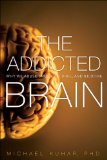
The Addicted Brain

The Addicted Brain: Why We Abuse Drugs, Alcohol, and Nicotine (FT Press Science) by Michael Kuhar (FT Press, 2011)

(kindle ed.), (amazon.co.uk)

Product description from the publisher:

What Science Has Learned About Addiction:

What causes it?
How do drugs change the brain?
Who’s most vulnerable?
Does treatment work?
What can we do?

Addiction destroys lives. In The Addicted Brain, a leading neuroscientist explains how and why this happens–and presents advances in treatment and prevention. Using breathtaking brain imagery and other research, Michael Kuhar, Ph.D., shows the powerful, long-term brain changes that drugs can cause, revealing why it can be so difficult for addicts to escape their grip.

In plain English, Kuhar describes why some people are far more susceptible to addiction than others. He illuminates striking neural similarities between drugs and other pleasures potentially capable of causing abuse or addiction–including alcohol, gambling, sex, caffeine, and even Internet overuse. Finally, he outlines the 12 characteristics most often associated with successful treatment.

Authoritative and easy to understand, The Addicted Brain offers today’s most up-to-date scientific explanation of addiction–and what addicts, their families, and society can do about it.

See also: Author’s homepage

Google Books preview:

Comments (0) - cognitive science,new books,psychology

new book – ‘Shiny Objects: Why We Spend Money We Don’t Have in Search of Happiness We Can’t Buy’

November 12, 2011

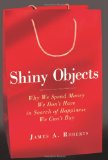
Shiny Objects

Shiny Objects: Why We Spend Money We Don’t Have in Search of Happiness We Can’t Buy by James A. Roberts (HarperOne, 2011)

(kindle ed.), (amazon.co.uk)

Product description from the publisher:

Americans toss out 140 million cell phones every year. We discard 2 million plastic bottles every five minutes. And our total credit-card debt as of July 2011 is $793 billion.

Plus, credit cards can make you fat.

The American Dream was founded on the belief that anyone dedicated to thrift and hard work could create opportunities and achieve a better life. Now that dream has been reduced to a hyperquantified desire for fancier clothes, sleeker cars, and larger homes. We’ve lost our way, but James Roberts argues that it’s not too late to find it again. In Shiny Objects, he offers us an opportunity to examine our day-to-day habits, and once again strive for lives of quality over quantity.

Mining his years of research into the psychology of consumer behavior, Roberts gets to the heart of the often-surprising ways we make our purchasing decisions. What he and other researchers in his field have found is that no matter what our income level, Americans believe that we need more to live a good life. But as our standard of living has climbed over the past forty years, our self-reported “happiness levels” have flatlined.

Roberts isn’t merely concerned with the GDP or big-ticket purchases—damaging spending habits play out countless times a day, in ways big and small: he demonstrates that even the amount we spend at our favorite fast-food joint increases anywhere from 60 to 100 percent when we use a credit card instead of cash. Every time we watch TV or turn on a radio we’re exposed to marketing messages (experts estimate up to 3,000 of them daily). Consumption is king, and its toll is not just a financial one: relationships are suffering, too, as materialism encroaches on the time and value we give the people around us.

By shedding much-needed light on the science of spending, Roberts empowers readers to make smart changes, improve self-control, and curtail spending. The American Dream is still ours for the taking, and Shiny Objects is ultimately a hopeful statement about the power we each hold to redefine the pursuit of happiness.


Browse Inside this book

Get this for your site

See also: a related new title – Consumption Matters: A Psychological Perspective by Cathrine Jansson-Boyd (Palgrave Macmillan, Nov 8, 2011), (amazon.co.uk)

Comments (0) - culture,happiness,new books,psychology