[ View menu ]

Archive for 'psychology'

new book – ‘Applied Evolutionary Psychology’

February 16, 2012
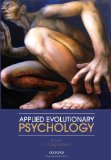
Applied Evolutionary Psychology

Applied Evolutionary Psychology ed. by S. Craig Roberts (Oxford University Press, 2012)

(amazon.co.uk – Nov 2011)

Book description from the publisher:

Human behaviour is marvellous in its complexity, variability and unpredictability. Understanding it, however, is not solely the role of psychologists: everyone has a vested interest in it, from individuals to organisations and industry. Recently, biologists and psychologists have had considerable success incorporating insights from evolutionary theory to help them understand some fundamental psychological issues, in a discipline now known as evolutionary psychology. However, to date, these useful insights have not been widely applied to tackle specific practical problems or issues in society.

This innovative new book kick-starts this process. It provides a foundation for an incipient focus on applications of evolutionary research. It draws together a collection of renowned academics from a disparate set of fields, whose common interest lies in using evolutionary thinking to inform their research. Topics range from reviews of evolutionary perspectives on adult and family relationships, insights into business, economics and marketing, health and interactions with technology and the media, through to major global and societal issues such as promoting green behaviour, cooperation, and public health, and tackling crime, terrorism, and prejudice.

No other book has focused as specifically and with such broad scope on the applications of modern evolutionary psychology. While the rapidly growing number of books on evolutionary psychology succeed in describing current theoretical thinking, illustrated and supported by empirical studies, this book uses this established basis as a backdrop and starting point for a more focused exploration of practical application. This groundbreaking book will be valuable for students and researchers in evolutionary and applied psychology, as well as biology and anthropology.

Google books preview:
Comments (0) - new books,psychology

new book – ‘Everyone Loves a Good Train Wreck: Why We Can’t Look Away’ by Eric G. Wilson

February 14, 2012

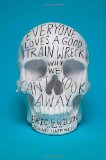
Everyone Loves a Good Train Wreck

Everyone Loves a Good Train Wreck: Why We Can’t Look Away by Eric G. Wilson (Farrar, Straus and Giroux, 2012)

(kindle ed.), (amazon.co.uk – 12 Mar 2012)

Book description from the publisher:

Why can’t we look away?

Whether we admit it or not, we’re fascinated by evil. Dark fantasies, morbid curiosities, Schadenfreude: As conventional wisdom has it, these are the symptoms of our wicked side, and we succumb to them at our own peril. But we’re still compelled to look whenever we pass a grisly accident on the highway, and there’s no slaking our thirst for gory entertainments like horror movies and police procedurals. What makes these spectacles so irresistible?

In Everyone Loves a Good Train Wreck, the scholar Eric G. Wilson sets out to discover the source of our attraction to the caustic, drawing on the findings of biologists, sociologists, psychologists, anthropologists, philosophers, theologians, and artists. A professor of English literature and a lifelong student of the macabre, Wilson believes there’s something nourishing in darkness. “To repress death is to lose the feeling of life,” he writes. “A closeness to death discloses our most fertile energies.”

His examples are legion, and startling in their diversity. Citing everything from elephant graveyards and Susan Sontag’s On Photography to the Tiger Woods sex scandal and Steel Magnolias, Wilson finds heartening truths wherever he confronts death. In Everyone Loves a Good Train Wreck, the perverse is never far from the sublime. The result is a powerful and delightfully provocative defense of what it means to be human—for better and for worse.

Google books preview:

See also: Author’s website

Comments (0) - culture,new books,psychology

new book – ‘Liars and Outliers: Enabling the Trust that Society Needs to Thrive’

February 2, 2012

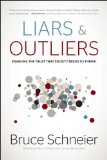
Liars & Outliers

Liars and Outliers: Enabling the Trust that Society Needs to Thrive by Bruce Schneier (Wiley, 2012)

(kindle ed.), (amazon.co.uk – 8 Mar 2012)

Product description from the publisher:

How does society function when you can’t trust everyone?

When we think about trust, we naturally think about personal relationships or bank vaults. That’s too narrow. Trust is much broader, and much more important. Nothing in society works without trust. It’s the foundation of communities, commerce, democracy—everything.

In this insightful and entertaining book, Schneier weaves together ideas from across the social and biological sciences to explain how society induces trust. He shows how trust works and fails in social settings, communities, organizations, countries, and the world.

In today’s hyper-connected society, understanding the mechanisms of trust is as important as understanding electricity was a century ago. Issues of trust and security are critical to solving problems as diverse as corporate responsibility, global warming, and our moribund political system. After reading Liars and Outliers, you’ll think about social problems, large and small, differently.

Google books preview:

See also: Author’s website

Comments (0) - culture,psychology

new book – ‘Guitar Zero: The New Musician and the Science of Learning’ by Gary Marcus

January 27, 2012

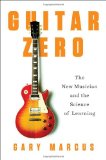
Guitar Zero

Guitar Zero: The New Musician and the Science of Learning by Gary Marcus (Penguin, 2012)

(kindle ed.), (amazon.co.uk)

Product description from the publisher:

On the eve of his 40th birthday, Gary Marcus, a renowned scientist with no discernible musical talent, learns to play the guitar and investigates how anyone—of any age —can become musical. Do you have to be born musical to become musical? Do you have to start at the age of six?

Using the tools of his day job as a cognitive psychologist, Gary Marcus becomes his own guinea pig as he takes up the guitar. In a powerful and incisive look at how both children and adults become musical, Guitar Zero traces Marcus’s journey, what he learned, and how anyone else can learn, too. A groundbreaking peek into the origins of music in the human brain, this musical journey is also an empowering tale of the mind’s enduring plasticity.

Marcus investigates the most effective ways to train body and brain to learn to play an instrument, in a quest that takes him from Suzuki classes to guitar gods. From deliberate and efficient practicing techniques to finding the right music teacher, Marcus translates his own experience—as well as reflections from world-renowned musicians—into practical advice for anyone hoping to become musical, or to learn a new skill.

Guitar Zero debunks the popular theory of an innate musical instinct while simultaneously challenging the idea that talent is only a myth. While standing the science of music on its head, Marcus brings new insight into humankind’s most basic question: what counts as a life well lived? Does one have to become the next Jimi Hendrix to make a passionate pursuit worthwhile, or can the journey itself bring the brain lasting satisfaction?

For all those who have ever set out to play an instrument—or wish that they could—Guitar Zero is an inspiring and fascinating look at the pursuit of music, the mechanics of the mind, and the surprising rewards that come from following one’s dreams.

Google books preview:

See also: Author’s website, New York Times article

Comments (0) - cognitive science,new books,psychology

new book – ‘Quiet: The Power of Introverts in a World That Can’t Stop Talking’

January 24, 2012

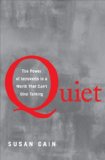
Quiet

Quiet: The Power of Introverts in a World That Can’t Stop Talking by Susan Cain (Crown)

(kindle ed.), (amazon.co.uk – 29 Mar 2012)

Product description from the publisher:

At least one-third of the people we know are introverts. They are the ones who prefer listening to speaking, reading to partying; who innovate and create but dislike self-promotion; who favor working on their own over brainstorming in teams. Although they are often labeled “quiet,” it is to introverts that we owe many of the great contributions to society–from van Gogh’s sunflowers to the invention of the personal computer.

Passionately argued, impressively researched, and filled with indelible stories of real people, Quiet shows how dramatically we undervalue introverts, and how much we lose in doing so. Taking the reader on a journey from Dale Carnegie’s birthplace to Harvard Business School, from a Tony Robbins seminar to an evangelical megachurch, Susan Cain charts the rise of the Extrovert Ideal in the twentieth century and explores its far-reaching effects. She talks to Asian-American students who feel alienated from the brash, backslapping atmosphere of American schools. She questions the dominant values of American business culture, where forced collaboration can stand in the way of innovation, and where the leadership potential of introverts is often overlooked. And she draws on cutting-edge research in psychology and neuroscience to reveal the surprising differences between extroverts and introverts.

Perhaps most inspiring, she introduces us to successful introverts–from a witty, high-octane public speaker who recharges in solitude after his talks, to a record-breaking salesman who quietly taps into the power of questions. Finally, she offers invaluable advice on everything from how to better negotiate differences in introvert-extrovert relationships to how to empower an introverted child to when it makes sense to be a “pretend extrovert.”

This extraordinary book has the power to permanently change how we see introverts and, equally important, how introverts see themselves.

Google books preview:

See also: Book website

Comments (0) - culture,new books,psychology,Uncategorized