[ View menu ]

Archive for 'psychology'

new book – ‘Pocket Guide to Interpersonal Neurobiology: An Integrative Handbook of the Mind’ by Daniel J. Siegel

March 11, 2012
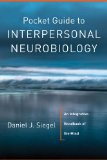
Pocket Guide to Interpersonal Neurobiology

Pocket Guide to Interpersonal Neurobiology: An Integrative Handbook of the Mind by Daniel J. Siegel (W.W. Norton, 2012)

(kindle ed.), (amazon.co.uk)

Book description from the publisher:

The central concepts of the theory of interpersonal neurobiology.
Many fields have explored the nature of mental life from psychology to psychiatry, literature to linguistics. Yet no common “framework” where each of these important perspectives can be honored and integrated with one another has been created in which a person seeking their collective wisdom can find answers to some basic questions, such as, What is the purpose of life? Why are we here? How do we know things, how are we conscious of ourselves? What is the mind? What makes a mind healthy or unwell? And, perhaps most importantly: What is the connection among the mind, the brain, and our relationships with one another?

Our mental lives are profoundly relational. The interactions we have with one another shape our mental world. Yet as any neuroscientist will tell you, the mind is shaped by the firing patterns in the brain. And so how can we reconcile this tension—that the mind is both embodied and relational? Interpersonal Neurobiology is a way of thinking across this apparent conceptual divide.

This Pocket Guide to Interpersonal Neurobiology is designed to aid in your personal and professional application of the interpersonal neurobiology approach to developing a healthy mind, an integrated brain, and empathic relationships. It is also designed to assist you in seeing the intricate foundations of interpersonal neurobiology as you read other books.

See also: Author’s website
Comments (0) - cognitive science,new books,psychology

new book – ‘Being Human: Psychological and Philosophical Perspectives’

March 9, 2012

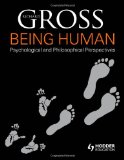
Being Human

Being Human: Psychological and Philosophical Perspectives by Richard Gross (Hodder Arnold, 2012)

(amazon.co.uk)

Book description from the publisher:

Richard Gross turns his expert eye to the psychology of human nature in a contemplative account encompassing cognition, consciousness, language, time perception, sense of mortality and human society. This book will help you to consider the unique aspects of being human and to understand the biological underpinnings for the intriguing and distinct behaviors and experiences common to human beings.

The book is enhanced throughout by:
*its logical arrangement of topics, with key questions, issues for additional focus and reflection points highlighted throughout.
*useful chapter introductions and summaries to provide clarity and insight
*diagrams to help explain difficult concepts
*detailed selection of references and useful sources including works from the fields of psychology, philosophy, religion and literature

This book is essential reading for students of psychology and related disciplines as well as general readers seeking insights into one of the most enduring questions to have faced humankind throughout history.

Comments (0) - new books,philosophy of mind,psychology

new book – ‘The Emotional Life of Your Brain’ by Richard J. Davidson and Sharon Begley

March 1, 2012

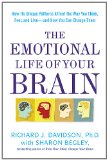
The Emotional Life of Your Brain

The Emotional Life of Your Brain: How Its Unique Patterns Affect the Way You Think, Feel, and Live–and How You Can Change Them by Richard J. Davidson and Sharon Begley (Hudson Street Press, 2012)

(kindle ed.), (amazon.co.uk)

Book description from the publisher:

This longawaited book by a pioneer in brain research offers a new model of our emotions- their origins, their power, and their malleability.

For more than thirty years, Richard Davidson has been at the forefront of brain research. Now he gives us an entirely new model for understanding our emotions, as well as practical strategies we can use to change them.

Davidson has discovered that personality is composed of six basic emotional “styles,” including resilience, self-awareness, and attention. Our emotional fingerprint results from where on the continuum of each style we fall. He explains the brain chemistry that underlies each style in order to give us a new model of the emotional brain, one that will even go so far as to affect the way we treat conditions like autism and depression. And, finally, he provides strategies we can use to change our own brains and emotions-if that is what we want to do.

Written with bestselling author Sharon Begley, this original and exciting book gives us a new and useful way to look at ourselves, develop a sense of well-being, and live more meaningful lives.

Comments (0) - cognitive science,psychology

new book – ‘The Power of Habit: Why We Do What We Do in Life and Business’

February 28, 2012

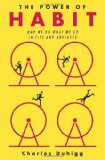
The Power of Habit

The Power of Habit: Why We Do What We Do in Life and Business by Charles Duhigg (Random House, 2012)

(kindle ed.), (amazon.co.uk)

Book description from the publisher:

A young woman walks into a laboratory. Over the past two years, she has transformed almost every aspect of her life. She has quit smoking, run a marathon, and been promoted at work. The patterns inside her brain, neurologists discover, have fundamentally changed.

Marketers at Procter & Gamble study videos of people making their beds. They are desperately trying to figure out how to sell a new product called Febreze, on track to be one of the biggest flops in company history. Suddenly, one of them detects a nearly imperceptible pattern—and with a slight shift in advertising, Febreze goes on to earn a billion dollars a year.

An untested CEO takes over one of the largest companies in America. His first order of business is attacking a single pattern among his employees—how they approach worker safety—and soon the firm, Alcoa, becomes the top performer in the Dow Jones.

What do all these people have in common? They achieved success by focusing on the patterns that shape every aspect of our lives.

They succeeded by transforming habits.

In The Power of Habit, award-winning New York Times business reporter Charles Duhigg takes us to the thrilling edge of scientific discoveries that explain why habits exist and how they can be changed. With penetrating intelligence and an ability to distill vast amounts of information into engrossing narratives, Duhigg brings to life a whole new understanding of human nature and its potential for transformation.

Along the way we learn why some people and companies struggle to change, despite years of trying, while others seem to remake themselves overnight. We visit laboratories where neuroscientists explore how habits work and where, exactly, they reside in our brains. We discover how the right habits were crucial to the success of Olympic swimmer Michael Phelps, Starbucks CEO Howard Schultz, and civil-rights hero Martin Luther King, Jr. We go inside Procter & Gamble, Target superstores, Rick Warren’s Saddleback Church, NFL locker rooms, and the nation’s largest hospitals and see how implementing so-called keystone habits can earn billions and mean the difference between failure and success, life and death.

At its core, The Power of Habit contains an exhilarating argument: The key to exercising regularly, losing weight, raising exceptional children, becoming more productive, building revolutionary companies and social movements, and achieving success is understanding how habits work.

Habits aren’t destiny. As Charles Duhigg shows, by harnessing this new science, we can transform our businesses, our communities, and our lives.

Google books preview:

See also: Author’s website

Comments (0) - cognitive science,new books,psychology

new book – ‘The Passionate Muse: Exploring Emotion in Stories’ by Keith Oatley

February 27, 2012

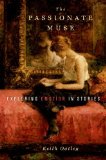
The Passionate Muse

The Passionate Muse: Exploring Emotion in Stories by Keith Oatley (Oxford University Press, USA, 2012)

(amazon.co.uk – May 2012)

Book description from the publisher:

The emotions a character feels–Hamlet’s vengefulness when he realizes his uncle has killed his father, Anna Karenina’s despair when she feels she can longer sustain her life, Marcel’s joy when he tastes a piece of madeleine cake–are vital aspects of the experience of fiction. As Keith Oatley points out, it’s not just the emotions of literary characters such as these in which we are interested. If we didn’t ourselves experience emotions, we wouldn’t go to the play, or watch the film, or read the book. In The Passionate Muse, Oatley, who is both a prize-winning novelist and a distinguished research psychologist, offers a hybrid book that alternates sections of an original short story, “One Another,” with chapters that illuminate the psychology of emotion and fiction. Oatley not only provides insight into how people engage in stories, he also illuminates the value of emotion and the importance of stories for our psychological well-being. Indeed, he offers evidence that the more fiction we read, the better is our understanding of others. Through fiction, we come to know more about the emotions of others and ourselves.

See also: Author’s website

Comments (0) - cognitive science,fiction,new books,psychology