June 21, 2009
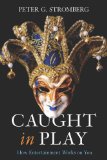
Caught in Play: How Entertainment Works on You by Peter Stromberg, Professor of Anthropology at the University of Tulsa (Stanford University Press, 2009).
Product description from the publisher:
Most of us have become so immersed in a book or game or movie that the activity temporarily assumed a profound significance and the outside world began to fade. Although we are likely to enjoy these experiences in the realm of entertainment, we rarely think about what effect they might be having on us. Precisely because it is so pervasive, entertainment is difficult to understand and even to talk about.
To understand the social role of entertainment, Caught in Play looks closely at how we engage entertainment and at the ideas and practices it creates and sustains. Though entertainment is for fun, it does not follow that it is trivial in its effect on our lives. As this work reveals, entertainment generates commitments to values we are not always willing to acknowledge: values of pleasure, self-indulgence, and consumption.
The book has a website.
Comments (0)
- culture,new books
June 18, 2009
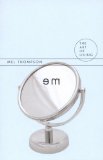
Me (Art of Living Series) by Mel Thompson (Acumen, 2009)
Product description from the publisher:
‘Who am I?’ In a world where randomness and chance make life transient and unpredictable, religion, psychology and philosophy have all tried, in their different ways, to answer this question and to give meaning and coherence to the human person. How we should construct a meaningful ‘me’ – and to make sense of one’s life – is the question at the heart of Mel Thompson’s illuminating book. Although Thompson begins by exploring the workings of the brain, he shows that if we are to consider the nature of the self, it is not enough to argue about such things as how mind relates to matter, or whether neuroscience can fully explain consciousness. Such an approach fails to do justice to the self that we experience and the selves that we encounter around us. We need to engage with the more personal, existential questions: how do I make sense of my life? And am I responsible for the person I have become? Thompson investigates the gap between what we are and what others perceive us to be to ascertain whether we are genuinely knowable entities. He explores the central dilemma of how one can have a fixed idea of ‘me’ to shape and direct one’s life when, in a world of constant change, events will rob us of that fixed idea at any moment. Perhaps we would be better to let go of the need for ‘me’, asks Thompson, but would a self-less life be possible, or desirable? Drawing on the writings of literature, philosophy, religion and science, as well as personal reflection and anecdote, Thompson has written an engaging and thought-provoking work that recaptures the notion of ‘me’ from the neuroscientists and situates it at the heart of finding a place in the world.
See also: review in The Guardian
Author’s website
Comments (0)
- new books,self
June 13, 2009
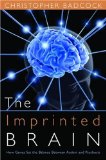
The Imprinted Brain: How Genes Set the Balance of the Mind Between Autism and Psychosis by Christopher Badcock (Jessica Kingsley Publishers, 2009)
Product description from the publisher:
“The Imprinted Brain” sets out a radical new theory of the mind and mental illness based on the recent discovery of genomic imprinting. Imprinted genes are those from one parent that, in that parent’s interest, are expressed in an offspring rather than the diametrically opposed genes from the other parent. For example, a higher birth weight may represent the dominance of the father’s genes in leading to a healthy child, whereas a lower birth weight is beneficial to the mother’s immediate wellbeing, and the imprint of the mother’s genes will result in a smaller baby. According to this view, a win for the father’s genes may result in autism, whereas one for the mother’s may result in psychosis. A state of equilibrium – normality – is the most likely outcome, with a no-win situation of balanced expression. Imprinted genes typically produce symptoms that are opposites of each other, and the author uses psychiatric case material to show how many of the symptoms of psychosis can be shown to be the mental mirror-images of those of autism. Combining psychiatry with insights from modern genetics and cognitive science, Christopher Badcock explains the fascinating imprinted brain theory to the reader in a thorough but accessible way. This new theory casts some intriguing new light on other topics as diverse as the nature of genius, the appeal of detective fiction, and the successes – and failures – of psychoanalysis. This thought-provoking book is a must-read for anyone with an interest in autism, psychiatry, cognitive science or psychology in general.
See also: “Imprinted Brain Theory” at Edge
Comments (0)
- cognitive science,consciousness,new books,philosophy of mind
June 7, 2009
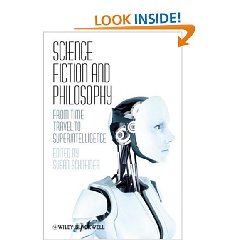
Two of my favorite realms of reading meet in Science Fiction and Philosophy: From Time Travel to Superintelligence ed. by Susan Schneider (Wiley-Blackwell, 2009). A “look inside” at the table of contents shows a lineup of authors that includes Daniel Dennett, David Chalmers, Andy Clark, Derek Parfit, David Lewis, and Ray Kurzweil.
Product description from the publisher:
A timely volume that uses science fiction as a springboard to meaningful philosophical discussions, especially at points of contact between science fiction and new scientific developments.
* Raises questions and examines timely themes concerning the nature of the mind, time travel, artificial intelligence, neural enhancement, free will, the nature of persons, transhumanism, virtual reality, and neuroethics
* Draws on a broad range of books, films and television series, including The Matrix, Star Trek, Blade Runner, Frankenstein, Brave New World, The Time Machine, and Back to the Future
* Considers the classic philosophical puzzles that appeal to the general reader, while also exploring new topics of interest to the more seasoned academic
Comments (0)
- fiction,new books,philosophy of mind
June 6, 2009
Robert Wright, author of Nonzero: The Logic of Human Destiny and The Moral Animal: Why We Are, the Way We Are: The New Science of Evolutionary Psychology, has just published The Evolution of God (Little, Brown, 2009)…
Product description from the publisher:
In this sweeping narrative that takes us from the Stone Age to the Information Age, Robert Wright unveils an astonishing discovery: there is a hidden pattern that the great monotheistic faiths have followed as they have evolved. Through the prisms of archaeology, theology, and evolutionary psychology, Wright’s findings overturn basic assumptions about Judaism, Christianity, and Islam, and are sure to cause controversy. He explains why spirituality has a role today, and why science, contrary to conventional wisdom, affirms the validity of the religious quest. And this previously unrecognized evolutionary logic points not toward continued religious extremism, but future harmony.
Nearly a decade in the making, The Evolution of God is a breathtaking re-examination of the past, and a visionary look forward.
The website for the book has excerpts and more.
Comments (0)
- culture,new books,psychology