July 28, 2009
Chess Metaphors: Artificial Intelligence and the Human Mind by Diego Rasskin-Gutman tr. Deborah Klosky (MIT Press, 2009)
Product description from the publisher:
When we play the ancient and noble game of chess, we grapple with ideas about honesty, deceitfulness, bravery, fear, aggression, beauty, and creativity, which echo (or allow us to depart from) the attitudes we take in our daily lives. Chess is an activity in which we deploy almost all our available cognitive resources; therefore, it makes an ideal laboratory for investigation into the workings of the mind. Indeed, research into artificial intelligence (AI) has used chess as a model for intelligent behavior since the 1950s. In Chess Metaphors, Diego Rasskin-Gutman explores fundamental questions about memory, thought, emotion, consciousness, and other cognitive processes through the game of chess, using the moves of thirty-two pieces over sixty-four squares to map the structural and functional organization of the brain.
Rasskin-Gutman focuses on the cognitive task of problem solving, exploring it from the perspectives of both biology and AI. He examines concept after concept, move after move, delving into the varied mental mechanisms and the cognitive processes underlying the actions of playing chess. Bringing the game of chess into a larger framework, he analyzes its collateral influences that spread along the frontiers of games, art, and science. Finally, he investigates AI’s effort to program a computer that could beat a flesh-and-blood grandmaster (and win a world chess championship) and how the results fall short when compared to the truly creative nature of the human mind.
Comments (0)
- mind,new books
July 27, 2009
The Neuro Revolution: How Brain Science Is Changing Our World by Zack Lynch with Byron Laursen (St Martin’s Press, 2009).
Product description from the publisher:
History has already progressed through an agricultural revolution, an industrial revolution, and an information revolution. The Neuro Revolution foretells a fast approaching fourth epoch, one that will radically transform how we all work, live and play.
Neurotechnology—brain imaging and other new tools for both understanding and influencing our brains—is accelerating the pace of change almost everywhere, from financial markets to law enforcement to politics to advertising and marketing, artistic expression, warfare, and even religious belief.
The Neuro Revolution introduces you to the brilliant people leading this worldwide transformation, taking you into their laboratories, boardrooms and courtrooms for a unique, insider’s glimpse into the startling future now appearing at our doorstep. From foolproof lie detectors to sure-fire investment strategies to super-enhanced religious and aesthetic experiences, the insights and revelations within The Neuro Revolution will foster wonder, debate, and in some cases consternation. Above all, though, they need to be understood by those who will be most affected—all of us.
See also: website for the book
Comments (0)
- cognitive science,new books
July 22, 2009
Social psychologist Kenneth J. Gergen, author of The Saturated Self,
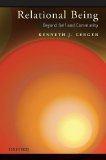 has a new book out from Oxford University Press: Relational Being: Beyond Self and Community.
Product description from the publisher:
This book builds on two current developments in psychology scholarship and practice. The first centers on broad discontent with the individualist tradition in which the rational agent, or autonomous self, is considered the fundamental atom of social life. Critique of individualism spring not only from psychologists working in the academy, but also from communities of therapy and counseling. The second, and related development from which this work builds, is the search for alternatives to individualist understanding. Thus, therapists such as Steve Mitchell, along with feminists at the Stone Center, expand the psychoanalytic tradition to include a relational orientation to therapy.
The present volume will give voice to the critique of individualism, but its major thrust is to develop and illustrate a far more radical and potentially exciting landscape of relational thought and practice than now exists. Most existing attempts to build a relational foundation remain committed to a residual form of individualist psychology. The present work carves out a space of understanding in which relational process stands prior to the very concept of the individual. More broadly, the book attempts to develop a thoroughgoing relational account of human activity. In doing so, Gergen reconstitutes ‘the mind’ as a manifestation of relationships and bears out these ideas in a range of everyday professional practices, including family therapy, collaborative classrooms, and organizational psychology.
Comments (0)
- new books,self
July 20, 2009

Something to check out, especially for those with access to an academic library: The Oxford Companion to Consciousness edited by Tim Bayne, Axel Cleeremans, and Patrick Wilkens.
Product Description from the publisher:
Consciousness is undoubtedly one of the last remaining scientific mysteries and hence one of the greatest contemporary scientific challenges. How does the brain’s activity result in the rich phenomenology that characterizes our waking life? Are animals conscious? Why did consciousness evolve? How does science proceed to answer such questions? Can we define what consciousness is? Can we measure it? Can we use experimental results to further our understanding of disorders of consciousness, such as those seen in schizophrenia, delirium, or altered states of consciousness?
These questions are at the heart of contemporary research in the domain. Answering them requires a fundamentally interdisciplinary approach that engages not only philosophers, but also neuroscientists and psychologists in a joint effort to develop novel approaches that reflect both the stunning recent advances in imaging methods as well as the continuing refinement of our concepts of consciousness.
In this light, the Oxford Companion to Consciousness is the most complete authoritative survey of contemporary research on consciousness. Five years in the making and including over 250 concise entries written by leaders in the field, the volume covers both fundamental knowledge as well as more recent advances in this rapidly changing domain. Structured as an easy-to-use dictionary and extensively cross-referenced, the Companion offers contributions from philosophy of mind to neuroscience, from experimental psychology to clinical findings, so reflecting the profoundly interdisciplinary nature of the domain. Particular care has been taken to ensure that each of the entries is accessible to the general reader and that the overall volume represents a comprehensive snapshot of the contemporary study of consciousness. The result is a unique compendium that will prove indispensable to anyone interested in consciousness, from beginning students wishing to clarify a concept to professional consciousness researchers looking for the best characterization of a particular phenomenon.
Comments (0)
- consciousness,new books