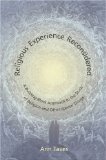
The essence of religion was once widely thought to be a unique form of experience that could not be explained in neurological, psychological, or sociological terms. In recent decades scholars have questioned the privileging of the idea of religious experience in the study of religion, an approach that effectively isolated the study of religion from the social and natural sciences. Religious Experience Reconsidered lays out a framework for research into religious phenomena that reclaims experience as a central concept while bridging the divide between religious studies and the sciences.
Ann Taves shifts the focus from “religious experience,” conceived as a fixed and stable thing, to an examination of the processes by which people attribute meaning to their experiences. She proposes a new approach that unites the study of religion with fields as diverse as neuroscience, anthropology, sociology, and psychology to better understand how these processes are incorporated into the broader cultural formations we think of as religious or spiritual. Taves addresses a series of key questions: how can we set up studies without obscuring contestations over meaning and value? What is the relationship between experience and consciousness? How can research into consciousness help us access and interpret the experiences of others? Why do people individually or collectively explain their experiences in religious terms? How can we set up studies that allow us to compare experiences across times and cultures?
Religious Experience Reconsidered demonstrates how methods from the sciences can be combined with those from the humanities to advance a naturalistic understanding of the experiences that people deem religious.
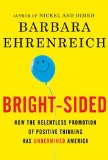
A sharp-witted knockdown of America’s love affair with positive thinking and an urgent call for a new commitment to realism
Americans are a “positive” people—cheerful, optimistic, and upbeat: this is our reputation as well as our self-image. But more than a temperament, being positive, we are told, is the key to success and prosperity.
In this utterly original take on the American frame of mind, Barbara Ehrenreich traces the strange career of our sunny outlook from its origins as a marginal nineteenth-century healing technique to its enshrinement as a dominant, almost mandatory, cultural attitude. Evangelical mega-churches preach the good news that you only have to want something to get it, because God wants to “prosper” you. The medical profession prescribes positive thinking for its presumed health benefits. Academia has made room for new departments of “positive psychology” and the “science of happiness.” Nowhere, though, has bright-siding taken firmer root than within the business community, where, as Ehrenreich shows, the refusal even to consider negative outcomes—like mortgage defaults—contributed directly to the current economic crisis.
With the mythbusting powers for which she is acclaimed, Ehrenreich exposes the downside of America’s penchant for positive thinking: On a personal level, it leads to self-blame and a morbid preoccupation with stamping out “negative” thoughts. On a national level, it’s brought us an era of irrational optimism resulting in disaster. This is Ehrenreich at her provocative best—poking holes in conventional wisdom and faux science, and ending with a call for existential clarity and courage.
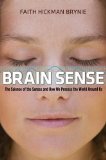
Have you ever wondered why you remember color images and scenes so much better than those in black and white? Or do you ponder why that first cup of morning coffee tastes better than anything you’ll have all day? The answer lies in the way our brains interpret and process the sights, smells, sounds, tastes, and touches that make up our lives. Brain Sense explores the latest research on brain function and the senses and offers fascinating new insights about what makes us tick. The book melds interviews with renowned scientists with stories of everyday experiences to illustrate how our brains process the world around us. Divided into parts, one for each sense, Brain Sense reveals:
• why what you eat and drink is not necessarily what you taste
• how we respond to pheromones
• how the body reacts to touch
• how music changes how the brain works
• the real truth about the sixth sense
• how the brain’s electrical responses affect hearing
Both enlightening and engaging, this book will help us more fully understand the elusive mysteries of the human brain.
Over the past decade, many of us have been alarmed to learn of the rapidly accelerating extinction of our planet’s diverse flora and fauna. But how many of us know that our human cultural diversity is also going extinct at a shocking rate? Biologists estimate that 18% of mammals and 11% of birds are threatened, while botanists anticipate the loss of 8% of flora. Meanwhile, of the 7,000 languages in the world today, 50% will disappear in our lifetime. Languages are merely the canaries in the coalmine: what of the poetry, songs, knowledge, and ways of seeing encoded in these disappearing voices?
In The Wayfinders, acclaimed anthropologist Wade Davis offers a gripping account of this urgent crisis. He leads us on a fascinating tour through a handful of indigenous cultures and worldviews while reminding us of the encroaching dangers posed by unchecked globalization. An enlightening, awe-inspiring, and cautionary look at vanishing cultures and languages from one of the world’s most celebrated and distinguished anthropologists.
Here is Davis’s 2003 TED talk on endangered cultures:
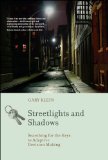
In making decisions, when should we go with our gut and when should we try to analyze every option? When should we use our intuition and when should we rely on logic and statistics? Most of us would probably agree that for important decisions, we should follow certain guidelines—gather as much information as possible, compare the options, pin down the goals before getting started. But in practice we make some of our best decisions by adapting to circumstances rather than blindly following procedures. In Streetlights and Shadows, Gary Klein debunks the conventional wisdom about how to make decisions. He takes ten commonly accepted claims about decision making and shows that they are better suited for the laboratory than for life. The standard advice works well when everything is clear, but the tough decisions involve shadowy conditions of complexity and ambiguity. Gathering masses of information, for example, works if the information is accurate and complete—but that doesn’t often happen in the real world. (Think about the careful risk calculations that led to the downfall of the Wall Street investment houses.)
Klein offers more realistic ideas about how to make decisions in real-life settings. He provides many examples—ranging from airline pilots and weather forecasters to sports announcers and Captain Jack Aubrey in Patrick O’Brian’s Master and Commander novels—to make his point. All these decision makers saw things that others didn’t. They used their expertise to pick up cues and to discern patterns and trends. We can make better decisions, Klein tells us, if we are prepared for complexity and ambiguity and if we will stop expecting the data to tell us everything.