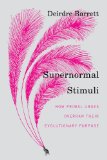
A Harvard psychologist explains how our once-helpful instincts get hijacked in our garish modern world. Our instincts—for food, sex, or territorial protection— evolved for life on the savannahs 10,000 years ago, not in today’s world of densely populated cities, technological innovations, and pollution. We now have access to a glut of larger-than-life objects, from candy to pornography to atomic weapons—that gratify these gut instincts with often-dangerous results. Animal biologists coined the term “supernormal stimuli” to describe imitations that appeal to primitive instincts and exert a stronger pull than real things, such as soccer balls that geese prefer over eggs. Evolutionary psychologist Deirdre Barrett applies this concept to the alarming disconnect between human instinct and our created environment, demonstrating how supernormal stimuli are a major cause of today’s most pressing problems, including obesity and war. However, Barrett does more than show how unfettered instincts fuel dangerous excesses. She also reminds us that by exercising self-control we can rein them in, potentially saving ourselves and civilization.
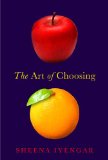
Every day we make choices. Coke or Pepsi? Save or spend? Stay or go?
Whether mundane or life-altering, these choices define us and shape our lives. Sheena Iyengar asks the difficult questions about how and why we choose: Is the desire for choice innate or bound by culture? Why do we sometimes choose against our best interests? How much control do we really have over what we choose? Sheena Iyengar’s award-winning research reveals that the answers are surprising and profound. In our world of shifting political and cultural forces, technological revolution, and interconnected commerce, our decisions have far-reaching consequences. Use THE ART OF CHOOSING as your companion and guide for the many challenges ahead.
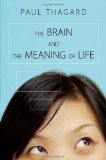
Why is life worth living? What makes actions right or wrong? What is reality and how do we know it? The Brain and the Meaning of Life draws on research in philosophy, psychology, and neuroscience to answer some of the most pressing questions about life’s nature and value. Paul Thagard argues that evidence requires the abandonment of many traditional ideas about the soul, free will, and immortality, and shows how brain science matters for fundamental issues about reality, morality, and the meaning of life. The ongoing Brain Revolution reveals how love, work, and play provide good reasons for living.
Defending the superiority of evidence-based reasoning over religious faith and philosophical thought experiments, Thagard argues that minds are brains and that reality is what science can discover. Brains come to know reality through a combination of perception and reasoning. Just as important, our brains evaluate aspects of reality through emotions that can produce both good and bad decisions. Our cognitive and emotional abilities allow us to understand reality, decide effectively, act morally, and pursue the vital needs of love, work, and play. Wisdom consists of knowing what matters, why it matters, and how to achieve it.
The Brain and the Meaning of Life shows how brain science helps to answer questions about the nature of mind and reality, while alleviating anxiety about the difficulty of life in a vast universe. The book integrates decades of multidisciplinary research, but its clear explanations and humor make it accessible to the general reader.
See also: Website for the book, including a sample chapter and links to cited websites.
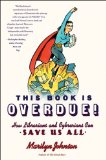
Buried in info? Cross-eyed over technology? From the bottom of a pile of paper and discs, books, e-books, and scattered thumb drives comes a cry of hope: Make way for the librarians! They want to help. They’re not selling a thing. And librarians know best how to beat a path through the googolplex sources of information available to us, writes Marilyn Johnson, whose previous book, The Dead Beat, breathed merry life into the obituary-writing profession.
This Book Is Overdue! is a romp through the ranks of information professionals and a revelation for readers burned out on the clichés and stereotyping of librarians. Blunt and obscenely funny bloggers spill their stories in these pages, as do a tattooed, hard-partying children’s librarian; a fresh-scrubbed Catholic couple who teach missionaries to use computers; a blue-haired radical who uses her smartphone to help guide street protestors; a plethora of voluptuous avatars and cybrarians; the quiet, law-abiding librarians gagged by the FBI; and a boxing archivist. These are just a few of the visionaries Johnson captures here, pragmatic idealists who fuse the tools of the digital age with their love for the written word and the enduring values of free speech, open access, and scout-badge-quality assistance to anyone in need.
Those who predicted the death of libraries forgot to consider that in the automated maze of contemporary life, none of us—neither the experts nor the hopelessly baffled—can get along without human help. And not just any help—we need librarians, who won’t charge us by the question or roll their eyes, no matter what we ask. Who are they? What do they know? And how quickly can they save us from being buried by the digital age?
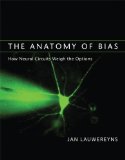
I will recklessly endeavor to scavenge materials from these various fields with the single aim of producing a coherent, but open-minded account of attention, or bias versus sensitivity, or how the activities of neurons allow us to decide one way or another that, with a faint echo of Hamlet in the background, something appears to be or not to be.
—from The Anatomy of Bias
In this engaging, even lyrical, book, Jan Lauwereyns examines the neural underpinnings of decision-making, using “bias” as his core concept rather than the more common but noncommittal terms “selection” and “attention.” Lauwereyns offers an integrative, interdisciplinary account of the structure and function of bias, which he defines as a basic brain mechanism that attaches different weights to different information sources, prioritizing some cognitive representations at the expense of others.
Lauwereyns introduces the concepts of bias and sensitivity based on notions from Bayesian probability, which he translates into easily recognizable neural signatures, introduced by concrete examples from the experimental literature. He examines, among other topics, positive and negative motivations for giving priority to different sensory inputs, and looks for the neural underpinnings of racism, sexism, and other forms of “familiarity bias.”
Lauwereyns—a poet and essayist as well as a scientist—connects findings and ideas in neuroscience to analogous concepts in such diverse fields as post-Lacanian psychoanalysis, literary theory, philosophy of mind, evolutionary psychology, and experimental economics. With The Anatomy of Bias, he gives readers that rarity in today’s world of proliferating and ever more narrowly focused technical research papers: a work of sustained, rational thinking, elegantly expressed.