[ View menu ]

Archive for 'new books'

new book – ‘The Twenty-Four Hour Mind’

June 17, 2010
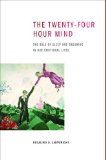
The Twenty-Four Hour Mind

The Twenty-four Hour Mind: The Role of Sleep and Dreaming in Our Emotional Lives by Rosalind Cartwright (Oxford University Press, 2010)

(link for UK)

Product description from the publisher:

In January of 1999, an otherwise nonviolent man under great stress at work brutally murdered his wife in their backyard. He then went back to bed, awakening only when police entered his home. He claimed to have no memory of the event because, while his body was awake at the time, his mind was not. He had been sleepwalking.

In The Twenty-four Hour Mind, sleep scientist Rosalind Cartwright brings together decades of research into the bizarre sleep disorders known as parasomnias to propose a new theory of how the human mind works consistently throughout waking and sleeping hours. Thanks to increasingly sophisticated EEG and brain imaging technologies, we now know that our minds do not simply “turn off” during sleep. Rather, they continue to be active, and research has indicated that one of the primary purposes of sleep is to aid in regulating emotions and processing experiences that occur during preceding waking hours. As such, when sleep is neurologically or genetically impaired or just too short, the processes that good sleep facilitates–those that usually have a positive effect on our mood and performance–can short circuit, with negative results that occasionally reach tragic proportions. Examining the interactions between conscious and unconscious forms of thinking as they proceed throughout the cycles of sleeping, dreaming, and waking, Cartwright demystifies the inner workings of the human mind that trigger sleep problems, how researchers are working to control them, and how they can apply what they learn to further our understanding of the brain. Along the way, she provides a lively account of the history of sleep research and the birth of sleep medicine that will initiate readers into this fascinating field of inquiry and the far-reaching implications it will have on the future of neuroscience. The Twenty-four Hour Mind offers a unique look at a relatively new area of study that will be of interest to those with and without sleep problems, as well as anyone captivated by the mysteries of the brain–and what sleep continues to teach us about the waking mind.

See also: Author’s website
Comments (0) - cognitive science,mind,new books,psychology

favorite Amazon browse categories

June 11, 2010

I’m working on a list of recent books in evolutionary psychology that will appear here soon. Meanwhile here’s a short list of places I check on Amazon.com when browsing for new books (Amazon.co.uk has a different system that I’ve never “sussed out”):

New Releases in Consciousness & Thought

New Releases in Neuropsychology

New Releases in Behavioral Science

Comments (0) - book search,new books

reminder – Clay Shirky’s ‘Cognitive Surplus’ available today (6/10)

June 10, 2010

I had posted about this book a few weeks ago but now it is published (and might be an occasion for a new “webibliography“). Here is a repeat of the previous post, with a few additions:

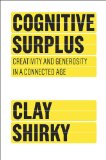
Cognitive Surplus

Cognitive Surplus: Creativity and Generosity in a Connected Age by Clay Shirky (Penguin, 2010).

(Kindle ed.)

(link for amazon.co.uk – due out July 1)

Product description from the publisher:

The author of the breakout hit Here Comes Everybody reveals how new technology is changing us from consumers to collaborators, unleashing a torrent of creative production that will transform our world.

For decades, technology encouraged people to squander their time and intellect as passive consumers. Today, tech has finally caught up with human potential. In Cognitive Surplus, Internet guru Clay Shirky forecasts the thrilling changes we will all enjoy as new digital technology puts our untapped resources of talent and goodwill to use at last.

Since we Americans were suburbanized and educated by the postwar boom, we’ve had a surfeit of intellect, energy, and time-what Shirky calls a cognitive surplus. But this abundance had little impact on the common good because television consumed the lion’s share of it-and we consume TV passively, in isolation from one another. Now, for the first time, people are embracing new media that allow us to pool our efforts at vanishingly low cost. The results of this aggregated effort range from mind expanding-reference tools like Wikipedia-to lifesaving-such as Ushahidi.com, which has allowed Kenyans to sidestep government censorship and report on acts of violence in real time.

Shirky argues persuasively that this cognitive surplus-rather than being some strange new departure from normal behavior-actually returns our society to forms of collaboration that were natural to us up through the early twentieth century. He also charts the vast effects that our cognitive surplus-aided by new technologies-will have on twenty-first-century society, and how we can best exploit those effects. Shirky envisions an era of lower creative quality on average but greater innovation, an increase in transparency in all areas of society, and a dramatic rise in productivity that will transform our civilization.

The potential impact of cognitive surplus is enormous. As Shirky points out, Wikipedia was built out of roughly 1 percent of the man-hours that Americans spend watching TV every year. Wikipedia and other current products of cognitive surplus are only the iceberg’s tip. Shirky shows how society and our daily lives will be improved dramatically as we learn to exploit our goodwill and free time like never before.

Here is Clay Shirky’s 2008 talk on “Gin, Television, and Social Surplus” (transcript here):

See also: review at boingboing.net

Comments (0) - culture,new books

new book – ‘Being Wrong: Adventures in the Margin of Error’

June 8, 2010

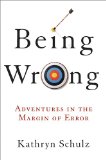
Being Wrong
A new book out today, Being Wrong: Adventures in the Margin of Error by journalist Kathryn Schulz (published by Ecco) received a starred review from Publisher’s Weekly. (link for UK)

Product description from the publisher:

To err is human. Yet most of us go through life assuming (and sometimes insisting) that we are right about nearly everything, from the origins of the universe to how to load the dishwasher. If being wrong is so natural, why are we all so bad at imagining that our beliefs could be mistaken, and why do we react to our errors with surprise, denial, defensiveness, and shame?

In Being Wrong, journalist Kathryn Schulz explores why we find it so gratifying to be right and so maddening to be mistaken, and how this attitude toward error corrodes relationships—whether between family members, colleagues, neighbors, or nations. Along the way, she takes us on a fascinating tour of human fallibility, from wrongful convictions to no-fault divorce; medical mistakes to misadventures at sea; failed prophecies to false memories; “I told you so!” to “Mistakes were made.” Drawing on thinkers as varied as Augustine, Darwin, Freud, Gertrude Stein, Alan Greenspan, and Groucho Marx, she proposes a new way of looking at wrongness. In this view, error is both a given and a gift—one that can transform our worldviews, our relationships, and, most profoundly, ourselves.

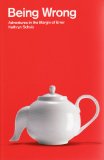
Being Wrong (UK edition)

In the end, Being Wrong is not just an account of human error but a tribute to human creativity—the way we generate and revise our beliefs about ourselves and the world. At a moment when economic, political, and religious dogmatism increasingly divide us, Schulz explores with uncommon humor and eloquence the seduction of certainty and the crises occasioned by error. A brilliant debut from a new voice in nonfiction, this book calls on us to ask one of life’s most challenging questions: what if I’m wrong?

See also: Website for the book, NPR interview

Comments (0) - new books,psychology

consciousness books 2010

June 6, 2010

I see it’s been awhile since I’ve updated some of the book lists here, so maybe now near the middle of the year is a good time to look at the books published so far and those still to come this year.

Following is a list of books on consciousness published or to be published during 2010, based on a search of WorldCat.

Aesthetic Genesis: The Origin of Consciousness in the Intentional Being of Nature by Jeffrey Anthony Mitscherling (Lanham, Md.: University Press of America) Mar 2010. (link for UK)

The Book of Not Knowing: Exploring the True Nature of Self, Mind, and Consciousness by Peter Ralston (Berkeley, Calif.: North Atlantic Books) Jan 2010 (link for UK)

Brain, Mind, and the Structure of Reality by Paul L Nunez (New York: Oxford University Press) Apr 2010. (link for UK)

The Character of Consciousness (Philosophy of Mind Series) by David John Chalmers (New York; Oxford: Oxford University Press) forthcoming Aug 2010. (link for UK)

Cognition, Brain, and Consciousness, Second Edition: Introduction to Cognitive Neuroscience by Bernard J Baars and Nicole M Gage (Burlington, MA: Academic Press/Elsevier) Mar 2010. (link for UK)

Consciousness (A Brief Insight) by Susan Blackmore (New York: Sterling) May 2010. (link for UK)

Consciousness, Attention and Meaning by Giorgio Marchetti (Hauppauge, N.Y.: Nova Science Publishers) forthcoming Oct 2010. (link for UK)

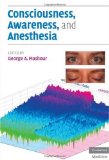
Consciousness, Awareness and Anesthesia

Consciousness, Awareness, and Anesthesia by George A Mashour (Cambridge; New York: Cambridge University Press) Jan 2010. (link for UK)

Consciousness, Theatre, Literature and the Arts 2009 ed by Daniel Meyer-Dinkgräfe (Newcastle: Cambridge Scholars) Jan 2010. (link for UK)

Embodiment and the Inner Life: Cognition and Consciousness in the Space of Possible Minds by Murray Shanahan (New York: Oxford University Press) forthcoming July 2010. (link for UK)

Free Will and Consciousness: How Might They Work? ed. by Roy F Baumeister; Alfred R Mele; Kathleen D Vohs; (New York: Oxford University Press) forthcoming July 2010. (link for UK)

Landscape of the Mind: Human Evolution and the Archeology of Thought by John F Hoffecker (New York; Chichester: Columbia University Press) forthcoming Aug 2010. (link for UK)

The Origin of Cultures by John Lin (Los Angeles, Calif.: Prometheus Press) forthcoming Sept 2010.

Our Own Minds: Sociocultural Grounds for Self-Consciousness (Bradford Books) by Radu J Bogdan (Cambridge, MA: MIT Press) forthcoming Oct 2010. (link for UK)

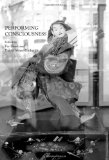
Performing Consciousness

Performing Consciousness by Per K Brask; Daniel Meyer-Dinkgräfe; (Newcastle upon Tyne: Cambridge Scholars) Jan 2010. (link for UK)

Process Approaches to Consciousness in Psychology, Neuroscience, and Philosophy of Mind (S U N Y Series in Philosophy) ed. by Michel Weber; Anderson Weekes (Albany, N.Y. : SUNY Press ; Bristol: University Presses Marketing [distributor]) Jan 2010. (link for UK)

Self Comes to Mind: Constructing the Conscious Brain by Antonio R Damasio (New York: Pantheon Books) forthcoming Nov 2010. (link for UK)

Social Structure and Forms of Consciousness, Volume 1: The Social Determination of Method by István Mészáros (New York : Monthly Review Press) Feb 2010. (link for UK)

Thinking Twice: Two Minds in One Brain by Jonathan St B T Evans (New York: Oxford University Press) forthcoming Jul 2010. (link for UK)

Visions of Discovery: New Light on Physics, Cosmology, and Consciousness ed. by Raymond Y Chiao; et al (Cambridge; New York: Cambridge University Press) forthcoming Oct 2010. (link for UK)

Comments (0) - consciousness,new books