September 4, 2010
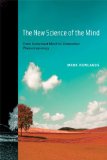
The New Science of the Mind: From Extended Mind to Embodied Phenomenology (Bradford Books) by Mark Rowlands (MIT Press, 2010).
(link for amazon.co.uk)
Product description from the publisher:
There is a new way of thinking about the mind that does not locate mental processes exclusively “in the head.” Some think that this expanded conception of the mind will be the basis of a new science of the mind. In this book, leading philosopher Mark Rowlands investigates the conceptual foundations of this new science of the mind.
Traditional attempts to study the mind are based on the idea that mental processes—perceiving, remembering, thinking, reasoning—exist in brains; they are often described as “software” realized by the “hardware” of the brain. The new way of thinking about the mind has emerged from the confluence of various disciplines in cognitive science ranging from perceptual and developmental psychology to robotics. It emphasizes the ways in which mental processes are embodied (partly made up of extra-neural bodily structures and processes), embedded (designed to function in tandem with the environment), enacted (constituted in part by action), and extended (located in the environment).
The new way of thinking about the mind, Rowlands writes, is actually an old way of thinking that has taken on new form. Rowlands describes a conception of mind that had its clearest expression in phenomenology—in the work of Husserl, Heidegger, Sartre, and Merleau-Ponty. He builds on these views, clarifies and renders consistent the ideas of embodied, embedded, enacted, and extended mind, and develops a unified philosophical treatment of the novel conception of the mind that underlies the new science of the mind.
Comments (0)
- cognitive science,new books,philosophy of mind
September 2, 2010
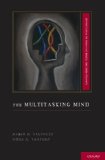
The Multitasking Mind by Dario D. Salvucci and Niels A. Taatgen (Oxford University Press, USA, 2010)
(link for amazon.co.uk)
Product description from the publisher:
Multitasking is all around us: the office worker interrupted by a phone call, the teenager texting while driving, the salesperson chatting while entering an order. When multitasking, the mind juggles all the many tasks we’re doing this second, this hour, this week, and tries to perform them together-sometimes with great ease, sometimes with great difficulty. We don’t often stop to think about how exactly we accomplish these feats of multitasking great and small. How do we switch from one task to another? What types of multitasking are disruptive, and when are they most disruptive? And ultimately, how can we take advantage of the benefits of multitasking while alleviating its negative effects in our daily lives?
This book presents the theory of threaded cognition, a theory that aims to explain the multitasking mind. The theory states that multitasking behavior can be expressed as cognitive threads-independent streams of thought that weave through the mind’s processing resources to produce multitasking behavior, and sometimes experience conflicts to produce multitasking interference. Grounded in the ACT-R cognitive architecture, threaded cognition incorporates computational representations and mechanisms used to simulate and predict multitasking behavior and performance.
The book describes the implications of threaded cognition theory across three traditionally disparate domains: concurrent multitasking (doing multiple tasks at once), sequential multitasking (interrupting and resuming tasks), and multitask skill acquisition (learning and practicing multiple tasks). The work stresses the importance of unifying basic and applied research by alternating between in-depth descriptions of basic research phenomena and broader treatments of phenomena in applied domains, such as driver distraction and human-computer interaction. The book also includes practical guidelines for designers of interactive systems intended for multitasking contexts.
See also: Multitasking on Dario Salvucci’s website, Niels Taatgen’s homepage
Comments (0)
- cognitive science,new books
August 31, 2010
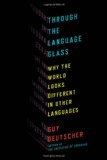
Through the Language Glass: Why the World Looks Different in Other Languages by Guy Deutscher (Metropolitan Books, 2010)
(link for amazon.co.uk)
Product description from the publisher:
A masterpiece of linguistics scholarship, at once erudite and entertaining, confronts the thorny question of how—and whether—culture shapes language and language, culture
Linguistics has long shied away from claiming any link between a language and the culture of its speakers: too much simplistic (even bigoted) chatter about the romance of Italian and the goose-stepping orderliness of German has made serious thinkers wary of the entire subject. But now, acclaimed linguist Guy Deutscher has dared to reopen the issue. Can culture influence language—and vice versa? Can different languages lead their speakers to different thoughts? Could our experience of the world depend on whether our language has a word for “blue”?
Challenging the consensus that the fundaments of language are hard-wired in our genes and thus universal, Deutscher argues that the answer to all these questions is—yes. In thrilling fashion, he takes us from Homer to Darwin, from Yale to the Amazon, from how to name the rainbow to why Russian water—a “she”—becomes a “he” once you dip a tea bag into her, demonstrating that language does in fact reflect culture in ways that are anything but trivial. Audacious, delightful, and field-changing, Through the Language Glass is a classic of intellectual discovery.
See also: recent New York Times article based on this book, Neuroanthropology.net response to NY Times article, Guy Deutscher’s website
Comments (0)
- culture,language,new books
August 27, 2010
A revised and updated edition of Mapping the Mind by Rita Carter has been issued by the University of California Press. (by Phoenix in the UK)
Product description from the publisher:
Today a brain scan reveals our thoughts and moods as clearly as an X-ray reveals our bones. We can actually observe a person’s brain registering a joke or experiencing a painful memory. In Mapping the Mind, award-winning journalist Rita Carter draws on the latest imaging technology and science to chart how human behavior and personality reflect the biological mechanisms behind thought and emotion. This acclaimed book, a complete visual guide to the coconut-sized, wrinkled gray mass we carry around inside our heads, has now been completely revised and updated throughout. Among many other topics, Carter explores obsessions and addictions, the differences between men’s and women’s brains, and memory.
• Comprehensively updated for this edition with the latest research, case studies, and contributions from distinguished scientists
• Addresses recent controversies over behavior prediction and prevention
• Includes new information on mirror neurons, unconscious cognition, and abnormalities in attention spans
See also: Author’s website
Comments (0)
- consciousness,mind,new books
August 26, 2010
Three Questions We Never Stop Asking by Michael Kellogg (Prometheus Books, 2010)
(link for UK)
Product description from the publisher:
What can I know? What may I hope? What ought I to do? These are three questions that—however much we immerse ourselves in the whirl and concerns of everyday life—we cannot, in the end, escape. They intrude themselves, not just in times of personal crisis, but at odd moments and in varied ways. Even those who are not inclined to the discipline of philosophy or even particularly reflective will feel their force on occasion. Whether we develop satisfactory answers or not, wrestling with such questions is part of what it is to be human.
In this excellent introduction to the essential issues that have preoccupied philosophers throughout the centuries, author Michael Kellogg provides fresh and engaging portraits of the greatest thinkers on each of these questions: Plato and Wittgenstein on the possibility of philosophical knowledge; Kant and Nietzsche on the existence of God; Aristotle and Heidegger on human virtue. The first member of the pair is a builder, the second a destroyer. One explores the promise of a theory, the other the consequences of its ruin.
These juxtaposed pairs are not self-contained, however. All six thinkers are engaged in a dialogue with one another on issues that touch our lives directly and profoundly. As Nietzsche explained, “I live as if the centuries were nothing.” The author has arranged them in an order that unveils an ever-deepening understanding of the moral, spiritual and intellectual space in which our lives unfold.
For anyone wishing to discover, or rediscover, philosophy in its original meaning—”the love of wisdom”—this engaging, clearly written, and accessible volume is an excellent place to start.
Comments (0)
- new books