[ View menu ]

Archive for 'new books'

coming soon – ‘Where Good Ideas Come From’ and ‘What Technology Wants’

October 1, 2010
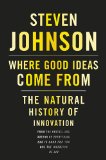
Where Good Ideas Come From

Coming October 5: Where Good Ideas Come From: The Natural History of Innovation by Steven Johnson (Riverhead, 2010)

(link for amazon.co.uk)

Product description from the publisher:

One of our most innovative, popular thinkers takes on-in exhilarating style-one of our key questions: Where do good ideas come from?

With Where Good Ideas Come From, Steven Johnson pairs the insight of his bestselling Everything Bad Is Good for You and the dazzling erudition of The Ghost Map and The Invention of Air to address an urgent and universal question: What sparks the flash of brilliance? How does groundbreaking innovation happen? Answering in his infectious, culturally omnivorous style, using his fluency in fields from neurobiology to popular culture, Johnson provides the complete, exciting, and encouraging story of how we generate the ideas that push our careers, our lives, our society, and our culture forward.

Beginning with Charles Darwin’s first encounter with the teeming ecosystem of the coral reef and drawing connections to the intellectual hyperproductivity of modern megacities and to the instant success of YouTube, Johnson shows us that the question we need to ask is, What kind of environment fosters the development of good ideas? His answers are never less than revelatory, convincing, and inspiring as Johnson identifies the seven key principles to the genesis of such ideas, and traces them across time and disciplines.

Most exhilarating is Johnson’s conclusion that with today’s tools and environment, radical innovation is extraordinarily accessible to those who know how to cultivate it. Where Good Ideas Come From is essential reading for anyone who wants to know how to come up with tomorrow’s great ideas.
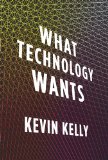
What Technology Wants

And on Oct 14: What Technology Wants by Kevin Kelly (Viking, 2010)

(link for amazon.co.uk)

Product description from the publisher:

A refreshing view of technology as a living force in the world.

This provocative book introduces a brand-new view of technology. It suggests that technology as a whole is not a jumble of wires and metal but a living, evolving organism that has its own unconscious needs and tendencies. Kevin Kelly looks out through the eyes of this global technological system to discover “what it wants.” He uses vivid examples from the past to trace technology’s long course and then follows a dozen trajectories of technology into the near future to project where technology is headed. This new theory of technology offers three practical lessons: By listening to what technology wants we can better prepare ourselves and our children for the inevitable technologies to come. By adopting the principles of pro-action and engagement, we can steer technologies into their best roles. And by aligning ourselves with the long-term imperatives of this near-living system, we can capture its full gifts. Written in intelligent and accessible language, this is a fascinating, innovative, and optimistic look at how humanity and technology join to produce increasing opportunities in the world and how technology can give our lives greater meaning.

See also: Wired: conversation between Johnson and Kelly, Steven Johnson’s website, Kevin Kelly’s website, Freakonomics Q&A with Steven Johnson
Comments (0) - culture,new books

new book – ‘The Character of Consciousness’ by David Chalmers

September 30, 2010

The Character of Consciousness

The Character of Consciousness (Philosophy of Mind Series) by David Chalmers (Oxford University Press, USA, 2010) is now available.

(link for amazon.co.uk)

Product description from the publisher:

What is consciousness? How does the subjective character of consciousness fit into an objective world? How can there be a science of consciousness? In this sequel to his groundbreaking and controversial The Conscious Mind, David Chalmers develops a unified framework that addresses these questions and many others. Starting with a statement of the “hard problem” of consciousness, Chalmers builds a positive framework for the science of consciousness and a nonreductive vision of the metaphysics of consciousness. He replies to many critics of The Conscious Mind, and then develops a positive theory in new directions. The book includes original accounts of how we think and know about consciousness, of the unity of consciousness, and of how consciousness relates to the external world. Along the way, Chalmers develops many provocative ideas: the “consciousness meter”, the Garden of Eden as a model of perceptual experience, and The Matrix as a guide to the deepest philosophical problems about consciousness and the external world. This book will be required reading for anyone interested in the problems of mind, brain, consciousness, and reality.

See also: Author’s website

[Douglas Hofstadter’s new book, Surfaces and Essences, originally had an expected publication date of Sept. 27, 2010, but now shows March 2011.]

Comments (0) - consciousness,new books

new book – ‘Friendship: Development, Ecology, and Evolution of a Relationship’

September 25, 2010

This book was recently featured at the Neuroanthropology blog:
Friendship: Development, Ecology, and Evolution of a Relationship (Origins of Human Behavior and Culture) by Daniel J. Hruschka (University of California Press, 2010)
(link for amazon.co.uk)

Product description from the publisher:

Friends-they are generous and cooperative with each other in ways that appear to defy standard evolutionary expectations, frequently sacrificing for one another without concern for past behaviors or future consequences. In this fascinating multidisciplinary study, Daniel J. Hruschka synthesizes an array of cross-cultural, experimental, and ethnographic data to understand the broad meaning of friendship, how it develops, how it interfaces with kinship and romantic relationships, and how it differs from place to place. Hruschka argues that friendship is a special form of reciprocal altruism based not on tit-for-tat accounting or forward-looking rationality, but rather on mutual goodwill that is built up along the way in human relationships.

See also: Author interview at Neuroanthopology, author’s webpage, Page 99 test

Comments (0) - culture,new books

new book – ‘How Intelligence Happens’

September 24, 2010

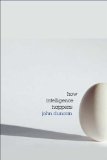
How Intelligence Happens

How Intelligence Happens by John Duncan (Yale University Press, 2010)

(link for amazon.co.uk)

Product description from the publisher:

Human intelligence is among the most powerful forces on earth. It builds sprawling cities, vast cornfields, coffee plantations, and complex microchips; it takes us from the atom to the limits of the universe. Understanding how brains build intelligence is among the most fascinating challenges of modern science. How does the biological brain, a collection of billions of cells, enable us to do things no other species can do? In this book John Duncan, a scientist who has spent thirty years studying the human brain, offers an adventure story—the story of the hunt for basic principles of human intelligence, behavior, and thought.

Using results drawn from classical studies of intelligence testing; from attempts to build computers that think; from studies of how minds change after brain damage; from modern discoveries of brain imaging; and from groundbreaking recent research, Duncan synthesizes often difficult-to-understand information into a book that will delight scientific and popular readers alike. He explains how brains break down problems into useful, solvable parts and then assemble these parts into the complex mental programs of human thought and action.

Moving from the foundations of psychology, artificial intelligence, and neuroscience to the most current scientific thinking, How Intelligence Happens is for all those curious to understand how their own mind works.

See also: Author’s webpage at Cambridge Neuroscience

Comments (0) - cognitive science,new books

new book – ‘The World Is Made of Stories’ by David Loy

September 19, 2010

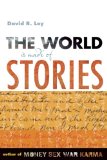
The World Is Made of Stories

The World Is Made of Stories by Buddhist philosopher David Loy (Wisdom Publications, 2010).

(link for amazon.co.uk)

Product description from the publisher:

In this unique and utterly novel presentation, David Loy explores the fascinating proposition that the stories we tell — about what is and is not possible, about ourselves, about right and wrong, life and death, about the world and everything in it — become the very building blocks of our experience and of the universe itself. Loy uses an intriguing mixture of quotations from familiar and less-familiar sources and brief standalone micro-essays, engaging both the reader and himself in challenging and illuminating dialogue. As we come to see that the world is made — in a word — of stories, we come to a richer understanding of that most elusive of Buddhist ideas: shunyata, the “generative emptiness” that makes up all forms. Reminiscent of Zen koans and works of sophisticated poetry, this book rewards both casual reading and deep reflection.

Comments (0) - consciousness,mind,new books,reality