July 19, 2011
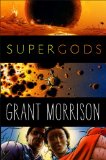
One of Amazon’s Best Books of the Month for July: Supergods: What Masked Vigilantes, Miraculous Mutants, and a Sun God from Smallville Can Teach Us About Being Human by Grant Morrison (Spiegel & Grau)
(kindle ed.), (amazon.co.uk)
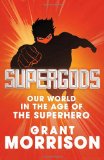
Product description from the publisher:
From one of the most acclaimed and profound writers in the world of comics comes a thrilling and provocative exploration of humankind’s great modern myth: the superhero.
The first superhero comic ever published, Action Comics no. 1 in 1938, introduced the world to something both unprecedented and timeless: Superman, a caped god for the modern age. In a matter of years, the skies of the imaginary world were filled with strange mutants, aliens, and vigilantes: Batman, Wonder Woman, the Fantastic Four, Iron Man, and the X-Men—the list of names as familiar as our own. In less than a century, they’ve gone from not existing at all to being everywhere we look: on our movie and television screens, in our videogames and dreams. But what are they trying to tell us?
For Grant Morrison, arguably the greatest of contemporary chroniclers of the “superworld,” these heroes are powerful archetypes whose ongoing, decades-spanning story arcs reflect and predict the course of human existence: Through them we tell the story of ourselves, our troubled history, and our starry aspirations. In this exhilarating work of a lifetime, Morrison draws on art, science, mythology, and his own astonishing journeys through this shadow universe to provide the first true history of the superhero—why they matter, why they will always be with us, and what they tell us about who we are . . . and what we may yet become.
See also: Author’s website, NY Times review
Comments (0)
- culture,new books
July 15, 2011
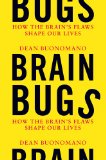
Brain Bugs: How the Brain’s Flaws Shape Our Lives by Dean Buonomano (W.W. Norton, 2011)
(kindle ed.), (amazon.co.uk – 1 Sep)
A lively, surprising tour of our mental glitches and how they arise.
With its trillions of connections, the human brain is more beautiful and complex than anything we could ever build, but it’s far from perfect. Our memory is unreliable; we can’t multiply large sums in our heads; advertising manipulates our judgment; we tend to distrust people who are different from us; supernatural beliefs and superstitions are hard to shake; we prefer instant gratification to long-term gain; and what we presume to be rational decisions are often anything but. Drawing on striking examples and fascinating studies, neuroscientist Dean Buonomano illuminates the causes and consequences of these “bugs” in terms of the brain’s innermost workings and their evolutionary purposes. He then goes one step further, examining how our brains function-and malfunction-in the digital, predator-free, information-saturated, special effects-addled world that we have built for ourselves. Along the way, Brain Bugs gives us the tools to hone our cognitive strengths while recognizing our inherent weaknesses. 10 black-and-white illustrations
See also: Book website, NPR story
Comments (0)
- cognitive science,new books
July 10, 2011
The calendar of upcoming releases has been moved to the sidebar “pages” section – here.
Comments (0)
- mind,new books
July 6, 2011

The Evident Connexion: Hume on Personal Identity by Galen Strawson (Oxford University Press, USA, 2011)
(amazon.co.uk)
Product description from the publisher:
The Evident Connexion presents a new reading of Hume’s ‘bundle theory’ of the self or mind, and his later rejection of it. Galen Strawson argues that the bundle theory does not claim that there are no subjects of experience, as many have supposed, or that the mind is just a series of experiences. Hume holds only that the ‘essence of the mind [is] unknown’. His claim is simply that we have no empirically respectable reason to believe in the existence of a persisting subject, or a mind that is more than a series of experiences (each with its own subject).
Why does Hume later reject the bundle theory? Many think he became dissatisfied with his account of how we come to believe in a persisting self, but Strawson suggests that the problem is more serious. The keystone of Hume’s philosophy is that our experiences are governed by a ‘uniting principle’ or ‘bond of union’. But a philosophy that takes a bundle of ontologically distinct experiences to be the only legitimate conception of the mind cannot make explanatory use of those notions in the way Hume does. As Hume says in the Appendix to the Treatise of Human Nature: having ‘loosen’d all our particular perceptions’ in the bundle theory, he is unable to ‘explain the principle of connexion, which binds them together’. This lucid book is the first to be wholly dedicated to Hume’s theory of personal identity, and presents a bold new interpretation which bears directly on current debates among scholars of Hume’s philosophy.
Strawson also has forthcoming in Oct Locke on Personal Identity (Princeton Monographs in Philosophy), (amazon.co.uk)
See also: Author’s website [updated link 7/19/13]
Comments (0)
- new books,philosophy of mind,self
July 1, 2011
Investigating Pristine Inner Experience: Moments of Truth by Russell T. Hurlburt (Cambridge University Press, 2011)
(amazon.co.uk – 31 July)
Product description from the publisher:
You live your entire waking life immersed in your inner experiences (thoughts, feelings, sensations, etc.) – private phenomena created by you, just for you, your own way. Despite their intimacy and ubiquity, you probably don’t know the characteristics of your own inner phenomena; neither does psychology or consciousness science. Investigating Pristine Inner Experience explores how to apprehend inner experience in high fidelity. This book will transform your view of your own inner experience, awaken you to experiential differences between people, and thereby reframe your thinking about psychology and consciousness science, which banned the study of inner experience for most of a century and yet continued to recognize its fundamental importance. The author, a pioneer in using beepers to explore inner experience, draws on his 35 years of studies to provide fascinating and provocative views of everyday inner experience and experience in bulimia, adolescence, the elderly, schizophrenia, Tourette’s syndrome, virtuosity, and so on.
See also: Author’s website
Hurlburt’s previous book with Eric Schwitzgebel: Describing Inner Experience?: Proponent Meets Skeptic (Life and Mind: Philosophical Issues in Biology and Psychology) (MIT Press, 2007)
Comments (0)
- consciousness,new books