November 23, 2007
My practice is to read nonfiction books straight through, beginning to end – I like to immerse myself in the author’s flow of thought and argument. That is not the method recommended by Paul Edwards (from the University of Michigan School of Information) in the following article:
“How to Read: Strategies for Getting the Most out of Non-Fiction Reading” (links to a 7-page pdf)
He says: “So unless you’re stuck in prison with nothing else to do, NEVER read a non-fiction book from beginning to end.” Though I can’t agree with that, there are some good tips on reading strategies.
Theoretically related is this recent book about reading (or not reading):
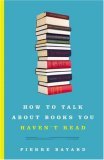
How to Talk About Books You Haven’t Read by Pierre Bayard, which has been getting a lot of attention…
 Complete Review has a great page full of links related to this title.
Comments (1)
- new books,reading
November 16, 2007
Comments (3)
- new books
November 8, 2007
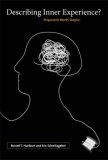
Describing Inner Experience?: Proponent Meets Skeptic (Bradford Books) is a new book from MIT Press by Russell T. Hurlburt and Eric Schwitzgebel, who announces the book’s appearance on his blog, the Splintered Mind.
This sounds really interesting both in the subject matter of introspection and the way the book is put together as a collaboration between opposing viewpoints (with a third collaborator, “Melanie,” as test subject). From the book description:
Hurlburt and Schwitzgebel recruited a subject, “Melanie,” to report on her conscious experience using Hurlburt’s Descriptive Experience Sampling method (in which the subject is cued by random beeps to describe her conscious experience). The heart of the book contains Melanie’s accounts, Hurlburt and Schwitzgebel’s interviews with her, and their subsequent discussions while studying the transcripts of the interviews. In this way the authors dispute about the general reliability of introspective reporting is steadily tempered by specific debates about the extent to which Melanie’s particular reports are believable.
The publisher’s website for the book includes the transcripts and audio files of the interviews, plus the first chapter of the book.
Comments (0)
- cognitive science,consciousness,new books
November 6, 2007
I like to browse…
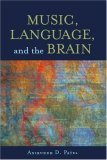
Music, Language, and the Brain is due to be released tomorrow (Nov. 7) from Oxford University Press.
“In the first comprehensive study of the relationship between music and language from the standpoint of cognitive neuroscience, Aniruddh D. Patel (Senior Fellow, The Neurosciences Institute, San Diego) challenges the widespread belief that music and language are processed independently.”
The Hidden Sense: Synesthesia in Art and Science (Leonardo Books),
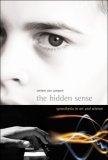 is new from MIT Press: “In The Hidden Sense, Cretien van Campen explores synesthesia from both artistic and scientific perspectives, looking at accounts of individual experiences, examples of synesthesia in visual art, music, and literature, and recent neurological research.”
 Consciousness and Mental Life
 by Daniel N. Robinson is due out on Nov. 16.
Comments (0)
- cognitive science,consciousness,new books
October 30, 2007
On Deep History and the Brain by Daniel Lord Smail (U of California Press, 2007)
 From the book description: “Daniel Lord Smail argues that, in the wake of the decade of the brain and the bestselling historical work of scientists like Jared Diamond, the time has come for fundamentally new ways of thinking about our past. He shows how recent work in evolution and paleohistory makes it possible to join the deep past with the recent past and abandon, once and for all, the idea of prehistory. Making an enormous literature accessible to the general reader, he lays out a bold new case for bringing neuroscience and neurobiology into the realm of history.”
UC Press book information
Comments (1)
- culture,new books

 , a collection edited with Jaime Teevan. Both titles are based on a