January 10, 2008
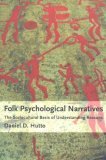
Recently issued by MIT Press: Folk Psychological Narratives: The Sociocultural Basis of Understanding Reasons (Bradford Books) by Daniel C. Hutto.
From the book description:
Established wisdom in cognitive science holds that the everyday folk psychological abilities of humans–our capacity to understand intentional actions performed for reasons–are inherited from our evolutionary forebears. In Folk Psychological Narratives, Daniel Hutto challenges this view (held in somewhat different forms by the two dominant approaches, “theory theory” and simulation theory) and argues for the sociocultural basis of this familiar ability. He makes a detailed case for the idea that the way we make sense of intentional actions essentially involves the construction of narratives about particular persons. Moreover he argues that children acquire this practical skill only by being exposed to and engaging in a distinctive kind of narrative practice.
Hutto calls this developmental proposal the narrative practice hypothesis (NPH). Its core claim is that direct encounters with stories about persons who act for reasons (that is, folk psychological narratives) supply children with both the basic structure of folk psychology and the norm-governed possibilities for wielding it in practice. In making a strong case for the as yet underexamined idea that our understanding of reasons may be socioculturally grounded, Hutto not only advances and explicates the claims of the NPH, but he also challenges certain widely held assumptions. For example, he targets the idea that the primary function of folk psychology is to enable us to predict the behaviors of others. In this way, Folk Psychological Narratives both clears conceptual space around the dominant approaches for an alternative and offers a groundbreaking proposal.
Amazon has “Search Inside the Book” for this title.
Comments (0)
- cognitive science,culture,new books,philosophy of mind,psychology
January 9, 2008
One of the books in the LibraryThing Early Reviewers program for this month is called “Sciousness .” I had never heard this term before, but it comes from William James (and of course has its own Wikipedia entry!)
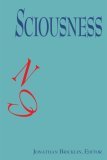
James uses the term to refer to “pure experience” or “consciousness without self” (or maybe more precisely “consciousness prior to self”).
I hope I get a copy of this book to review!
Comments (0)
- consciousness,new books
January 7, 2008
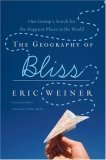 At the bookstore today I browsed through The Geography of Bliss: One Grump’s Search for the Happiest Places in the World
 by Eric Weiner, a breezy, humorous sort of travelogue looking at the relationship between place and happiness. Weiner starts at the World Database of Happiness in the Netherlands, then visits Switzerland, Bhutan, Qatar, Iceland, Moldova (an example of an unhappy place), Thailand, Great Britain, India and the US.
Reviews: here, here (for the Moldovan perspective), and here.
The Author’s website includes a slideshow on Bhutan.
Comments (1)
- happiness,new books
January 6, 2008
The Emotional Construction of Morals by Jesse Prinz (Oxford University Press, Dec. 28, 2007).
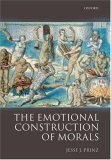 From the book description: “Jesse Prinz argues that recent work in philosophy, neuroscience, and anthropology supports two radical hypotheses about the nature of morality: moral values are based on emotional responses, and these emotional responses are inculcated by culture, not hard-wired through natural selection.”
author’s website, University of North Carolina, Chapel Hill
excerpts (24 p pdf draft)
article “The Emotional Basis of Moral Judgments,” Philosophical Explorations, March 2006 (16 p pdf)
Comments (2)
- culture,new books,philosophy of mind,psychology