January 28, 2008
In On Being Certain: Believing You Are Right Even When You’re Not, neurologist Robert Burton challenges the notions of how we think about 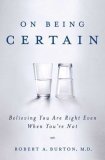 what we know. He shows that the feeling of certainty we have when we “know” something comes from sources beyond our control and knowledge. In fact, certainty is a mental sensation, rather than evidence of fact. Because this “feeling of knowing” seems like confirmation of knowledge, we tend to think of it as a product of reason. But an increasing body of evidence suggests that feelings such as certainty stem from primitive areas of the brain, and are independent of active, conscious reflection and reasoning. The feeling of knowing happens to us; we cannot make it happen.
Comments (0)
- cognitive science,new books,psychology
January 27, 2008
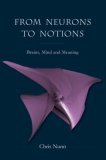
One of the new books I want to highlight is From Neurons to Notions: Brains, Mind and Meaning (coming soon in the US, already available in the UK) by Chris Nunn, a psychiatrist and an editor of the Journal of Consciousness Studies.
From the book description:
Anyone interested in exploring the dynamics of mind and memory, how we experience time, and how ideas seem to have a life of their own, will enjoy this highly readable and enjoyable account written by a specialist in consciousness studies. Chris Nunn builds a picture of our minds suitable for the new century, a picture that is rapidly developing in ways very different from predominant twentieth-century views. Along the way, he offers an understanding of how our minds behave during sleep, how the craze for alien abduction came about, and what our sense of beauty may be based on. Final chapters extend these ideas to cover near-death and mystical experiences, among other topics. Nunn’s account ranges over theories and research evidence of the last one hundred and fifty years, and brings us right up to date with the views of modern brain scientists.
The Author’s website has a Table of Contents and Introduction.
Nunn is also the author of De La Mettrie’s Ghost: The Story of Decisions (Macmillan, 2005) and Awareness: What It Is, What It Does (Routledge, 1995 – “Search Inside” available at Amazon).
Comments (0)
- cognitive science,consciousness,mind,new books
January 26, 2008
 I’ve tried the Amazon new book feed mash in Fwicki: link to the feed. It has several of the mind-related categories in Amazon’s ‘hot new releases’ section merged into one feed. The feed works just fine but a “reader” page at Fwicki had to be taken down because of some problem with the way the Amazon feed was formatted.
The FeedBlendr mash from episode 1 did not work too well when inserted right into the post, so I won’t link back to it, but FeedBlendr did make a nice webpage for the feed. I like this page because you can go back through a link at the bottom of the page and browse through many pages of books, instead of just seeing the ones that happen to come up on top.[I’ve changed the link to open in a new browser in case it is slow to load.]
Comments (0)
- book search,new books
January 25, 2008
sp!ked review of books takes a look at ‘Big Ideas: The Essential Guide to the Latest Thinking’ by James Harkin, finding it “gently withering throughout” and: “Insofar as it inserts the ideas discussed within a historical 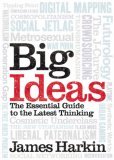 context, Harkin’s introduction is indispensable.” The review discusses happiness as an example of Harkin’s approach.
Comments (0)
- culture,new books
January 22, 2008
I’ve been experimenting with creating a combined feed for new books. My first semi-success is displayed here; it’s rather lengthy so I’m putting it after the break (click “more” – you probably know…). This has several feeds from Amazon’s “new releases” in the mind-related topics plus a del.icio.us tag feed so I can throw in some hand-picked items from time to time.
The FeedBlendr page is here in case anyone would like to subscribe or make use of it. I’m not totally satisfied with the results, mostly because the feeds from Amazon are long, so it seems like entries from only one feed are displayed on top. [Plus sometimes very slow to load I’m afraid.] Your comments and suggestions are welcome, as always.
(more…)
Comments (0)
- new books