Computing the Mind: How the Mind Really Works by Shimon Edelman is due out from Oxford University Press on Aug. 20 (according to Oxford) or Sept. 8 (according to Amazon) in the US.
Here is the product description:
In a culmination of humanity’s millennia-long quest for self knowledge, the sciences of the mind are now in a position to offer concrete, empirically validated answers to the most fundamental questions about human nature. What does it mean to be a mind? How is the mind related to the brain? How are minds shaped by their embodiment and environment? What are the principles behind cognitive functions such as perception, memory, language, thought, and consciousness?
By analyzing the tasks facing any sentient being that is subject to stimulation and a pressure to act, Shimon Edelman identifies computation as the common denominator in the emerging answers to all these questions. Any system composed of elements that exchange signals with each other and occasionally with the rest of the world can be said to be engaged in computation. A brain composed of neurons is one example of a system that computes, and the computations that the neurons collectively carry out constitute the brain’s mind.
Edelman presents a computational account of the entire spectrum of cognitive phenomena that constitutes the mind. He begins with sentience, and uses examples from visual perception to demonstrate that it must, at its very core, be a type of computation. Throughout his account, Edelman acknowledges the human mind’s biological origins. Along the way, he also demystifies traits such as creativity, language, and individual and collective consciousness, and hints at how naturally evolved minds can transcend some of their limitations by moving to computational substrates other than brains. The account that Edelman gives in this book is accessible, yet unified and rigorous, and the big picture he presents is supported by evidence ranging from neurobiology to computer science. The book should be read by anyone seeking a comprehensive and current introduction to cognitive psychology.
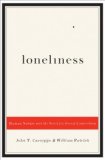
John T. Cacioppo’s groundbreaking research topples one of the pillars of modern medicine and psychology: the focus on the individual as the unit of inquiry. By employing brain scans, monitoring blood pressure, and analyzing immune function, he demonstrates the overpowering influence of social context—a factor so strong that it can alter DNA replication. He defines an unrecognized syndrome—chronic loneliness—brings it out of the shadow of its cousin depression, and shows how this subjective sense of social isolation uniquely disrupts our perceptions, behavior, and physiology, becoming a trap that not only reinforces isolation but can also lead to early death. He gives the lie to the Hobbesian view of human nature as a “war of all against all,” and he shows how social cooperation is, in fact, humanity’s defining characteristic. Most important, he shows how we can break the trap of isolation for our benefit both as individuals and as a society.
“What was the first song that humans sang and why did music become an integral part of human life from the beginning? Levitin tells the story of the co-evolution of music and of the human brain, how each one influenced the development of the other over tens of thousands of years. An unprecedented blend of science and art, Daniel Levitin’s best-selling debut, This Is Your Brain on Music (translated into 8 languages), changed the way we think about how music gets in our heads. Now in what is being called a tour de force by leading scientists, he shows how six specific forms of music played a pivotal role in creating human culture and society as we know it. Levitin masterfully weaves together the story of human evolution, music, anthropology, psychology and biology from the dawn of homo sapiens to the present.”
An exploration of urbanism, personal identity, and how the space we live in shapes us
According to philosopher and cultural critic Mark Kingwell, the transnational global city—New York and Shanghai—is the most significant machine our species has ever produced. And yet, he says, we fail again and again to understand it. How do cities shape us, and how do we shape them? That is the subject of Concrete Reveries, which investigates how we occupy city space and why place is so important to who we are.
There is a great deal of current philosophical and scientific interest in emotional feelings. However, many of the feelings that people struggle to express in their everyday lives do not appear on standard lists of emotions. For example, there are feelings of unreality, heightened existence, surreality, familiarity, unfamiliarity, estrangement, strangeness, isolation, emptiness, belonging, being at home in the world, being at one with things, significance, insignificance, and the list goes on. Such feelings might be referred to as ‘existential’ because they comprise a changeable sense of being part of a world. Existential feelings have not been systematically explored until now, despite the important role that they play in our lives and the devastating effects that disturbances of existential feeling can have in psychiatric illness.
Feelings of Being is the first ever philosophical account of the nature, role and variety of existential feelings in psychiatric illness and in everyday life. In this book, Matthew Ratcliffe proposes that existential feelings form a distinctive group by virtue of three characteristics: they are bodily feelings, they constitute ways of relating to the world as a whole, and they are responsible for our sense of reality. The book explains how something can be a bodily feeling and, at the same time, a sense of reality and belonging. It then explores the role of changed feeling in psychiatric illness, showing how an account of existential feeling can help us to understand experiential changes that occur in a range of conditions, including depression, circumscribed delusions, depersonalisation and schizophrenia. The book also addresses the contribution made by existential feelings to religious experience and to philosophical thought.
Written in a clear, non-technical style throughout, it will be valuable for philosophers, clinicians, students, and researchers working in a wide range of disciplines.
In this fascinating discussion of ancient art and religion, Dr. David S. Whitley–one of the world’s leading experts on cave paintings–guides the reader in an exploration of these intriguing questions, while sharing his firsthand experiences in visiting these exquisite, breath-taking sites.
To grasp what drove these ancient artists to create these masterpieces, and to understand the origin of myth and religion, as Whitley explains, is to appreciate what makes us human. Moreover, he broadens our understanding of the genesis of creativity and myth by proposing a radically new and original theory that weds two seemingly warring camps from separate disciplines.
On the one hand, archaeologists specializing in prehistoric cave paintings have argued that the visionary rituals of shamans led to the creation of this expressive art. They consider shamanism to be the earliest known form of religion. By contrast, evolutionary psychologists view the emergence of religious beliefs as a normal expression of the human mind. In their eyes, the wild and ecstatic trances of shamans were a form of aberrant behavior. Far from being typical representatives of ancient religion, shamans were exceptions to the normal rule of early religion.
Whitley resolves the controversy by interweaving the archaeological evidence with the latest findings of cutting-edge neuroscience. He thereby rewrites our understanding of shamanism and its connection with artistic creativity, myth, and religion.
In Human Reasoning and Cognitive Science, Keith Stenning and Michiel van Lambalgen–a cognitive scientist and a logician–argue for the indispensability of modern mathematical logic to the study of human reasoning. Logic and cognition were once closely connected, they write, but were “divorced” in the past century; the psychology of deduction went from being central to the cognitive revolution to being the subject of widespread skepticism about whether human reasoning really happens outside the academy. Stenning and van Lambalgen argue that logic and reasoning have been separated because of a series of unwarranted assumptions about logic.
Stenning and van Lambalgen contend that psychology cannot ignore processes of interpretation in which people, wittingly or unwittingly, frame problems for subsequent reasoning. The authors employ a neurally implementable defeasible logic for modeling part of this framing process, and show how it can be used to guide the design of experiments and interpret results. They draw examples from deductive reasoning, from the child’s development of understandings of mind, from analysis of a psychiatric disorder (autism), and from the search for the evolutionary origins of human higher mental processes.
The picture proposed is one of fast, cheap, automatic but logical processes bringing to bear general knowledge on the interpretation of task, language, and context, thus enabling human reasoners to go beyond the information given. This proposal puts reasoning back at center stage.