October 27, 2009
Found via the Book Bench at the New Yorker:
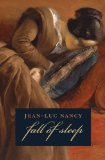
Fall of Sleep by Jean-Luc Nancy, tr. Charlotte Mandell (Fordham University Press, 2009)
(link for UK)
Product description from the publisher:
Philosophers have largely ignored sleep, treating it as a useless negativity, mere repose for the body or at best a source for the production of unconscious signs out of the night of the soul. In an extraordinary theoretical investigation written with lyric intensity, The Fall of Sleep puts an end to this neglect by providing a deft yet rigorous philosophy of sleep. What does it mean to “fall” asleep? Might there exist something like a “reason” of sleep, a reason at work in its own form or modality, a modality of being in oneself, of return to oneself, without the waking “self” that distinguishes “I” from “you” and from the world? What reason might exist in that absence of ego, appearance, and intention, in an abandon thanks to which one is emptied out into a non-place shared by everyone? Sleep attests to something like an equality of all that exists in the rhythm of the world. With sleep, victory is constantly renewed over the fear of night, an a confidence that we will wake with the return of day, in a return to self, to us–though to a self, an us, that is each day different, unforeseen, without any warning given in advance.To seek anew the meaning stirring in the supposed loss of meaning, of consciousness, and of control that occurs in sleep is not to reclaim some meaning already familiar in philosophy, religion, progressivism, or any other -ism. It is instead to open anew a source that is not the source of a meaning but that makes up the nature proper to meaning, its truth: opening, gushing forth, infinity.This beautiful, profound meditation on sleep is a unique work in the history of phenomenology–a lyrical phenomenology of what can have no phenomenology, since sleep shows itself to the waking observer, the subject of phenomenology, only as disappearance and concealment.
Comments (0)
- consciousness,new books,philosophy of mind
October 25, 2009
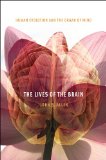
The Lives of the Brain: Human Evolution and the Organ of Mind by John S. Allen (Harvard University Press, 2009)
(link for UK)
Product description from the publisher:
Though we have other distinguishing characteristics (walking on two legs, for instance, and relative hairlessness), the brain and the behavior it produces are what truly set us apart from the other apes and primates. And how this three-pound organ composed of water, fat, and protein turned a mammal species into the dominant animal on earth today is the story John S. Allen seeks to tell.
Adopting what he calls a “bottom-up” approach to the evolution of human behavior, Allen considers the brain as a biological organ; a collection of genes, cells, and tissues that grows, eats, and ages, and is subject to the direct effects of natural selection and the phylogenetic constraints of its ancestry. An exploration of the evolution of this critical organ based on recent work in paleoanthropology, brain anatomy and neuroimaging, molecular genetics, life history theory, and related fields, his book shows us the brain as a product of the contexts in which it evolved: phylogenetic, somatic, genetic, ecological, demographic, and ultimately, cultural-linguistic. Throughout, Allen focuses on the foundations of brain evolution rather than the evolution of behavior or cognition. This perspective demonstrates how, just as some aspects of our behavior emerge in unexpected ways from the development of certain cognitive capacities, a more nuanced understanding of behavioral evolution might develop from a clearer picture of brain evolution.
An excerpt is available through the publisher’s website.
See also: author’s blog at Psychology Today
Comments (2)
- cognitive science,human evolution,new books
October 21, 2009
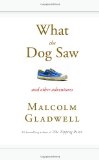
What the Dog Saw: And Other Adventures is Malcolm Gladwell’s new book, a collection of his New Yorker articles (Little, Brown, 2009).
(link for UK)
Product description from the publisher:
What is the difference between choking and panicking? Why are there dozens of varieties of mustard-but only one variety of ketchup? What do football players teach us about how to hire teachers? What does hair dye tell us about the history of the 20th century?
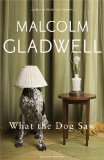
In the past decade, Malcolm Gladwell has written three books that have radically changed how we understand our world and ourselves: The Tipping Point; Blink; and Outliers. Now, in What the Dog Saw, he brings together, for the first time, the best of his writing from The New Yorker over the same period.
Here is the bittersweet tale of the inventor of the birth control pill, and the dazzling inventions of the pasta sauce pioneer Howard Moscowitz. Gladwell sits with Ron Popeil, the king of the American kitchen, as he sells rotisserie ovens, and divines the secrets of Cesar Millan, the “dog whisperer” who can calm savage animals with the touch of his hand. He explores intelligence tests and ethnic profiling and “hindsight bias” and why it was that everyone in Silicon Valley once tripped over themselves to hire the same college graduate.
“Good writing,” Gladwell says in his preface, “does not succeed or fail on the strength of its ability to persuade. It succeeds or fails on the strength of its ability to engage you, to make you think, to give you a glimpse into someone else’s head.” What the Dog Saw is yet another example of the buoyant spirit and unflagging curiosity that have made Malcolm Gladwell our most brilliant investigator of the hidden extraordinary.
More information at the author’s website
Comments (0)
- new books
October 20, 2009
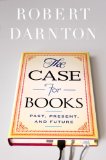
The Case for Books: Past, Present, and Future by historian Robert Darnton (PublicAffairs, 2009).
(link for UK)
Product description from the publisher:
The invention of writing was one of the most important technological, cultural, and sociological breakthroughs in human history. With the printed book, information and ideas could disseminate more widely and effectively than ever before—and in some cases, affect and redirect the sway of history. Today, nearly one million books are published each year. But is the era of the book as we know it—a codex of bound pages—coming to an end? And if it is, should we celebrate its demise and the creation of a democratic digital future, or mourn an irreplaceable loss? The digital age is revolutionizing the information landscape. Already, more books have been scanned and digitized than were housed in the great library in Alexandria, making available millions of texts for a curious reader at the click of a button, and electronic book sales are growing exponentially. Will this revolution in the delivery of information and entertainment make for more transparent and far-reaching dissemination or create a monopolistic stranglehold?
In The Case for Books, Robert Darnton, an intellectual pioneer in the field of the history of the book and director of Harvard University’s Library, offers an in-depth examination of the book from its earliest beginnings to its shifting role today in popular culture, commerce, and the academy. As an author, editorial advisor, and publishing entrepreneur, Darnton is a unique authority on the life and role of the book in society. This book is a wise work of scholarship—one that requires readers to carefully consider how the digital revolution will broadly affect the marketplace of ideas.
See also:
More new releases in Books & Reading
Barnes & Noble’s upcoming ebook reader
Comments (0)
- culture,new books,reading
October 17, 2009
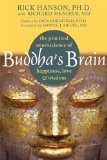
Buddha’s Brain: The Practical Neuroscience of Happiness, Love, and Wisdom by Rick Hanson with Richard Mendius (New Harbinger, 2009)
(link for UK)
Product description from the publisher:
Jesus, Moses, Mohammed, Gandhi, and the Buddha all had brains built essentially like anyone else’s, yet they were able to harness their thoughts and shape their patterns of thinking in ways that changed history. With new breakthroughs in modern neuroscience and the wisdom of thousands of years of contemplative practice, it is possible for us to shape our own thoughts in a similar way for greater happiness, love, compassion, and wisdom.
Buddha’s Brain joins the forces of modern neuroscience with ancient contemplative teachings to show readers how they can work toward greater emotional well-being, healthier relationships, more effective actions, and deepened religious and spiritual understanding. This book will explain how the core elements of both psychological well-being and religious or spiritual life-virtue, mindfulness, and wisdom-are based in the core functions of the brain: regulating, learning, and valuing. Readers will also learn practical ways to apply this information, as the book offers many exercises they can do to tap the unused potential of the brain and rewire it over time for greater peace and well-being.
Comments (2)
- consciousness,happiness,meditation,new books