November 25, 2009
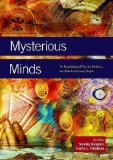
Mysterious Minds: The Neurobiology of Psychics, Mediums, and Other Extraordinary People ed. by Stanley Krippner and Harris L. Friedman (Praeger, 2009)
(link for UK)
Welcome to the world of Mysterious Minds: The Neurobiology of Psychics, Mediums, and Other Extraordinary People. Here, experts in the emerging field of neurobiological study make the case that while many claims of psychic ability are easily proven false, there may well be claimants who can obtain information in ways not easily explained by mainstream science—and there might be scientific tools and approaches available to confirm those experiences.
Written by an expert team of distinguished investigators from a half dozen countries around the world, Mysterious Minds introduces readers to the current state of research into parapsychological experiences, emphasizing the neurobiological data obtained by those who claim to be psychics or mediums. It offers specific examples of paranormal claims of extraordinary people—claims scrutinized through the use of high-tech brain imaging, clinical neurological examinations, and psychotropic drugs. The book concludes by proposing a series of models based on fundamental neurobiology, psychology, and quantum physics that could help us unravel these mental mysteries.
Comments (0)
- mind,new books
November 15, 2009
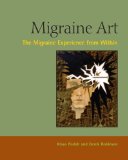
A recent library find—Migraine Art: The Migraine Experience from Within by Klaus Podoll and Derek Robinson (North Atlantic Books, 2009) [link for UK], a fascinating & beautiful book I probably would not have discovered if it hadn’t been in the new books section of my local library.
Product description from the publisher:
Migraine Art includes more than 300 powerful illustrations and paintings created by migraine sufferers from around the world. It provides a thoroughly unique window into the subjective world of the migraine sufferer. The idea of collecting migraine art started with a number of public competitions in the 1980s, which encouraged artists, both amateur and professional, to illustrate the pain, the visual disturbances, and the effect migraines had on their lives. The book includes hundreds of these submissions as well as detailed descriptions of different types of migraine visual phenomena.
Covering such topics as migraine signs, triggers, and treatments, as well as types of visual hallucinations and somatic sensations and experiences, the book offers a comprehensive view of the migraine experience. Each category of visual disturbance is accompanied by related artwork. A description of migraine visual experiences of famous historical figures, such as Blaise Pascal and Lewis Carroll, provide historical background on the topic. The book also includes a history of four Migraine Art competitions and information about the Migraine Art collection.
See also:
Preview at Google Books
Migraine Art section by Klaus Podoll at the Migraine Aura Foundation
Migraine art collection at Discovery Health
Migraine art slideshow at The New Times
“Alluring Abstract Art of Agonizing Migraines” at Life in the Fast Lane
Comments (0)
- new books,psychology
November 11, 2009
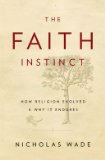
The Faith Instinct: How Religion Evolved and Why It Endures by Nicholas Wade is a preorder as I’m writing but due out from Penguin tomorrow (Nov 12) so it may be available by the time you’re reading this.
(link for UK)
Product description from the author’s website:
The Faith Instinct presents a novel approach to religion. It explores the evolutionary origins of religious behavior in early humans, and traces the cultural development of religion from its origins up until to the present day.
The book does not challenge the central belief of either atheists or people of faith, since it offers no opinion as to whether or not God exists. It’s about religious behavior and its value to the first human societies and their successors.
Based on evidence from anthropologists’ studies of religion, and new findings from genetics and archaeology, The Faith Instinct concludes that religious behavior was favored by natural selection because of the survival advantage it conferred on early human groups.
The religion of early peoples, who lived as hunters and gatherers, underwent a profound cultural transformation as the hunter gatherers formed the first settled societies. The form of religious observance shifted from all-night communal dances, to the spring and harvest festivals of early agricultural societies, to the forms of religion more familiar today. The Faith Instinct retraces the historical context in which Judaism, Christianity and Islam arose, and analyzes how religion has retained many of its ancient roles even in modern secular societies.
An excerpt, reviews and more are available at the author’s website.
Comments (0)
- culture,new books
November 8, 2009
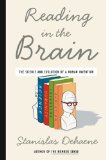
Reading in the Brain: The Science and Evolution of a Human Invention by Stanislaus Dehaene is due out this Thurs (Nov 12) from Viking.
(link for UK)
Product description from the publisher:
A renowned cognitive neuroscientist’s fascinating and highly informative account of how the brain acquires reading
How can a few black marks on a white page evoke an entire universe of sounds and meanings? In this riveting investigation, Stanislas Dehaene provides an accessible account of the brain circuitry of reading and explores what he calls the “reading paradox”: Our cortex is the product of millions of years of evolution in a world without writing, so how did it adapt to recognize words? Reading in the Brain describes pioneering research on how we process language, revealing the hidden logic of spelling and the existence of powerful unconscious mechanisms for decoding words of any size, case, or font.
Dehaene’s research will fascinate not only readers interested in science and culture, but also educators concerned with debates on how we learn to read, and who wrestle with pathologies such as dyslexia. Like Steven Pinker, Dehaene argues that the mind is not a blank slate: Writing systems across all cultures rely on the same brain circuits, and reading is only possible insofar as it fits within the limits of a primate brain. Setting cutting-edge science in the context of cultural debate, Reading in the Brain is an unparalleled guide to a uniquely human ability.
The website for the book has chapter summaries and color figures.
Comments (0)
- cognitive science,new books,reading
October 30, 2009
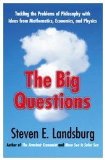
The Big Questions: Tackling the Problems of Philosophy with Ideas from Mathematics, Economics and Physics by Steven E. Landsburg (Free Press, 2009)
(link for UK)
Product description from the publisher:
In the wake of his enormously popular books The Armchair Economist and More Sex Is Safer Sex, Slate columnist and Economics professor Steven Landsburg uses concepts from mathematics, economics, and physics to address the big questions in philosophy: What is real? What can we know? What is the difference between right and wrong? And how should we live? Landsburg begins with the broadest possible categories from a mathematical analysis of the arguments for the existence of God; to the real meaning of the Heisenberg Uncertainty Principle and the Godel Incompleteness Theorem; to the moral choices we face in the marketplace and the voting booth. Stimulating, illuminating, and always surprising, The Big Questions challenges readers to re-evaluate their most fundamental beliefs and reveals the relationship between the loftiest philosophical quests and our everyday lives.
See also: Website for the book (including correction to p. 29)
Comments (0)
- new books