[ View menu ]

Archive for 'new books'

new book – ‘Crazy Like Us: The Globalization of the American Psyche’

January 23, 2010

Crazy Like US

A new book that seems to be generating lots of discussion is Crazy Like Us: The Globalization of the American Psyche by Ethan Watters (Free Press, 2010)
(link for UK)

Product description from the publisher:

It is well known that American culture is a dominant force at home and abroad; our exportation of everything from movies to junk food is a well-documented phenomenon. But is it possible America’s most troubling impact on the globalizing world has yet to be accounted for? In Crazy Like Us, Ethan Watters reveals that the most devastating consequence of the spread of American culture has not been our golden arches or our bomb craters but our bulldozing of the human psyche itself: We are in the process of homogenizing the way the world goes mad.

America has been the world leader in generating new mental health treatments and modern theories of the human psyche. We export our psychopharmaceuticals packaged with the certainty that our biomedical knowledge will relieve the suffering and stigma of mental illness. We categorize disorders, thereby defining mental illness and health, and then parade these seemingly scientific certainties in front of the world. The blowback from these efforts is just now coming to light: It turns out that we have not only been changing the way the world talks about and treats mental illness — we have been changing the mental illnesses themselves.

For millennia, local beliefs in different cultures have shaped the experience of mental illness into endless varieties. Crazy Like Us documents how American interventions have discounted and worked to change those indigenous beliefs, often at a dizzying rate. Over the last decades, mental illnesses popularized in America have been spreading across the globe with the speed of contagious diseases. Watters travels from China to Tanzania to bring home the unsettling conclusion that the virus is us: As we introduce Americanized ways of treating mental illnesses, we are in fact spreading the diseases.

In post-tsunami Sri Lanka, Watters reports on the Western trauma counselors who, in their rush to help, inadvertently trampled local expressions of grief, suffering, and healing. In Hong Kong, he retraces the last steps of the teenager whose death sparked an epidemic of the American version of anorexia nervosa. Watters reveals the truth about a multi-million-dollar campaign by one of the world’s biggest drug companies to change the Japanese experience of depression — literally marketing the disease along with the drug.

But this book is not just about the damage we’ve caused in faraway places. Looking at our impact on the psyches of people in other cultures is a gut check, a way of forcing ourselves to take a fresh look at our own beliefs about mental health and healing. When we examine our assumptions from a farther shore, we begin to understand how our own culture constantly shapes and sometimes creates the mental illnesses of our time. By setting aside our role as the world’s therapist, we may come to accept that we have as much to learn from other cultures’ beliefs about the mind as we have to teach.

See also: Website for the book

“Mad in America” at Cognition and Culture

Neuroanthropology.net on “Americans exporting mental illness”
Comments (0) - culture,new books,psychology

two new books: ‘The Hidden Brain’ and ‘What You Don’t Know You Know’

January 17, 2010

Two new books on the unconscious will be available this Tues Jan 19 according to Amazon, but were already on the shelves of my local bookstore today…

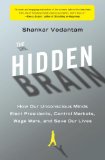
The Hidden Brain

The Hidden Brain: How Our Unconscious Minds Elect Presidents, Control Markets, Wage Wars, and Save Our Lives by Shankar Vedantam (Spiegel & Grau, 2010)

(link for UK)

Product description from the publisher:

The hidden brain is Shankar Vedantam’s shorthand for a host of brain functions, emotional responses, and cognitive processes that happen outside of our conscious awareness, but that have a decisive effect on how we behave. The hidden brain has its finger on the scale when we make all of our most complex and important decisions – it decides who we fall in love with, whether we should convict someone of murder, or which way to run when someone yells “fire!” It explains why we can become riveted by the story of a single puppy adrift on an ocean but are quickly bored by a story of genocide. The hidden brain can also be deliberately manipulated to vote against their interest, or even become suicide terrorists. But the most disturbing thing is that it does all of this without our knowing.

Shankar Vedantam, longtime author of the Washington Post’s popular “Department of Human Behavior” column, takes us on a tour of this phenomenon and explores its consequences. Using original reporting that combines the latest scientific research with compulsively readable narratives that take readers from the American campaign trail to terrorist indoctrination camps, from the World Trade Center on 9/11 to, yes, a puppy adrift in the Pacific Ocean, Vedantam illuminates the dark recesses of our minds while making an original argument about how we can compensate for our blind spots—and what happens when we don’t.

The book website includes video summaries for each chapter, plus an excerpt, the author’s blog and much more.


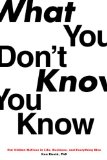
What You Don’t Know You Know: Our Hidden Motives in Life, Business, and Everything Else by Ken Eisold (Other Press, 2010)

(link for UK)

Product description from the publisher:

The unconscious sprang to the attention of the West a hundred years ago, and we are still struggling to absorb its full impact. It was one thing to understand the concept, to see it and believe it, but another to live with it, to take in fully its challenge to our deepest cultural assumptions. Today, as we expand our understanding of its reach, we are still coming to grips with what it means. This “new unconscious” is driven by the identities we assume, the groups we belong to, the ideas we inherit, the languages we use–all the elements that provide meaning and structure to our world.

What You Don’t Know You Know is about this emergent understanding, and how it forces us to rethink our relationships with each other as well as our beliefs about what it means to be a person, to have a self. It is for all those who want a better understanding of the complexity of human motivation, whether as an executive faced with employees resisting change, an elected official trying to forge agreements among competing interests, a consultant brought in to restructure an ailing corporation, or individuals struggling to understand their relationships and why they do the things they do. All too often, our actions do not conform to our explicit intentions or to common sense. We are more constricted than we think, but sometimes we are also smarter.

See also: Author’s website

Comments (0) - mind,new books

new Jaron Lanier: ‘You Are Not a Gadget’

January 14, 2010

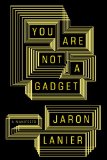
You Are Not a Gadget

You Are Not a Gadget: A Manifesto by Jaron Lanier (Knopf, 2010) is one of Amazon’s Best Books of the Month.

(link for UK)

Product description from the publisher:

Jaron Lanier, a Silicon Valley visionary since the 1980s, was among the first to predict the revolutionary changes the World Wide Web would bring to commerce and culture. Now, in his first book, written more than two decades after the web was created, Lanier offers this provocative and cautionary look at the way it is transforming our lives for better and for worse.

The current design and function of the web have become so familiar that it is easy to forget that they grew out of programming decisions made decades ago. The web’s first designers made crucial choices (such as making one’s presence anonymous) that have had enormous—and often unintended—consequences. What’s more, these designs quickly became “locked in,” a permanent part of the web’s very structure.

Lanier discusses the technical and cultural problems that can grow out of poorly considered digital design and warns that our financial markets and sites like Wikipedia, Facebook, and Twitter are elevating the “wisdom” of mobs and computer algorithms over the intelligence and judgment of individuals.

Lanier also shows:
How 1960s antigovernment paranoia influenced the design of the online world and enabled trolling and trivialization in online discourse
How file sharing is killing the artistic middle class;
How a belief in a technological “rapture” motivates some of the most influential technologists
Why a new humanistic technology is necessary.

Controversial and fascinating, You Are Not a Gadget is a deeply felt defense of the individual from an author uniquely qualified to comment on the way technology interacts with our culture.

See also: Author’s website

Comments (0) - consciousness,culture,new books

new book – ‘Mindsight: The New Science of Personal Transformation’

January 12, 2010

Mindsight

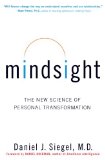
Mindsight: The New Science of Personal Transformation by Dr Daniel J Siegel (Bantam, 2010)

(link for UK)

Product description from the publisher:

From a pioneer in the field of mental health comes a groundbreaking book on the healing power of “mindsight,” the potent skill that is the basis for both emotional and social intelligence. Mindsight allows you to make positive changes in your brain–and in your life.

• Is there a memory that torments you, or an irrational fear you can’ t shake?
• Do you sometimes become unreasonably angry or upset and find it hard to calm down?
• Do you ever wonder why you can’t stop behaving the way you do, no matter how hard you try?
• Are you and your child (or parent, partner, or boss) locked in a seemingly inevitable pattern of conflict?

What if you could escape traps like these and live a fuller, richer, happier life? This isn’t mere speculation but the result of twenty-five years of careful hands-on clinical work by Daniel J. Siegel, M.D. A Harvard-trained physician, Dr. Siegel is one of the revolutionary global innovators in the integration of brain science into the practice of psychotherapy. Using case histories from his practice, he shows how, by following the proper steps, nearly everyone can learn how to focus their attention on the internal world of the mind in a way that will literally change the wiring and architecture of their brain.

Through his synthesis of a broad range of scientific research with applications to everyday life, Dr. Siegel has developed novel approaches that have helped hundreds of patients heal themselves from painful events in the past and liberate themselves from obstacles blocking their happiness in the present. And now he has written the first book that will help all of us understand the potential we have to create our own lives. Showing us mindsight in action, Dr. Siegel describes

• a sixteen-year-old boy with bipolar disorder who uses meditation and other techniques instead of drugs to calm the emotional storms that made him suicidal
• a woman paralyzed by anxiety, who uses mindsight to discover, in an unconscious memory of a childhood accident, the source of her dread
• a physician–the author himself–who pays attention to his intuition, which he experiences as a “vague, uneasy feeling in my belly, a gnawing restlessness in my heart and my gut,” and tracks down a patient who could have gone deaf because of an inaccurately written prescription for an ear infection
• a twelve-year-old girl with OCD who learns a meditation that is “like watching myself from outside myself” and, using a form of internal dialogue, is able to stop the compulsive behaviors that have been tormenting her

These and many other extraordinary stories illustrate how mindsight can help us master our emotions, heal our relationships, and reach our fullest potential.

A book as inspiring as it is informative, as practical as it is profound, Mindsight offers exciting new proof that we aren’t hardwired to behave in certain ways, but instead have the ability to harness the power of our minds to resculpt the neural pathways of our brains in ways that will be life-transforming.

See also: Author’s website & a Google talk from last April:

Comments (1) - meditation,mind,new books,psychology

new Oxford Handbooks on ‘Philosophy of Emotion’ and ‘Causation’

January 10, 2010

Oxford Handbook of Philosophy of Emotion

The Oxford Handbook of Philosophy of Emotion (Oxford Handbooks in Philosophy) ed. by Peter Goldie (Oxford University Press, 2010)

(link for UK – published Dec 2009)

Product description from the publisher:

This volume contains thirty-one state-of-the-art contributions from leading figures in the study of emotion today. The volume addresses all the central philosophical issues in current emotion research, including: the nature of emotion and of emotional life; the history of emotion from Plato to Sartre; emotion and practical reason; emotion and the self; emotion, value, and morality; and emotion, art and aesthetics.

Anyone interested in the philosophy of emotion, and its wide-ranging implications in other related fields such as morality and aesthetics, will want to consult this book. It will be a vital resource not only for scholars and graduate students but also for undergraduates who are finding their way into this fascinating topic

See also: Table of contents

Oxford Handbook of Causation

The Oxford Handbook of Causation (Oxford Handbooks) ed. by Helen Beebee, Christopher Hitchcock and Peter Menzies (Oxford, 2010)

(link for UK – published Nov 2009)

Product description from the publisher:

Causation is a central topic in many areas of philosophy. In metaphysics, philosophers want to know what causation is, and how it is related to laws of nature, probability, action, and freedom of the will. In epistemology, philosophers investigate how causal claims can be inferred from statistical data, and how causation is related to perception, knowledge and explanation. In the philosophy of mind, philosophers want to know whether and how the mind can be said to have causal efficacy, and in ethics, whether there is a moral distinction between acts and omissions and whether the moral value of an act can be judged according to its consequences. And causation is a contested concept in other fields of enquiry, such as biology, physics, and the law.
This book provides an in-depth and comprehensive overview of these and other topics, as well as the history of the causation debate from the ancient Greeks to the logical empiricists. The chapters provide surveys of contemporary debates, while often also advancing novel and controversial claims; and each includes a comprehensive bibliography and suggestions for further reading. The book is thus the most comprehensive source of information about causation currently available, and will be invaluable for upper-level undergraduates through to professional philosophers.

Comments (0) - new books,philosophy of mind