[ View menu ]

Archive for 'new books'

new book – ‘The Artificial Ape: How Technology Changed the Course of Human Evolution’

July 20, 2010
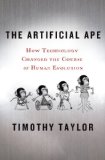
The Artificial Ape

The Artificial Ape: How Technology Changed the Course of Human Evolution by Timothy Taylor (Palgrave Macmillan, 2010)

(link for amazon.co.uk)

Product description from the publisher:

A breakthrough theory that tools and technology are the real drivers of human evolution

Although humans are one of the great apes, along with chimpanzees, gorillas, and orangutans, we are remarkably different from them. Unlike our cousins who subsist on raw food, spend their days and nights outdoors, and wear a thick coat of hair, humans are entirely dependent on artificial things, such as clothing, shelter, and the use of tools, and would die in nature without them. Yet, despite our status as the weakest ape, we are the masters of this planet. Given these inherent deficits, how did humans come out on top?

In this fascinating new account of our origins, leading archaeologist Timothy Taylor proposes a new way of thinking about human evolution through our relationship with objects. Drawing on the latest fossil evidence, Taylor argues that at each step of our species’ development, humans made choices that caused us to assume greater control of our evolution. Our appropriation of objects allowed us to walk upright, lose our body hair, and grow significantly larger brains. As we push the frontiers of scientific technology, creating prosthetics, intelligent implants, and artificially modified genes, we continue a process that started in the prehistoric past, when we first began to extend our powers through objects.

Weaving together lively discussions of major discoveries of human skeletons and artifacts with a reexamination of Darwin’s theory of evolution, Taylor takes us on an exciting and challenging journey that begins to answer the fundamental question about our existence: what makes humans unique, and what does that mean for our future?

See also: Artificial Ape on Facebook
Comments (0) - culture,human evolution,new books

upcoming titles from Oliver Sacks and Antonio Damasio

July 16, 2010

Besides new books by David Chalmers and Douglas Hofstadter mentioned in an earlier post, there are also new books coming later this year by Oliver Sacks and Antonio Damasio.

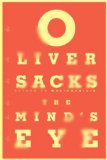
The Mind's Eye

Coming in October – The Mind’s Eye by Oliver Sacks (Knopf, 2010). (link for amazon.co.uk)

Product description from the publisher:

From the author of the best-selling Musicophilia (hailed as “luminous, original, and indispensable” by The American Scholar), an exploration of vision through the case histories of six individuals—including a renowned pianist who continues to give concerts despite losing the ability to read the score, and a neurobiologist born with crossed eyes who, late in life, suddenly acquires binocular vision, and how her brain adapts to that new skill. Most dramatically, Sacks gives us a riveting account of the appearance of a tumor in his own eye, the strange visual symptoms he observed, an experience that left him unable to perceive depth.

In The Mind’s Eye, Oliver Sacks explores some of the most fundamental facets of human experience—how we see in three dimensions, how we represent the world internally when our eyes are closed, and the remarkable, unpredictable ways that our brains find new ways of perceiving that create worlds as complete and rich as the no-longer-visible world.

Damasio’s book is coming in November from Pantheon: Self Comes to Mind: Constructing the Conscious Brain. (link for amazon.co.uk)

Product description from the publisher:

One of the most important and original neuroscientists at work today tackles a question that has confounded neurologists, philosophers, cognitive scientists, and psychologists for centuries: how consciousness is created.

Antonio Damasio has spent the past thirty years studying and writing about how the brain operates, and his work has garnered acclaim for its singular melding of the scientific and the humanistic. In this revelatory work, he debunks the long-standing idea that consciousness is somehow separate from the body, presenting astounding new scientific evidence that consciousness—what we think of as “self”—is in fact a biological process created by the brain. Besides the three traditional perspectives used to study the mind (the personal, the behavioral, and the neurological), Damasio introduces the evolutionary perspective, which entails a radical change in the way the history of conscious minds is viewed and told.

Self Comes to Mind is a groundbreaking investigation of consciousness as a dynamic, unpredictable faculty that is instrumental in defining and explaining who we understand ourselves to be.

Comments (0) - cognitive science,consciousness,new books,psychology,self

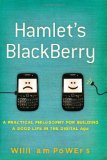
new book – ‘Hamlet’s BlackBerry: A Practical Philosophy for Building a Good Life in the Digital Age’

July 11, 2010

Hamlet's BlackBerry

Hamlet’s BlackBerry: A Practical Philosophy for Building a Good Life in the Digital Age by William Powers (Harper, 2010). (Kindle ed), (link for amazon.co.uk)

A crisp, passionately argued answer to the question that everyone who’s grown dependent on digital devices is asking: “Where’s the rest of my life?”

At a time when we’re all trying to make sense of our relentlessly connected lives, this revelatory book presents a bold new approach to the digital age. Part intellectual journey, part memoir, Hamlet’s BlackBerry sets out to solve what William Powers calls the conundrum of connectedness. Our computers and mobile devices do wonderful things for us. But they also impose an enormous burden, making it harder for us to focus, do our best work, build strong relationships, and find the depth and fulfillment we crave.

Hamlet’s BlackBerry argues that we need a new way of thinking, an everyday philosophy for life with screens. To find it, Powers reaches into the past, uncovering a rich trove of ideas that have helped people manage and enjoy their connected lives for thousands of years. New technologies have always brought the mix of excitement and stress that we feel today. Drawing on some of history’s most brilliant thinkers, from Plato to Shakespeare to Thoreau, he shows that digital connectedness serves us best when it’s balanced by its opposite, disconnectedness.

Using his own life as laboratory and object lesson, Powers demonstrates why this is the moment to revisit our relationship to screens and mobile technologies, and how profound the rewards of doing so can be. Lively, original, and entertaining, Hamlet’s BlackBerry will challenge you to rethink your digital life.

See also: Author’s website

Comments (0) - culture,new books

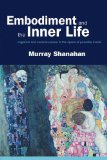
coming soon – ‘Embodiment and the Inner Life: Cognition and Consciousness in the Space of Possible Minds’

July 9, 2010

Embodiment and the Inner Life

Coming soon from Oxford University Press (US release scheduled for July 15, already available at amazon.co.uk):
Embodiment and the Inner Life: Cognition and Consciousness in the Space of Possible Minds by Murray Shanahan.

Product description from the publisher:

To understand the mind and its place in Nature is one of the great intellectual challenges of our time, a challenge that is both scientific and philosophical. How does cognition influence an animal’s behaviour? What are its neural underpinnings? How is the inner life of a human being constituted? What are the neural underpinnings of the conscious condition?

Embodiment and the Inner Life approaches each of these questions from a scientific standpoint. But it contends that, before we can make progress on them, we have to give up the habit of thinking metaphysically, a habit that creates a fog of philosophical confusion. From this post-reflective point of view, the book argues for an intimate relationship between cognition, sensorimotor embodiment, and the integrative character of the conscious condition.

Drawing on insights from psychology, neuroscience, and dynamical systems, it proposes an empirical theory of this three-way relationship whose principles, not being tied to the contingencies of biology or physics, are applicable to the whole space of possible minds in which humans and other animals are included. Embodiment and the Inner Life is one of very few books that provides a properly joined-up theory of consciousness, and will be essential reading for all psychologists, philosophers, and neuroscientists with an interest in the enduring puzzle of consciousness.

See also: Author’s website

Comments (0) - cognitive science,consciousness,new books

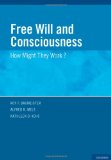
new book – ‘Free Will and Consciousness: How Might They Work?’

June 18, 2010

Free Will and Consciousness

Free Will and Consciousness: How Might They Work? ed. by Roy F. Baumeister, Alfred R. Mele, and Kathleen D. Vohs (Oxford University Press, 2010). Contributors include John Searle and Merlin Donald.

(link for UK)

Product description from the publisher:

This volume is aimed at readers who wish to move beyond debates about the existence of free will and the efficacy of consciousness and closer to appreciating how free will and consciousness might operate. It draws from philosophy and psychology, the two fields that have grappled most fundamentally with these issues. In this wide-ranging volume, the contributors explore such issues as how free will is connected to rational choice, planning, and self-control; roles for consciousness in decision making; the nature and power of conscious deciding; connections among free will, consciousness, and quantum mechanics; why free will and consciousness might have evolved; how consciousness develops in individuals; the experience of free will; effects on behavior of the belief that free will is an illusion; and connections between free will and moral responsibility in lay thinking. Collectively, these state-of-the-art chapters by accomplished psychologists and philosophers provide a glimpse into the future of research on free will and consciousness.

See also: Free will & determinism books at Amazon.com

Free will & determinism books at Amazon.co.uk

Comments (0) - consciousness,new books,reality