[ View menu ]

Archive for 'new books'

new book – ‘The Mind’s Eye’ by Oliver Sacks

October 26, 2010
The Mind's Eye

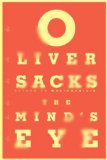
The Mind’s Eye by Oliver Sacks (Knopf, 2010)

(link for amazon.co.uk)

Product description from the publisher:

In The Mind’s Eye, Oliver Sacks tells the stories of people who are able to navigate the world and communicate with others despite losing what many of us consider indispensable senses and abilities: the power of speech, the capacity to recognize faces, the sense of three-dimensional space, the ability to read, the sense of sight. For all of these people, the challenge is to adapt to a radically new way of being in the world.

There is Lilian, a concert pianist who becomes unable to read music and is eventually unable even to recognize everyday objects, and Sue, a neurobiologist who has never seen in three dimensions, until she suddenly acquires stereoscopic vision in her fifties.

There is Pat, who reinvents herself as a loving grandmother and active member of her community, despite the fact that she has aphasia and cannot utter a sentence, and Howard, a prolific novelist who must find a way to continue his life as a writer even after a stroke destroys his ability to read.

And there is Dr. Sacks himself, who tells the story of his own eye cancer and the bizarre and disconcerting effects of losing vision to one side.

Sacks explores some very strange paradoxes—people who can see perfectly well but cannot recognize their own children, and blind people who become hyper-visual or who navigate by “tongue vision.” He also considers more fundamental questions: How do we see? How do we think? How important is internal imagery—or vision, for that matter? Why is it that, although writing is only five thousand years old, humans have a universal, seemingly innate, potential for reading?

The Mind’s Eye is a testament to the complexity of vision and the brain and to the power of creativity and adaptation. And it provides a whole new perspective on the power of language and communication, as we try to imagine what it is to see with another person’s eyes, or another person’s mind.

See also: Author’s website, interview

Comments (0) - cognitive science,new books

first chapter of ‘Where Good Ideas Come From’ on “Kindle for the Web”

October 17, 2010

Note for Firefox users: the full screen view doesn’t seem to be working on the individual post page, though it does work on the main page; in Chrome and IE it worked on both pages.

Comments (0) - culture,new books

‘Fame’ by Daniel Kehlmann – preview in ‘Kindle for the Web’

Fame

This is the first time I’ve come across a book with “Kindle for the Web” enabled so I can embed the first chapter right here. (Note the full-screen option in the center of the title bar.) The book is ‘Fame: A Novel in Five Episodes’ which the San Francisco Chronicle reviewer today called “a rare and thrilling example of a philosophical novel as pleasurable as it is thought-provoking.”

(link for amazon.co.uk)

Comments (0) - fiction,new books

new book – ‘The Watchman’s Rattle: Thinking Our Way Out of Extinction’

October 11, 2010

The Watchman's Rattle

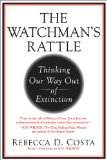
The Watchman’s Rattle: Thinking Our Way Out of Extinction by Rebecca Costa (Vanguard Press, 2010).

(link for amazon.co.uk)

Product description from the publisher:

Why can’t we solve our problems anymore? Why do threats such as the Gulf oil spill, worldwide recession, terrorism, and global warming suddenly seem unstoppable? Are there limits to the kinds of problems humans can solve?

Rebecca Costa confronts—and offers a solution to—these questions in her highly anticipated and game-changing book, The Watchman’s Rattle.

Costa pulls headlines from today’s news to demonstrate how accelerating complexity quickly outpaces the rate at which the human brain can develop new capabilities. With compelling evidence based on research into the rise and fall of the Mayan, Khmer, and Roman empires, Costa shows how the tendency to find a quick fix to problems by focusing on symptoms—instead of searching for permanent solutions—leads to frightening long-term consequences: society’s ability to solve its most challenging, intractable problems becomes gridlocked, progress slows, and collapse ensues.

A provocative new voice in the tradition of thought leaders Thomas Friedman, Jared Diamond, and Malcolm Gladwell, Costa reveals how we can reverse the downward spiral. Part history, part social science, part biology, The Watchman’s Rattle is sure to provoke, engage, and incite change.

See also: Author’s website

Comments (1) - culture,new books,psychology

new book – ‘The Moral Landscape: How Science Can Determine Human Values’ by Sam Harris

October 6, 2010

The Moral Landscape

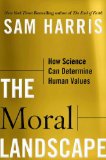
The Moral Landscape: How Science Can Determine Human Values by Sam Harris (Free Press, 2010)

(link for amazon.co.uk)

Product description from the publisher:

Sam Harris’s first book, The End of Faith, ignited a worldwide debate about the validity of religion. In the aftermath, Harris discovered that most people—from religious fundamentalists to nonbelieving scientists—agree on one point: science has nothing to say on the subject of human values. Indeed, our failure to address questions of meaning and morality through science has now become the most common justification for religious faith. It is also the primary reason why so many secularists and religious moderates feel obligated to “respect” the hardened superstitions of their more devout neighbors. In this explosive new book, Sam Harris tears down the wall between scientific facts and human values, arguing that most people are simply mistaken about the relationship between morality and the rest of human knowledge. Harris urges us to think about morality in terms of human and animal well-being, viewing the experiences of conscious creatures as peaks and valleys on a “moral landscape.” Because there are definite facts to be known about where we fall on this landscape, Harris foresees a time when science will no longer limit itself to merely describing what people do in the name of “morality”; in principle, science should be able to tell us what we ought to do to live the best lives possible. Bringing a fresh perspective to age-old questions of right and wrong and good and evil, Harris demonstrates that we already know enough about the human brain and its relationship to events in the world to say that there are right and wrong answers to the most pressing questions of human life. Because such answers exist, moral relativism is simply false—and comes at increasing cost to humanity. And the intrusions of religion into the sphere of human values can be finally repelled: for just as there is no such thing as Christian physics or Muslim algebra, there can be no Christian or Muslim morality.

Using his expertise in philosophy and neuroscience, along with his experience on the front lines of our “culture wars,” Harris delivers a game-changing book about the future of science and about the real basis of human cooperation.

See also: Author’s website, New York Times review

Comments (0) - cognitive science,culture,happiness,new books