[ View menu ]

Archive for 'new books'

new book – ‘Thinking Twice: Two Minds in One Brain’

November 14, 2010
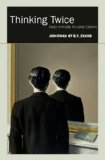
Thinking Twice

Thinking Twice: Two Minds in One Brain by Jonathan St. B.T. Evans (Oxford University Press, 2010)

(link for amazon.co.uk)

Product description from the publisher:

Common sense would suggest that we are in complete control of the actions we perform – that all our actions are the result of considered and conscious preparation. Yet, there are countless examples of this control breaking down, for example, in the case of phobias and compulsive actions. We can all recall those times when, in the ‘heat of the moment’, our actions have been very different to those that would have resulted from calm and considered reflection. In extreme moments of ‘absent-mindedness’ our actions can even have catastrophic consequences, resulting in harm to ourselves or others. So why does this happen – why do apparently rational and intelligent beings make, what appear to be, such fundamental errors in their thinking.

This book explores the idea that humans have two distinct minds within their brains: one intuitive and the other reflective.
The intuitive mind is old, evolved early, and shares many of its features with animal cognition. It is the source of emotion and intuitions, and reflects both the habits acquired in our lifetime and the adaptive behaviours evolved by ancient ancestors.
The reflective mind, by contrast, is recently evolved and distinctively human: it enables us to think in abstract and hypothetical ways about the world around us and to calculate the future consequences of our actions. The evolution of the new, reflective mind is linked with the development of language and the very large forebrains that distinguish humans from other species; it has also given us our unique human form of intelligence. On occasions though, our two minds can come into in conflict, and when this happens, the old mind often wins. These conflicts are often rationalised so that we, conscious persons, are unaware that the intuitive mind is in control.

Written by a leading cognitive scientist, this book demonstrates how much of our behaviour is controlled by automatic and intuitive mental processes, which shape, as well as compete, with our conscious thinking and decision making. Accessibly written, and assuming no prior knowledge of the field, the book will be fascinating reading for all those interested in human behaviour, including students and researchers in psychology, neuroscience, and philosophy.

See also: author’s works at PhilPapers
Comments (0) - cognitive science,new books

new book – ‘Future Minds: How the Digital Age is Changing Our Minds, Why this Matters and What We Can Do About It’

November 11, 2010

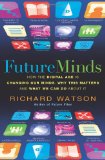
Future Minds

Future Minds: How the Digital Age is Changing Our Minds, Why this Matters and What We Can Do About It by Richard Watson (Nicholas Brealey Publishing, 2010)

(link for amazon.co.uk)

Product description from the publisher:

We are on the cusp of a revolution. Mobile phones, computers and iPods are commonplace in hundreds of millions of households worldwide, influencing how we think and shaping how we interact. In the future, smart machines will compete with clever people for employment and even human affection. We are shifting to a world where knowledge will be automated and people will be rewarded instead as conceptual and creative thinkers. Hence being able to think and act in ways that machines cannot will become vital. Ideas are the currency of this new economy and curiosity and imagination are among the key raw materials.

But what happens to the rigor of our thinking in a world where we never really sit still or completely switch off? What are some of the unexpected consequences of digital information on the 100 billion cells and quadrillion connections inside our brains? Future Minds illustrates how to maximize the potential of digital technology and minimize its greatest downside, addressing the future of thinking and how we can ensure that we unleash the extraordinary potential of the human mind.

In this absorbing new book, discover all about:

The sex life of ideas
The rise of the screenager
Generations, gender and geography
Delving deep inside your head
How to clear a blocked brain
Why clever people make dumb mistakes
Why we are so afraid of doing nothing
What we can do to reclaim our brains

See also: Book website

Comments (0) - culture,mind,new books

new book – ‘Self Comes to Mind’ by Antonio Damasio

November 7, 2010

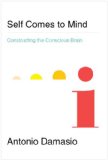
Self Comes to Mind

Self Comes to Mind: Constructing the Conscious Brain by Antonio Damasio (Pantheon, 2010) is officially due out next Tues (Nov 9) but I saw it today at my local bookstore.
(link for amazon.co.uk)

Product description from the publisher:

One of the most important and original neuroscientists at work today tackles a question that has confounded neurologists, philosophers, cognitive scientists, and psychologists for centuries: how consciousness is created.

Antonio Damasio has spent the past thirty years studying and writing about how the brain operates, and his work has garnered acclaim for its singular melding of the scientific and the humanistic. In this revelatory work, he debunks the long-standing idea that consciousness is somehow separate from the body, presenting astounding new scientific evidence that consciousness—what we think of as “self”—is in fact a biological process created by the brain. Besides the three traditional perspectives used to study the mind (the personal, the behavioral, and the neurological), Damasio introduces the evolutionary perspective, which entails a radical change in the way the history of conscious minds is viewed and told.

Self Comes to Mind is a groundbreaking investigation of consciousness as a dynamic, unpredictable faculty that is instrumental in defining and explaining who we understand ourselves to be.

See also: Website for the book, including a series of video interviews and a preview of the book

Comments (0) - cognitive science,consciousness,new books,self

‘How to Live: Or a Life of Montaigne in One Question and Twenty Attempts at an Answer’ by Sarah Bakewell

November 6, 2010

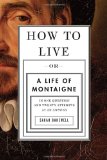
How to Live

How to Live: Or A Life of Montaigne in One Question and Twenty Attempts at an Answer by Sarah Bakewell (Other Press, 2010)

(link for amazon.co.uk)

I’ve been watching for this book ever since reading Bakewell’s Guardian series “Montaigne, philosopher of life” and was fortunate to grab a review copy through NetGalley. How to Live has been available in the UK since early 2010 but just recently appeared in a US edition published by Other Press.

This book provides a great background for approaching Montaigne’s Essays. It is a life of Montaigne and also a life of his book, tracing the book’s changing reception through the centuries. We learn of Montaigne’s near-death experience, from which he concluded: “If you don’t know how to die, don’t worry; Nature will tell you what to do on the spot, fully and adequately. She will do this job perfectly for you; don’t bother your head about it.” (p. 21)

Despite living in an era dominated by religious strife, Montaigne was much influenced by the Hellenistic philosophies of Stoicism, Epicureanism and Skepticism, whose answer to the question ‘How to Live?’ involved eudaimonia, or “human flourishing,” through ataraxia or equilibrium. Skepticism is especially characteristic of Montaigne, and “most of Montaigne’s thought consists of a series of realizations that life is not as simple as he has just made it out to be.” (p. 36)

Through all his self-exploration Montaigne did not arrive at a unified view of himself, as Bakewell describes:

“We are all patchwork,” he wrote, “and so shapeless and diverse in composition that each bit, each moment, plays its own game.” No overall point of view existed from which he could look back and construct the one consistent Montaigne that he would have liked to be. Since he did not try to airbrush his previous selves out of life, there was no reason for him to do it in his book either.

(p. 286-287)

Product description from the publisher:

How to get along with people, how to deal with violence, how to adjust to losing someone you love—such questions arise in most people’s lives. They are all versions of a bigger question: how do you live? How do you do the good or honorable thing, while flourishing and feeling happy?

This question obsessed Renaissance writers, none more than Michel Eyquem de Monatigne, perhaps the first truly modern individual. A nobleman, public official and wine-grower, he wrote free-roaming explorations of his thought and experience, unlike anything written before. He called them “essays,” meaning “attempts” or “tries.” Into them, he put whatever was in his head: his tastes in wine and food, his childhood memories, the way his dog’s ears twitched when it was dreaming, as well as the appalling events of the religious civil wars raging around him. The Essays was an instant bestseller and, over four hundred years later, Montaigne’s honesty and charm still draw people to him. Readers come in search of companionship, wisdom and entertainment—and in search of themselves.

This book, a spirited and singular biography, relates the story of his life by way of the questions he posed and the answers he explored. It traces his bizarre upbringing, youthful career and sexual adventures, his travels, and his friendships with the scholar and poet Étienne de La Boétie and with his adopted “daughter,” Marie de Gournay. And we also meet his readers—who for centuries have found in Montaigne an inexhaustible source of answers to the haunting question, “how to live?”

See also: book website

Comments (0) - new books

coming soon – ‘Sleights of Mind: What the Neuroscience of Magic Reveals about Our Everyday Deceptions’

November 4, 2010

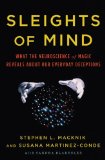
Sleights of Mind

This book is featured in the current issue of Scientific American Mind and due out next Tues, Nov. 9:
Sleights of Mind: What the Neuroscience of Magic Reveals about Our Everyday Deceptions by Stephen L. Macknik, Susana Martinez-Conde and Sandra Blakeslee (Henry Holt & Co, 2010)

(link for amazon.co.uk)

Product description from the publisher:

“This book doesn’t just promise to change the way you think about sleight of hand and David Copperfield—it will also change the way you think about the mind.” —Jonah Lehrer, author of How We Decide and Proust Was A Neuroscientist

Stephen Macknik and Susana Martinez-Conde, the founders of the exciting new discipline of neuromagic, have convinced some of the world’s greatest magicians to allow scientists to study their techniques for tricking the brain. This book is the result of the authors’ yearlong, world-wide exploration of magic and how its principles apply to our behavior. Magic tricks fool us because humans have hardwired processes of attention and awareness that are hackable—a good magician uses your mind’s own intrinsic properties against you in a form of mental jujitsu.

Now magic can reveal how our brains work in everyday situations. For instance, if you’ve ever bought an expensive item you’d sworn you’d never buy, the salesperson was probably a master at creating the “illusion of choice,” a core technique of magic. The implications of neuromagic go beyond illuminating our behavior; early research points to new approaches for everything from the diagnosis of autism to marketing techniques and education. Sleights of Mind makes neuroscience fun and accessible by unveiling the key connections between magic and the mind.

See also: Book website

Comments (0) - cognitive science,mind,new books,psychology