[ View menu ]

Archive for 'new books'

new book – V.S. Ramachandran, ‘The Tell-Tale Brain: A Neuroscientist’s Quest for What Makes Us Human’

December 31, 2010
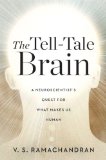
The Tell-Tale Brain

The Tell-Tale Brain: A Neuroscientist’s Quest for What Makes Us Human by V.S. Ramachandran (W.W. Norton & Co, 2011)
(link for amazon.co.uk)

Product description from the publisher:

Drawing on strange and thought-provoking case studies, an eminent neurologist offers unprecedented insight into the evolution of the uniquely human brain. V. S. Ramachandran is at the forefront of his field-so much so that Richard Dawkins dubbed him the “Marco Polo of neuroscience.” Now, in a major new work, Ramachandran sets his sights on the mystery of human uniqueness. Taking us to the frontiers of neurology, he reveals what baffling and extreme case studies can teach us about normal brain function and how it evolved. Synesthesia becomes a window into the brain mechanisms that make some of us more creative than others. And autism—for which Ramachandran opens a new direction for treatment—gives us a glimpse of the aspect of being human that we understand least: self-awareness. Ramachandran tackles the most exciting and controversial topics in neurology with a storyteller’s eye for compelling case studies and a researcher’s flair for new approaches to age-old questions. Tracing the strange links between neurology and behavior, this book unveils a wealth of clues into the deepest mysteries of the human brain. 15 black-and-white illustrations.

See also: Author’s Wikipedia article
Comments (0) - cognitive science,new books

new book – ‘Emotional Truth’ by Ronald de Sousa

December 11, 2010

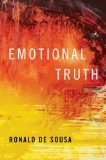
Emotional Truth

Emotional Truth by Ronald de Sousa (Oxford University Press, 2011)

(link for amazon.co.uk)

Product description from the publisher:

The word “truth” retains, in common use, traces of origins that link it to trust, truth, and truce, connoting ideas of fidelity, loyalty, and authenticity. The word has become, in contemporary philosophy, encased in a web of technicalities, but we know that a true image is a faithful portrait; a true friend a loyal one. In a novel or a poem, too, we have a feel for what is emotionally true, though we are not concerned with the actuality of events and characters depicted. To have emotions is to care about certain things: we can wonder whether those things are really worth caring about. We can wonder whether our passions reflect who we are, and whether they constitute fitting responses to the vicissitudes of life. So there are two aspects to emotional truth: how well an emotion reflects the threats and promises of the world, and how well it reflects our own individual nature. That is the starting point of this book, which looks first at the analogies and disanalogies between strict propositional truth and a looser, “generic” sense of truth. As applied to emotions, generic truth is closer to those original meanings: as in a portrait’s fidelity or friend’s loyalty. Taken in this sense, the notion of emotional truth opens up large vistas on areas of life essential to our existence as social beings, and to our concerns with beauty, morality, love, death, sex, knowledge, desire, coherence, and happiness. Each of those topics illustrates some facet of the dominant theme of the book: the crucial but often ambivalent role of our emotions in grounding and yet also sometimes undermining our values. Emotions act, in holistic perspective, as ultimate arbiters of values where different and independently justified standards of value compete.

See also: Ronald de Sousa at PhilPapers

Comments (0) - new books

new – ‘Book of Symbols: Reflections on Archetypal Images’

November 27, 2010

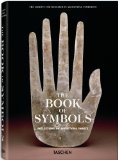
The Book of Symbols

This would make a wonderful gift for anyone interested in Jungian psychology, dreams, or symbolism:

The Book Of Symbols: Reflections On Archetypal Images by the Archive for Research in Archetypal Symbolism (Tarcher, 2010)

(link for amazon.co.uk)

Product description from the publisher:

Reflections on symbols and symbolic imagery
The Book of Symbols combines original and incisive essays about particular symbols with representative images from all parts of the world and all eras of history.The Book of Symbols combines original and incisive essays about particular symbols with representative images from all parts of the world and all eras of history. The highly readable texts and almost 800 beautiful full-color images come together in a unique way to convey hidden dimensions of meaning. Each of the c. 350 essays examines a given symbol’s psychic background, and how it evokes psychic processes and dynamics. Etymological roots, the play of opposites, paradox and shadow, the ways in which diverse cultures have engaged a symbolic image—all these factors are taken into consideration.

Authored by writers from the fields of psychology, religion, art, literature and comparative myth, the essays flow into each other in ways that mirror the psyche’s unexpected convergences. There are no pat definitions of the kind that tend to collapse a symbol; a still vital symbol remains partially unknown, compels our attention and unfolds in new meanings and manifestations over time. Rather than merely categorize, The Book of Symbols illuminates how to move from the visual experience of a symbolic image in art, religion, life, or dreams, to directly experiencing its personal and psychological resonance.

The Book of Symbols sets new standards for thoughtful exploration of symbols and their meanings, and will appeal to a wide range of readers: artists, designers, dreamers and dream interpreters, psychotherapists, self-helpers, gamers, comic book readers, religious and spiritual searchers, writers, students, and anyone curious about the power of archetypal images.

See also: A nice 12-page pdf preview is available through the ARAS website. (Click on “See More” by the book cover.)

Better yet, at the publisher’s website, you can “leaf through” the first 100 pages!

Comments (0) - culture,new books,psychology

new book – ‘Creativity and Art: Three Roads to Surprise’

November 19, 2010

Creativity and Art

Creativity and Art: Three Roads to Surprise by Margaret A. Boden (Oxford University Press, 2010)

(link for amazon.co.uk)

Product description from the publisher:

Margaret Boden presents a series of essays in which she explores the nature of creativity in a wide range of art forms. Creativity in general is the generation of novel, surprising, and valuable ideas (conceptual, theoretical, musical, literary, or visual). Boden identifies three forms of creativity: combinational, exploratory, and transformational. These elicit differing forms of surprise, and are defined by the different kinds of psychological process that generate the new ideas. Boden examines creativity not only in traditional fine art, but also in craftworks, and some less orthodox approaches–namely, conceptual art and several types of computer art. Her Introduction draws out the conceptual links between the various case-studies, showing how they express a coherent view of creativity in art.

Comments (0) - cognitive science,new books

recent book – ‘Portraits of the Mind: Visualizing the Brain from Antiquity to the 21st Century’

November 18, 2010

Portraits of the Mind

Found via Discover Magazine (“The Brain Is Ready for Its Close-Up”), where a gallery of images from the book is shown:

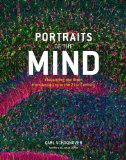
Portraits of the Mind: Visualizing the Brain from Antiquity to the 21st Century by Carl Schoonover (Abrams, 2010)

(link for amazon.co.uk)

Product description from the publisher:

Portraits of the Mind follows the fascinating history of our exploration of the brain through images, from medieval sketches and 19th-century drawings by the founder of modern neuroscience to images produced using state-of-the-art techniques, allowing us to see the fantastic networks in the brain as never before. These black-and-white and vibrantly colored images, many resembling abstract art, are employed daily by scientists around the world, but most have never before been seen by the general public. Each chapter addresses a different set of techniques for studying the brain as revealed through the images, and each is introduced by a leading scientist in that field of study. Author Carl Schoonover’s captions provide detailed explanations of each image as well as the major insights gained by scientists over the course of the past 20 years. Accessible to a wide audience, this book reveals the elegant methods applied to study the mind, giving readers a peek at its innermost workings, helping us to understand them, and offering clues about what may lie ahead.

See also: Author’s website

Comments (0) - cognitive science,new books