February 7, 2012
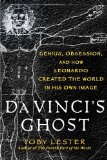
One of Amazon’s Best Books of February is Da Vinci’s Ghost: Genius, Obsession, and How Leonardo Created the World in His Own Image by Toby Lester (Free Press, 2012)
(kindle ed.), (amazon.co.uk)
Product description from the publisher:
EVERYONE KNOWS THE IMAGE. NO ONE KNOWS ITS STORY. This is the story of Vitruvian Man: Leonardo da Vinci’s famous drawing of a man in a circle and a square. Deployed today to celebrate subjects as various as the nature of genius, the beauty of the human form, and the universality of the human spirit, the figure appears on everything from coffee cups and T-shirts to book covers and corporate logos. In short, it has become the world’s most famous cultural icon, yet almost nobody knows anything about it. Leonardo didn’t summon Vitruvian Man out of thin air. He was playing with the idea, set down by the Roman architect Vitruvius, that the human body could be made to fit inside a circle, long associated with the divine, and a square, related to the earthly and secular. To place a man inside those shapes was therefore to imply that the human body was the world in miniature. This idea, known as the theory of the microcosm, was the engine that had powered Western religious and scientific thought for centuries, and Leonardo hitched himself to it in no uncertain terms. Yet starting in the 1480s he set out to do something unprecedented. If the design of the body truly did reflect that of the cosmos, he reasoned, then by studying its proportions and anatomy more thoroughly than had ever been done before—by peering deep into both body and soul—he might broaden the scope of his art to include the broadest of metaphysical horizons. He might, in other words, obtain an almost godlike perspective on the makeup of the world as a whole. Vitruvian Man gives that exhilarating idea visual expression. In telling its story, Toby Lester weaves together a century-spanning saga of people and ideas. Assembled here is an eclectic cast of fascinating characters: the architect Vitruvius; the emperor Caesar Augustus and his “body of empire”; early Christian and Muslim thinkers; the visionary mystic Hildegard of Bingen; the book-hunter Poggio Bracciolini; the famous dome-builder Filippo Brunelleschi; Renaissance anatomists, architects, art theorists, doctors, and military engineers; and, of course, in the starring role, Leonardo himself—whose ghost Lester resurrects in the surprisingly unfamiliar context of his own times. Da Vinci’s Ghost is written with the same narrative flair and intellectual sweep as Lester’s award-winning first book, the “almost unbearably thrilling” (Simon Winchester) Fourth Part of the World. Like Vitruvian Man itself, the book captures a pivotal time in the history of Western thought when the Middle Ages was giving way to the Renaissance, when art and science and philosophy all seemed to be converging as one, and when it seemed just possible, at least to Leonardo da Vinci, that a single human being might embody—and even understand—the nature of everything.
Google books preview:
See also: Author’s website
Comments (0)
- culture,new books
February 3, 2012
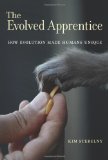
The Evolved Apprentice: How Evolution Made Humans Unique (Jean Nicod Lectures) by Kim Sterelny (MIT Press, 2012)
(kindle ed.), (amazon.co.uk)
Product description from the publisher:
Over the last three million years or so, our lineage has diverged sharply from those of our great ape relatives. Change has been rapid (in evolutionary terms) and pervasive. Morphology, life history, social life, sexual behavior, and foraging patterns have all shifted sharply away from other great apes. No other great ape lineage–including those of chimpanzees and gorillas–seems to have undergone such a profound transformation. In The Evolved Apprentice, Kim Sterelny argues that the divergence stems from the fact that humans gradually came to enrich the learning environment of the next generation. Humans came to cooperate in sharing information, and to cooperate ecologically and reproductively as well, and these changes initiated positive feedback loops that drove us further from other great apes. Sterelny develops a new theory of the evolution of human cognition and human social life that emphasizes the gradual evolution of information sharing practices across generations and how information sharing transformed human minds and social lives. Sterelny proposes that humans developed a new form of ecological interaction with their environment, cooperative foraging, which led to positive feedback linking ecological cooperation, cultural learning, and environmental change. The ability to cope with the immense variety of human ancestral environments and social forms, he argues, depended not just on adapted minds but also on adapted developmental environments.
Google books preview:
See also: “The Evolved Apprentice” at On the Human (onthehuman.org)
Comments (0)
- cognitive science,culture,human evolution,new books
January 30, 2012
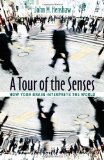
A Tour of the Senses: How Your Brain Interprets the World by John M. Henshaw (Johns Hopkins University Press, 2012)
(amazon.co.uk – 9 Feb 2012)
Product description from the publisher:
Ever wonder why some people have difficulty recognizing faces or why food found delicious in one culture is reviled in another? John M. Henshaw ponders these and other surprising facts in this fascinating and fast-paced tour of the senses.
From when stimuli first excite our senses to the near-miraculous sense organs themselves to the mystery of how our brain interprets senses, Henshaw explains the complex phenomena of how we see, feel, taste, touch, and smell. He takes us through the rich history of sensory perception, dating back to Aristotle’s classification of the five main senses, and helps us understand the science and technology behind sensory research today.
A Tour of the Senses travels beyond our human senses. Henshaw describes artificial sensing technologies and instruments, unusual sensory abilities of the animal kingdom, and techniques for improving, rehabilitating, and even replacing sense organs.
This entertaining introduction to sensory science is a clever mix of research findings and real-world stories that helps us understand the complex processes that turn sensory stimuli into sophisticated brain responses.
Google books preview:
Comments (0)
- cognitive science,new books
January 29, 2012
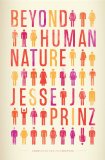
Although the W.W Norton hardcover edition has never appeared, Beyond Human Nature: How Culture and Experience Shape Our Lives by Jesse Prinz is now available in a kindle edition and in hardcover at amazon.co.uk.
(Here’s a link to Free Kindle Reading Apps.)
Product description from the publisher:
In this provocative, revelatory tour de force, Jesse Prinz reveals how the cultures we live in – not biology – determine how we think and feel. He examines all aspects of our behaviour, looking at everything from our intellects and emotions, to love and sex, morality and even madness. This book seeks to go beyond traditional debates of nature and nurture. He is not interested in finding universal laws but, rather, in understanding, explaining and celebrating our differences. Why do people raised in Western countries tend to see the trees before the forest, while people from East Asia see the forest before the trees? Why, in South East Asia, is there a common form of mental illness, unheard of in the West, in which people go into a trancelike state after being startled? Compared to Northerners, why are people in the American South more than twice as likely to kill someone over an argument? And, above all, just how malleable are we? Prinz shows that the vast diversity of our behaviour is not engrained. He picks up where biological explanations leave off. He tells us the human story.
See also: Roger Scruton review in Prospect Magazine.
Comments (0)
- cognitive science,culture,new books
January 28, 2012
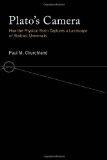
Plato’s Camera: How the Physical Brain Captures a Landscape of Abstract Universals by Paul M. Churchland (MIT Press, 2012)
(amazon.co.uk)
In Plato’s Camera, eminent philosopher Paul Churchland offers a novel account of how the brain constructs a representation–or ‘takes a picture’–of the universe’s timeless categorical and dynamical structure. This construction process, which begins at birth, yields the enduring background conceptual framework with which we will interpret our sensory experience for the rest of our lives. But, as even Plato knew, to make singular perceptual judgments requires that we possess an antecedent framework of abstract categories to which any perceived particular can be relevantly assimilated. How that background framework is assembled in the first place is the motivating mystery, and the primary target, of Churchland’s book.
His account draws on the best of the recent philosophical literature on semantic theory, and on the most recent results from cognitive neurobiology. The resulting story throws immediate light on issues that have been at the center of philosophy for at least two millennia, such as how the mind represents reality, both in its ephemeral and in its timeless dimensions.
Unexpectedly, this neurobiologically grounded account of human cognition also provides a systematic story of how such low-level epistemological activities are integrated within an enveloping framework of linguistic structures and regulatory mechanisms at the social level. As Churchland illustrates, this integration of cognitive mechanisms at several levels has launched the human race on an epistemological adventure denied to all other terrestrial creatures.
Google books preview:
Comments (1)
- cognitive science,new books,philosophy of mind