February 23, 2012
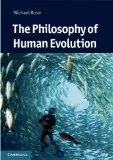
The Philosophy of Human Evolution (Cambridge Introductions to Philosophy and Biology) by Michael Ruse (Cambridge University Press, 2012)
(kindle ed.), (amazon.co.uk)
Book description from the publisher:
This book provides a unique discussion of human evolution from a philosophical viewpoint, looking at the facts and interpretations since Charles Darwin’s The Descent of Man. Michael Ruse explores such topics as the nature of scientific theories, the relationships between culture and biology, the problem of progress and the extent to which evolutionary issues pose problems for religious beliefs. He identifies these issues, highlighting the problems for morality in a world governed by natural selection. By taking a philosophical viewpoint, the full ethical and moral dimensions of human evolution are examined. This book engages the reader in a thorough discussion of the issues, appealing to students in philosophy, biology and anthropology.
Google books preview:
Comments (0)
- human evolution,new books
February 22, 2012

Varieties of Presence by Alva Noë (Harvard University Press, 2012)
(amazon.co.uk)
Product description from the publisher:
The world shows up for us—it is present in our thought and perception. But, as Alva Noë contends in his latest exploration of the problem of consciousness, it doesn’t show up for free. The world is not simply available; it is achieved rather than given. As with a painting in a gallery, the world has no meaning—no presence to be experienced—apart from our able engagement with it. We must show up, too, and bring along what knowledge and skills we’ve cultivated. This means that education, skills acquisition, and technology can expand the world’s availability to us and transform our consciousness.
Although deeply philosophical, Varieties of Presence is nurtured by collaboration with scientists and artists. Cognitive science, dance, and performance art as well as Kant and Wittgenstein inform this literary and personal work of scholarship intended no less for artists and art theorists, psychologists, cognitive scientists, and anthropologists than for philosophers.
Noë rejects the traditional representational theory of mind and its companion internalism, dismissing outright the notion that conceptual knowledge is radically distinct from other forms of practical ability or know-how. For him, perceptual presence and thought presence are species of the same genus. Both are varieties of exploration through which we achieve contact with the world. Forceful reflections on the nature of understanding, as well as substantial examination of the perceptual experience of pictures and what they depict or model are included in this far-ranging discussion.
Comments (0)
- consciousness,new books
February 18, 2012
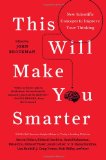
This Will Make You Smarter: New Scientific Concepts to Improve Your Thinking ed. by John Brockman (Harper Perennial)
(kindle ed.), (amazon.co. uk)
Book description from the publisher:
Featuring a foreword by David Brooks, This Will Make You Smarter presents brilliant—but accessible—ideas to expand every mind.
What scientific concept would improve everybody’s cognitive toolkit? This is the question John Brockman, publisher of Edge.org, posed to the world’s most influential thinkers. Their visionary answers flow from the frontiers of psychology, philosophy, economics, physics, sociology, and more. Surprising and enlightening, these insights will revolutionize the way you think about yourself and the world.
Daniel Kahneman on the “focusing illusion” • Jonah Lehrer on controlling attention • Richard Dawkins on experimentation • Aubrey De Grey on conquering our fear of the unknown • Martin Seligman on the ingredients of well-being • Nicholas Carr on managing “cognitive load” • Steven Pinker on win-win negotiating • Daniel C. Dennett on benefiting from cycles • Jaron Lanier on resisting delusion • Frank Wilczek on the brain’s hidden layers • Clay Shirky on the “80/20 rule” • Daniel Goleman on understanding our connection to the natural world • V. S. Ramachandran on paradigm shifts • Matt Ridley on tapping collective intelligence • John McWhorter on path dependence • Lisa Randall on effective theorizing • Brian Eno on “ecological vision” • Richard Thaler on rooting out false concepts • J. Craig Venter on the multiple possible origins of life • Helen Fisher on temperament • Sam Harris on the flow of thought • Lawrence Krauss on living with uncertainty
See also: Edge.org book info (including full text of the foreword), Edge.org Annual Question
Comments (0)
- new books
February 16, 2012
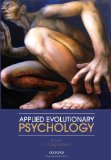
Applied Evolutionary Psychology ed. by S. Craig Roberts (Oxford University Press, 2012)
(amazon.co.uk – Nov 2011)
Book description from the publisher:
Human behaviour is marvellous in its complexity, variability and unpredictability. Understanding it, however, is not solely the role of psychologists: everyone has a vested interest in it, from individuals to organisations and industry. Recently, biologists and psychologists have had considerable success incorporating insights from evolutionary theory to help them understand some fundamental psychological issues, in a discipline now known as evolutionary psychology. However, to date, these useful insights have not been widely applied to tackle specific practical problems or issues in society.
This innovative new book kick-starts this process. It provides a foundation for an incipient focus on applications of evolutionary research. It draws together a collection of renowned academics from a disparate set of fields, whose common interest lies in using evolutionary thinking to inform their research. Topics range from reviews of evolutionary perspectives on adult and family relationships, insights into business, economics and marketing, health and interactions with technology and the media, through to major global and societal issues such as promoting green behaviour, cooperation, and public health, and tackling crime, terrorism, and prejudice.
No other book has focused as specifically and with such broad scope on the applications of modern evolutionary psychology. While the rapidly growing number of books on evolutionary psychology succeed in describing current theoretical thinking, illustrated and supported by empirical studies, this book uses this established basis as a backdrop and starting point for a more focused exploration of practical application. This groundbreaking book will be valuable for students and researchers in evolutionary and applied psychology, as well as biology and anthropology.
Google books preview:
Comments (0)
- new books,psychology
February 15, 2012

The Mental as Fundamental: New Perspectives on Panpsychism ed. by Michael Blamauer (Ontos Verlag)
(amazon.co.uk – 16 July 2011)
Book description from the publisher:
A revival of panpsychistic considerations of the mind’s place in nature has recently enriched the debate on the mind-body problem in the contemporary philosophy of the mind. The essays assembled in the present collection aim to supply a positive contribution to these considerations, providing new perspectives on panpsychism by shedding new light on its arguments and impacts, as well as on its problems and theoretical challenges. Panpsychism is discussed as a position that understands consciousness as a truly fundamental feature of our reality—not only with respect to the human species, but also with respect to the evolution of the universe as such.
Google books preview:
See also: Notre Dame Philosophical Reviews, PhilPapers on panpsychism
Comments (0)
- consciousness,new books,philosophy of mind