[ View menu ]

Archive for 'new books'

new book – ‘Religion for Atheists’ by Alain de Botton

March 6, 2012

Religion for Atheists

Religion for Atheists: A Non-believer’s Guide to the Uses of Religion by Alain de Botton (Pantheon, 2012)

(kindle ed.), (amazon.co.uk)

Book description from the publisher:

What if religions are neither all true nor all nonsense? The long-running and often boring debate between fundamentalist believers and non-believers is finally moved forward by Alain de Botton’s inspiring new book, which boldly argues that the supernatural claims of religion are entirely false—but that it still has some very important things to teach the secular world.

Religion for Atheists suggests that rather than mocking religion, agnostics and atheists should instead steal from it—because the world’s religions are packed with good ideas on how we might live and arrange our societies. Blending deep respect with total impiety, de Botton (a non-believer himself) proposes that we look to religion for insights into how to, among other concerns, build a sense of community, make our relationships last, overcome feelings of envy and inadequacy, inspire travel and reconnect with the natural world.

For too long non-believers have faced a stark choice between either swallowing some peculiar doctrines or doing away with a range of consoling and beautiful rituals and ideas. At last, in Religion for Atheists, Alain de Botton has fashioned a far more interesting and truly helpful alternative.

Google books preview:

See also: Author’s website
Comments (0) - culture,new books

new book – ‘Mindmelding: Consciousness, Neuroscience, and the Mind’s Privacy’

March 3, 2012

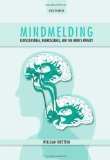
Mindmelding

Mindmelding: Consciousness, Neuroscience, and the Mind’s Privacy by William Hirstein (Oxford University Press, USA)

(amazon.co.uk)

Book description from the publisher:

Can consciousness and the human mind be understood and explained in sheerly physical terms? Materialism is a philosophical/scientific theory, according to which the mind is completely physical. This theory has been around for literally thousands of years, but it was always stymied by its inability to explain how exactly mere matter could do the amazing things the mind can do. Beginning in the 1980s, however, a revolution began quietly boiling away in the neurosciences, yielding increasingly detailed theories about how the brain might accomplish consciousness. Nevertheless, a fundamental obstacle remains. Contemporary research techniques seem to still have the scientific observer of the conscious state locked out of the sort of experience the subjects themselves are having. Science can observe, stimulate, and record events in the brain, but can it ever enter the most sacred citadel, the mind? Can it ever observe the most crucial properties of conscious states, the ones we are aware of? If it can’t, this creates a problem. If conscious mental states lack a basic feature possessed by all other known physical states, i.e., the capability to be observed or experienced by many people, this give us reason to believe that they are not entirely physical. In this intriguing book, William Hirstein argues that it is indeed possible for one person to directly experience the conscious states of another, by way of what he calls mindmelding. This would involve making just the right connections in two peoples’ brains, which he describes in detail. He then follows up the many other consequences of the possibility that what appeared to be a wall of privacy can actually be breached. Drawing on a range of research from neuroscience and psychology, and looking at executive functioning, mirror neuron work, as well as perceptual phenomena such as blind-sight and filling-in, this book presents a highly original new account of consciousness.

Google books preview:

See also: “Mindmelding: Connected Brains and the Problem of Consciousness” (21p pdf, 2008)

Comments (0) - cognitive science,consciousness,new books

new book – ‘Seven Puzzles of Thought and How to Solve Them: An Originalist Theory of Concepts’

March 2, 2012

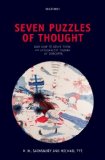
Seven Puzzles of Thought

Seven Puzzles of Thought and How to Solve Them: An Originalist Theory of Concepts by R.M. Sainsbury and Michael Tye (Oxford University Press, USA)

(amazon.co.uk – Mar 2012)

Book description from the publisher:

How can one think about the same thing twice without knowing that it’s the same thing? How can one think about nothing at all (for example Pegasus, the mythical flying horse)? Is thinking about oneself special? One could mistake one’s car for someone else’s, but it seems one could not mistake one’s own headache for someone else’s. Why not?

R. M. Sainsbury and Michael Tye provide an entirely new theory–called ‘originalism’– which provides simple and natural solutions to these puzzles and more. Originalism’s central thesis is that concepts, the constituents of thoughts, are to be individuated by their origin, rather than epistemically or semantically. The doctrine has further valuable consequences for the nature of thought, our knowledge of our own thoughts, the nature of experience, the epistemology of perception-based beliefs, and for arguments based on conceivability. Sainsbury and Tye argue that although thought is special, there is no special mystery attaching to the nature of thought. Their account of the mind considers it as part of nature, as opposed to something with supernatural powers–which means that human beings have more opportunities to make mistakes than many have liked to think.

Google books preview:

See also: Michael Tye’s homepage, Mark Sainsbury’s homepage

Comments (0) - new books,philosophy of mind

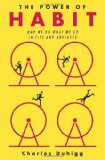
new book – ‘The Power of Habit: Why We Do What We Do in Life and Business’

February 28, 2012

The Power of Habit

The Power of Habit: Why We Do What We Do in Life and Business by Charles Duhigg (Random House, 2012)

(kindle ed.), (amazon.co.uk)

Book description from the publisher:

A young woman walks into a laboratory. Over the past two years, she has transformed almost every aspect of her life. She has quit smoking, run a marathon, and been promoted at work. The patterns inside her brain, neurologists discover, have fundamentally changed.

Marketers at Procter & Gamble study videos of people making their beds. They are desperately trying to figure out how to sell a new product called Febreze, on track to be one of the biggest flops in company history. Suddenly, one of them detects a nearly imperceptible pattern—and with a slight shift in advertising, Febreze goes on to earn a billion dollars a year.

An untested CEO takes over one of the largest companies in America. His first order of business is attacking a single pattern among his employees—how they approach worker safety—and soon the firm, Alcoa, becomes the top performer in the Dow Jones.

What do all these people have in common? They achieved success by focusing on the patterns that shape every aspect of our lives.

They succeeded by transforming habits.

In The Power of Habit, award-winning New York Times business reporter Charles Duhigg takes us to the thrilling edge of scientific discoveries that explain why habits exist and how they can be changed. With penetrating intelligence and an ability to distill vast amounts of information into engrossing narratives, Duhigg brings to life a whole new understanding of human nature and its potential for transformation.

Along the way we learn why some people and companies struggle to change, despite years of trying, while others seem to remake themselves overnight. We visit laboratories where neuroscientists explore how habits work and where, exactly, they reside in our brains. We discover how the right habits were crucial to the success of Olympic swimmer Michael Phelps, Starbucks CEO Howard Schultz, and civil-rights hero Martin Luther King, Jr. We go inside Procter & Gamble, Target superstores, Rick Warren’s Saddleback Church, NFL locker rooms, and the nation’s largest hospitals and see how implementing so-called keystone habits can earn billions and mean the difference between failure and success, life and death.

At its core, The Power of Habit contains an exhilarating argument: The key to exercising regularly, losing weight, raising exceptional children, becoming more productive, building revolutionary companies and social movements, and achieving success is understanding how habits work.

Habits aren’t destiny. As Charles Duhigg shows, by harnessing this new science, we can transform our businesses, our communities, and our lives.

Google books preview:

See also: Author’s website
Comments (0) - cognitive science,new books,psychology

new book – ‘The Passionate Muse: Exploring Emotion in Stories’ by Keith Oatley

February 27, 2012

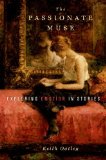
The Passionate Muse

The Passionate Muse: Exploring Emotion in Stories by Keith Oatley (Oxford University Press, USA, 2012)

(amazon.co.uk – May 2012)

Book description from the publisher:

The emotions a character feels–Hamlet’s vengefulness when he realizes his uncle has killed his father, Anna Karenina’s despair when she feels she can longer sustain her life, Marcel’s joy when he tastes a piece of madeleine cake–are vital aspects of the experience of fiction. As Keith Oatley points out, it’s not just the emotions of literary characters such as these in which we are interested. If we didn’t ourselves experience emotions, we wouldn’t go to the play, or watch the film, or read the book. In The Passionate Muse, Oatley, who is both a prize-winning novelist and a distinguished research psychologist, offers a hybrid book that alternates sections of an original short story, “One Another,” with chapters that illuminate the psychology of emotion and fiction. Oatley not only provides insight into how people engage in stories, he also illuminates the value of emotion and the importance of stories for our psychological well-being. Indeed, he offers evidence that the more fiction we read, the better is our understanding of others. Through fiction, we come to know more about the emotions of others and ourselves.

See also: Author’s website

Comments (0) - cognitive science,fiction,new books,psychology