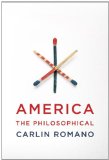
A bold, insightful book that rejects the myth of America the Unphilosophical, arguing that America today towers as the most philosophical culture in the history of the world, an unprecedented marketplace of truth and argument that far surpasses ancient Greece or any other place one can name.
With verve and keen intelligence, Carlin Romano—Pulitzer Prize finalist, award-winning book critic, and professor of philosophy—takes on the widely held belief that ours is an anti–intellectual society. Instead, while providing a richly reported overview of American thought, Romano argues that ordinary Americans see through phony philosophical justifications faster than anyone else, and that the best of our thinkers abandon artificial academic debates for fresh intellectual enterprises, such as cyberphilosophy. Along the way, Romano seeks to topple philosophy’s most fiercely admired hero, Socrates, asserting that it is Isocrates, the nearly forgotten Greek philosopher who rejected certainty, whom Americans should honor as their intellectual ancestor. America the Philosophical introduces readers to a nation whose existence most still doubt: a dynamic, deeply stimulating network of people and places drawn together by shared excitement about ideas. From the annual conference of the American Philosophical Association, where scholars tack wiseguy notes addressed to Spinoza on a public bulletin board, to the eruption of philosophy blogs where participants discuss everything from pedagogy to the philosophy of science to the nature of agency and free will, Romano reveals a world where public debate and intellectual engagement never stop. And readers meet the men and women whose ideas have helped shape American life over the previous few centuries, from well-known historical figures like William James and Ralph Waldo Emerson, to modern cultural critics who deserve to be seen as thinkers (Kenneth Burke, Edward Said), to the iconoclastic African American, women, Native American, and gay mavericks (Cornel West, Susan Sontag, Anne Waters, Richard Mohr) who have broadened the boundaries of American philosophy.
Smart and provocative, America the Philosophical is a rebellious tour de force that both celebrates our country’s unparalleled intellectual energy and promises to bury some of our most hidebound cultural clichés.
Google Books preview:
See also: “Is America Philosophical?”, adapted from the book’s introduction, in the Chronicle of Higher Education, May 20, 2012
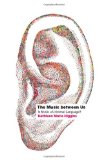
From our first social bonding as infants to the funeral rites that mark our passing, music plays an important role in our lives, bringing us closer to one another. In The Music between Us, philosopher Kathleen Marie Higgins investigates this role, examining the features of human perception that enable music’s uncanny ability to provoke, despite its myriad forms across continents and throughout centuries, the sense of a shared human experience.
Drawing on disciplines such as philosophy, psychology, musicology, linguistics, and anthropology, Higgins’s richly researched study showcases the ways music is used in rituals, education, work, healing, and as a source of security and—perhaps most importantly—joy. By participating so integrally in such meaningful facets of society, Higgins argues, music situates itself as one of the most fundamental bridges between people, a truly cross-cultural form of communication that can create solidarity across political divides. Moving beyond the well-worn takes on music’s universality, The Music between Us provides a new understanding of what it means to be musical and, in turn, human.
Why do some people give freely while others are cold hearted?
Why do some people cheat and steal while others you can trust with your life?
Why are some husbands more faithful than others—and why do women tend to be more generous than men?
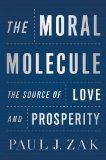
Could they key to moral behavior lie with a single molecule?
From the bucolic English countryside to the highlands of Papua New Guinea, from labs in Switzerland to his campus in Southern California, Dr. Paul Zak recounts his extraordinary stories and sets out, for the first time, his revolutionary theory of moral behavior. Accessible and electrifying, The Moral Molecule reveals nothing less than the origins of our most human qualities—empathy, happiness, and the kindness of strangers.
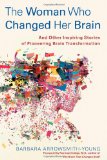
Barbara Arrowsmith-Young was born with severe learning disabilities that caused teachers to label her slow, stubborn—or worse. As a child, she read and wrote everything backward, struggled to process concepts in language, continually got lost, and was physically uncoordinated. She could make no sense of an analogue clock. But by relying on her formidable memory and iron will, she made her way to graduate school, where she chanced upon research that inspired her to invent cognitive exercises to “fix” her own brain. The Woman Who Changed Her Brain interweaves her personal tale with riveting case histories from her more than thirty years of working with both children and adults.Recent discoveries in neuroscience have conclusively demonstrated that, by engaging in certain mental tasks or activities, we actually change the structure of our brains—from the cells themselves to the connections between cells. The capability of nerve cells to change is known as neuroplasticity, and Arrowsmith-Young has been putting it into practice for decades. With great inventiveness, after combining two lines of research, Barbara developed unusual cognitive calisthenics that radically increased the functioning of her weakened brain areas to normal and, in some areas, even above-normal levels. She drew on her intellectual strengths to determine what types of drills were required to target the specific nature of her learning problems, and she managed to conquer her cognitive deficits. Starting in the late 1970s, she has continued to expand and refine these exercises, which have benefited thousands of individuals. Barbara founded Arrowsmith School in Toronto in 1980 and then the Arrowsmith Program to train teachers and to implement this highly effective methodology in schools all over North America. Her work is revealed as one of the first examples of neuroplasticity’s extensive and practical application. The idea that self-improvement can happen in the brain has now caught fire.
The Woman Who Changed Her Brain powerfully and poignantly illustrates how the lives of children and adults struggling with learning disorders can be dramatically transformed. This remarkable book by a brilliant pathbreaker deepens our understanding of how the brain works and of the brain’s profound impact on how we participate in the world. Our brains shape us, but this book offers clear and hopeful evidence of the corollary: we can shape our brains.
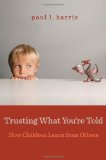
If children were little scientists who learn best through firsthand observations and mini-experiments, as conventional wisdom holds, how would a child discover that the earth is round—never mind conceive of heaven as a place someone might go after death? Overturning both cognitive and commonplace theories about how children learn, Trusting What You’re Told begins by reminding us of a basic truth: Most of what we know we learned from others.
Children recognize early on that other people are an excellent source of information. And so they ask questions. But youngsters are also remarkably discriminating as they weigh the responses they elicit. And how much they trust what they are told has a lot to do with their assessment of its source. Trusting What You’re Told opens a window into the moral reasoning of elementary school vegetarians, the preschooler’s ability to distinguish historical narrative from fiction, and the six-year-old’s nuanced stance toward magic: skeptical, while still open to miracles. Paul Harris shares striking cross-cultural findings, too, such as that children in religious communities in rural Central America resemble Bostonian children in being more confident about the existence of germs and oxygen than they are about souls and God.
We are biologically designed to learn from one another, Harris demonstrates, and this greediness for explanation marks a key difference between human beings and our primate cousins. Even Kanzi, a genius among bonobos, never uses his keyboard to ask for information: he only asks for treats.