[ View menu ]

Archive for 'new books'

new book – ‘The Mansion of Happiness: A History of Life and Death’ by Jill Lepore

June 6, 2012
The Mansion of Happiness

The Mansion of Happiness: A History of Life and Death by Jill Lepore (Knopf, 2012)

(kindle ed.), (amazon.co.uk)

Book description from the publisher:

Renowned Harvard scholar and New Yorker staff writer Jill Lepore has composed a strikingly original, ingeniously conceived, and beautifully crafted history of American ideas about life and death from before the cradle to beyond the grave.

How does life begin? What does it mean? What happens when we die? “All anyone can do is ask,” Lepore writes. “That’s why any history of ideas about life and death has to be, like this book, a history of curiosity.” Lepore starts that history with the story of a seventeenth-century Englishman who had the idea that all life begins with an egg and ends it with an American who, in the 1970s, began freezing the dead. In between, life got longer, the stages of life multiplied, and matters of life and death moved from the library to the laboratory, from the humanities to the sciences. Lately, debates about life and death have determined the course of American politics. Each of these debates has a history. Investigating the surprising origins of the stuff of everyday life—from board games to breast pumps—Lepore argues that the age of discovery, Darwin, and the Space Age turned ideas about life on earth topsy-turvy. “New worlds were found,” she writes, and “old paradises were lost.” As much a meditation on the present as an excavation of the past, The Mansion of Happiness is delightful, learned, and altogether beguiling.

Google books preview:

See also: Author Q & A at The New York Times, video lecture “The Meaning of Life – Jill Lepore – Harvard Thinks Big”, author’s webpages at Harvard
Comments (0) - culture,happiness,new books

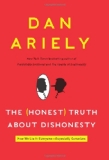
new book – ‘The Honest Truth About Dishonesty: How We Lie to Everyone—Especially Ourselves’ by Dan Ariely

June 5, 2012

The (Honest) Truth About Dishonesty

The Honest Truth About Dishonesty: How We Lie to Everyone—Especially Ourselves by Dan Ariely (Harper)

(kindle ed.), (amazon.co.uk)

Book description from the publisher:

The New York Times bestselling author of Predictably Irrational and The Upside of Irrationality returns with thought-provoking work to challenge our preconceptions about dishonesty and urge us to take an honest look at ourselves.

  • Does the chance of getting caught affect how likely we are to cheat?
  • How do companies pave the way for dishonesty?
  • Does collaboration make us more honest or less so?
  • Does religion improve our honesty?

Most of us think of ourselves as honest, but, in fact, we all cheat. From Washington to Wall Street, the classroom to the workplace, unethical behavior is everywhere. None of us is immune, whether it’s the white lie to head off trouble or padding our expense reports. In The (Honest) Truth About Dishonesty, award-winning, bestselling author Dan Ariely turns his unique insight and innovative research to the question of dishonesty.

Generally, we assume that cheating, like most other decisions, is based on a rational cost-benefit analysis. But Ariely argues, and then demonstrates, that it’s actually the irrational forces that we don’t take into account that often determine whether we behave ethically or not. For every Enron or political bribe, there are countless puffed rÉsumÉs, hidden commissions, and knockoff purses. In The (Honest) Truth About Dishonesty, Ariely shows why some things are easier to lie about; how getting caught matters less than we think; and how business practices pave the way for unethical behavior, both intentionally and unintentionally. Ariely explores how unethical behavior works in the personal, professional, and political worlds, and how it affects all of us, even as we think of ourselves as having high moral standards.

But all is not lost. Ariely also identifies what keeps us honest, pointing the way for achieving higher ethics in our everyday lives. With compelling personal and academic findings, The (Honest) Truth About Dishonesty will change the way we see ourselves, our actions, and others.

See also: Author’s website

Google Books preview

Comments (0) - new books,psychology

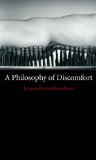
new book – ‘A Philosophy of Discomfort’

June 1, 2012

Philosophy of Discomfort

A Philosophy of Discomfort by Jacques Pezeu-Massabuau (Reaktion Books, 2012)

(amazon.co.uk)

Book description from the publisher:

A hard chair. An embarrassing conversation. A mosquito bite. All these provoke in us a sense of discomfort, whether an irksome sensation or an experience of unpleasantness. While we normally define “discomfort” simply as a lack of comfort, it is unclear which came first—comfort or the lack of it.
A Philosophy of Discomfort explores comfort and discomfort as historical and philosophical concepts, viewing these ideas as a constant push and pull of opposing forces. Arguing that comfort is a relative state that changes as our concept of well-being evolves, Jacques Pezeu-Massabuau observes our notions of comfort over time, with particular consideration to examples of housing and interiors—in Japanese housing, the Moroccan casbah, and modern city apartments, some aspects of discomfort, or the physical lack of well-being, are tolerated and accepted. Despite the human instinct to avoid discomfort, Pezeu-Massabuau contends that people must recognize the uncomfortable as necessary to existence and suggests they learn to use discomfort as another kind of pleasure, a new hedonism, or simply a new way to achieve well-being. Unraveling the myths of modern comfort, this book serves as a guide to integrating disorder into our daily lives.

Comments (0) - new books

new book – ‘Pursuits of Wisdom: Six Ways of Life in Ancient Philosophy from Socrates to Plotinus’ by John M. Cooper

May 31, 2012

Pursuits of Wisdom

Pursuits of Wisdom: Six Ways of Life in Ancient Philosophy from Socrates to Plotinus by John M. Cooper (Princeton University Press, 2012)

(kindle ed.), (amazon.co.uk)

Book description from the publisher:

This is a major reinterpretation of ancient philosophy that recovers the long Greek and Roman tradition of philosophy as a complete way of life–and not simply an intellectual discipline. Distinguished philosopher John Cooper traces how, for many ancient thinkers, philosophy was not just to be studied or even used to solve particular practical problems. Rather, philosophy–not just ethics but even logic and physical theory–was literally to be lived. Yet there was great disagreement about how to live philosophically: philosophy was not one but many, mutually opposed, ways of life. Examining this tradition from its establishment by Socrates in the fifth century BCE through Plotinus in the third century CE and the eclipse of pagan philosophy by Christianity, Pursuits of Wisdom examines six central philosophies of living–Socratic, Aristotelian, Stoic, Epicurean, Skeptic, and the Platonist life of late antiquity.

The book describes the shared assumptions that allowed these thinkers to conceive of their philosophies as ways of life, as well as the distinctive ideas that led them to widely different conclusions about the best human life. Clearing up many common misperceptions and simplifications, Cooper explains in detail the Socratic devotion to philosophical discussion about human nature, human life, and human good; the Aristotelian focus on the true place of humans within the total system of the natural world; the Stoic commitment to dutifully accepting Zeus’s plans; the Epicurean pursuit of pleasure through tranquil activities that exercise perception, thought, and feeling; the Skeptical eschewal of all critical reasoning in forming their beliefs; and, finally, the late Platonist emphasis on spiritual concerns and the eternal realm of Being.

Pursuits of Wisdom is essential reading for anyone interested in understanding what the great philosophers of antiquity thought was the true purpose of philosophy–and of life.

Comments (0) - new books

new book – ‘The Marvelous Learning Animal: What Makes Human Nature Unique’ by Arthur W. Staats

May 30, 2012

The Marvelous Learning Animal

The Marvelous Learning Animal: What Makes Human Nature Unique by Arthur W. Staats (Prometheus, 2012)

(amazon.co.uk – 28 Apr)

Book description from the publisher:

What makes us human? In recent decades, researchers have focused on innate tendencies and inherited traits as explanations for human behavior, especially in light of human genome research. Renowned psychologist Arthur W. Staats thinks this trend is misleading. As he shows in great detail in this engaging, highly informative book, what makes our species unique is our marvelous ability to learn, an ability that no other primate possesses. Staats argues that the immensity of human learning has not been understood.

The author notes that evolution has endowed us with extremely versatile bodies and a brain of one hundred billion neurons, making us especially suited for a wide range of sophisticated learning. Already in childhood, human beings begin learning complex repertoires—language, sports, value systems, music, science, rules of behavior, and many other aspects of culture. These repertoires build on one another in special ways, and our brains develop in response to the learning experiences we receive from those around us and from what we read and hear and see. When humans gather in society, the cumulative effect of building learning upon learning is enormous.

Staats presents a new way of understanding humanness—in human evolution, in the behavioral nature of the human body, in child development, in personality, and in abnormal behavior—a unified conception that provides new ways of solving human problems and lays the foundations for new areas of science.

See also: Author’s faculty webpage

Comments (0) - human evolution,new books,psychology