June 30, 2012
Thinking without Thinking in the Victorian Novel by Vanessa L. Ryan (Johns Hopkins University Press, 2012)
(amazon.co.uk)
Product description from the publisher:
In Thinking without Thinking in the Victorian Novel, Vanessa L. Ryan demonstrates how both the form and the experience of reading novels played an important role in ongoing debates about the nature of consciousness during the Victorian era.
Revolutionary developments in science during the mid- and late nineteenth century—including the discoveries and writings of Herbert Spencer, William Carpenter, and George Henry Lewes—had a vital impact on fiction writers of the time. Wilkie Collins, George Eliot, George Meredith, and Henry James read contributions in what we now call cognitive science that asked, “what is the mind?” These Victorian fiction writers took a crucial step, asking how we experience our minds, how that experience relates to our behavior and questions of responsibility, how we can gain control over our mental reflexes, and finally how fiction plays a special role in understanding and training our minds.
Victorian fiction writers focus not only on the question of how the mind works but also on how it seems to work and how we ought to make it work. Ryan shows how the novelistic emphasis on dynamic processes and functions—on the activity of the mind, rather than its structure or essence—can also be seen in some of the most exciting and comprehensive scientific revisions of the understanding of “thinking” in the Victorian period. This book studies the way in which the mind in the nineteenth-century view is embedded not just in the body but also in behavior, in social structures, and finally in fiction.
Comments (0)
- cognitive science,consciousness,culture,fiction,new books
June 26, 2012
The Great Divide: Nature and Human Nature in the Old World and the New by Peter Watson (Harper, 2012)
(kindle ed.), (amazon.co.uk – 12 Jan 2012)
Product description from the publisher:
Exploring the development of humankind between the Old World and the New—from 15,000 BC to AD 1500—the acclaimed author of Ideas and The German Genius offers a groundbreaking new understanding of human history.
Why did Asia and Europe develop far earlier than the Americas? What were the factors that accelerated—or impeded— development? How did the experiences of Old World inhabitants differ from their New World counterparts—and what factors influenced those differences?
In this fascinating and erudite history, Peter Watson ponders these questions central to the human story. By 15,000 BC, humans had migrated from northeastern Asia across the frozen Bering land bridge to the Americas. When the world warmed up and the last Ice Age came to an end, the Bering Strait refilled with water, dividing America from Eurasia. This division—with two great populations on Earth, each unaware of the other—continued until Christopher Columbus voyaged to the New World in the fifteenth century.
The Great Divide compares the development of humankind in the Old World and the New between 15,000 BC and AD 1500. Watson identifies three major differences between the two worlds—climate, domesticable mammals, and hallucinogenic plants—that combined to produce very different trajectories of civilization in the two hemispheres. Combining the most up-to-date knowledge in archaeology, anthropology, geology, meteorology, cosmology, and mythology, this unprecedented, masterful study offers uniquely revealing insight into what it means to be human.
Comments (1)
- culture,human evolution,new books
June 15, 2012
The Hour Between Dog and Wolf: Risk Taking, Gut Feelings and the Biology of Boom and Bust by John Coates (Penguin Press, 2012)
(kindle ed.), (amazon.co.uk)
Book description from the publisher:
A successful Wall Street trader turned Cambridge neuroscientist reveals the biology of boom and bust and how risk taking transforms our body chemistry, driving us to extremes of euphoria and risky behavior or stress and depression
The laws of financial boom and bust, it turns out, have more than a little to do with male hormones. In a series of groundbreaking experiments, Dr. John Coates identified a feedback loop between testosterone and success that dramatically lowers the fear of risk in men, especially younger men—significantly, the fear of risk is not reduced in women. Similarly, intense failure leads to a rise in levels of cortisol, the antitestosterone hormone that lowers the appetite for risk across an entire spectrum of decisions.
Coates had set out to prove what was already a strong intuition from his previous life: Before he became a world-class neuroscientist, Coates ran a derivatives desk in New York. As a successful trader on Wall Street, “the hour between dog and wolf” was the moment traders transformed-they would become revved up, exuberant risk takers, when flying high, or tentative, risk-averse creatures, when cowering from their losses. Coates understood instinctively that these dispositions were driven by body chemistry-and then he proved it.
The Hour Between Dog and Wolf expands on Coates’s own research to offer lessons from the entire exploding new field-the biology of risk. Risk concentrates the mind-and the body-like nothing else, altering our physiology in ways that have profound and lasting effects. What’s more, biology shifts investors’ risk preferences across the business cycle and can precipitate great change in the marketplace.
Though Coates’s research concentrates on traders, his conclusions shed light on all types of high-pressure decision making-from the sports field to the battlefield. The Hour Between Dog and Wolf leaves us with a powerful recognition: To handle risk in a “highly evolved” way isn’t a matter of mind over body; it’s a matter of mind and body working together. We all have it in us to be transformed from dog into wolf; the only question is whether we can understand the causes and the consequences.
Google Books preview:
Comments (0)
- new books,psychology
June 14, 2012
(…prices may vary by region and are subject to change, so be sure to check before purchasing.)
Comments (0)
- cognitive science,new books
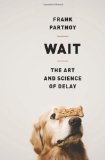
Wait: The Art and Science of Delay by Frank Partnoy (PublicAffairs)
(kindle ed.), (amazon.co.uk)
Book description from the publisher:
What do these scenarios have in common: a professional tennis player returning a serve, a woman evaluating a first date across the table, a naval officer assessing a threat to his ship, and a comedian about to reveal a punch line?
In this counterintuitive and insightful work, author Frank Partnoy weaves together findings from hundreds of scientific studies and interviews with wide-ranging experts to craft a picture of effective decision-making that runs counter to our brutally fast-paced world. Even as technology exerts new pressures to speed up our lives, it turns out that the choices we make––unconsciously and consciously, in time frames varying from milliseconds to years––benefit profoundly from delay. As this winning and provocative book reveals, taking control of time and slowing down our responses yields better results in almost every arena of life … even when time seems to be of the essence.
The procrastinator in all of us will delight in Partnoy’s accounts of celebrity “delay specialists,” from Warren Buffett to Chris Evert to Steve Kroft, underscoring the myriad ways in which delaying our reactions to everyday choices––large and small––can improve the quality of our lives.
Google Books preview:
See also: Author’s website
Comments (0)
- cognitive science,new books