August 3, 2012
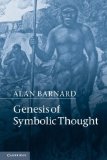
Genesis of Symbolic Thought by Alan Barnard (Columbia University Press, 2012)
(kindle ed.), (amazon.co.uk)
Book description from the publisher:
Symbolic thought is what makes us human. Claude Lévi-Strauss stated that we can never know the genesis of symbolic thought, but in this powerful new study Alan Barnard argues that we can. Continuing the line of analysis initiated in Social Anthropology and Human Origins (Cambridge University Press, 2011), The Genesis of Symbolic Thought applies ideas from social anthropology, old and new, to understand some of the areas also being explored in fields as diverse as archaeology, linguistics, genetics and neuroscience. Barnard aims to answer questions including: when and why did language come into being? What was the earliest religion? And what form did social organization take before humanity dispersed from the African continent? Rejecting the notion of hunter-gatherers as ‘primitive’, Barnard hails the great sophistication of the complex means of their linguistic and symbolic expression and places the possible origin of symbolic thought at as early as 130,000 years ago.
Comments (0)
- culture,human evolution,language,new books
July 30, 2012
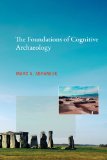
The Foundations of Cognitive Archaeology by Marc A. Abramiuk (MIT Press, 2012)
(amazon.co.uk)
Book description from the publisher:
In The Foundations of Cognitive Archaeology, Marc Abramiuk proposes a multidisciplinary basis for the study of the mind in the past, arguing that archaeology and the cognitive sciences have much to offer one another. Abramiuk draws on relevant topics from philosophy, biological anthropology, cognitive psychology, cognitive anthropology, and archaeology to establish theoretically founded and empirically substantiated principles of a discipline that integrates different approaches to mind-related archaeological research.
Abramiuk discusses the two ways that archaeologists have traditionally viewed the human mind: as a universal or as a relative interface with the environment. He argues that neither view by itself can satisfactorily serve as a basis for gleaning insight into all aspects of the mind in the past and, therefore, the mind is more appropriately studied using multiple approaches. He explains the rationale for using these approaches in mind-related archaeological research, reviewing the literature in both cognitive psychology and cognitive anthropology on human memory, perception, and reasoning. Drawing on archaeological and genetic evidence, Abramiuk investigates the evolution of the mind through the Upper Paleolithic era–when the ancient mind became functionally comparable to the modern human mind. Finally, Abramiuk offers a model for the establishment of a discipline dealing with the study of the mind in the past that integrates all the approaches discussed.
Google Books preview:
Comments (0)
- cognitive science,culture,human evolution,new books
July 29, 2012
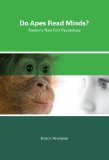
Do Apes Read Minds?: Toward a New Folk Psychology by Kristin Andrews (MIT Press, 2012)
(amazon.co.uk)
Book description from the publisher:
By adulthood, most of us have become experts in human behavior, able to make sense of the myriad behaviors we find in environments ranging from the family home to the local mall and beyond. In philosophy of mind, our understanding of others has been largely explained in terms of knowing others’ beliefs and desires; describing others’ behavior in these terms is the core of what is known as folk psychology. In Do Apes Read Minds? Kristin Andrews challenges this view of folk psychology, arguing that we don’t consider others’ beliefs and desires when predicting most quotidian behavior, and that our explanations in these terms are often inaccurate or unhelpful. Rather than mindreading, or understanding others as receptacles for propositional attitudes, Andrews claims that folk psychologists see others first as whole persons with traits, emotions, and social relations. Drawing on research in developmental psychology, social psychology, and animal cognition, Andrews argues for a pluralistic folk psychology that employs different kinds of practices (including prediction, explanation, and justification) and different kinds of cognitive tools (including personality trait attribution, stereotype activation, inductive reasoning about past behavior, and generalization from self) that are involved in our folk psychological practices. According to this understanding of folk psychology–which does not require the sophisticated cognitive machinery of second-order metacognition associated with having a theory of mind–animals (including the other great apes) may be folk psychologists, too.
Google Books preview:
See also: Kristin Andrews and Robert Lurz on animals and mindreading at Philosophy TV, author’s articles at PhilPapers
Comments (0)
- cognitive science,new books,philosophy of mind
July 26, 2012
Book description from the publisher:
On July 4th, 2012, one of physics’ most exhilarating results was announced: an entirely new kind of particle had been discovered at the Large Hadron Collider. The particle—a Higgs boson—is the key to verifying and understanding the Higgs mechanism that underlies elementary particle masses. Harvard University Professor Lisa Randall, one of the world’s most cited and influential theoretical physicists, and author of the bestselling Knocking on Heaven’s Door and Warped Passages, deftly explains both this epochal discovery and its startlingly beautiful implications.
Comments (0)
- new books,reality
July 25, 2012
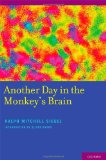
Another Day in the Monkey’s Brain by Ralph Mitchell Siegel, with a foreword by Oliver Sacks (Oxford University Press, USA, 2012)
(amazon.co.uk – Sep 2012)
Book description from the publisher:
ANOTHER DAY IN THE MONKEY’S BRAIN charts a neuroscientist’s journey to understand the central mysteries of consciousness. Dr. Siegel began his career in the neurophysiology of vision in the 1980s, just when the field was coming into focus with the advent of new computing and imaging technologies. As a pioneer in the technique of mesoscopic imaging, he worked with some of the giants in vision science: Torsten Wiesel, Francis Crick, Tom Albright and many others. With insight and clarity, he shows how science is built on such relationships. Along the way, he gives a vivid sense of the abundant passion and creativity that drive scientists in their pursuit of understanding. From monkey to man, Dr. Siegel finds the beauty in the scientific discovery of self in mind and brain.
Google Books preview:
Comments (0)
- cognitive science,consciousness,new books