[ View menu ]

Archive for 'new books'

new book – ‘How Ancient Europeans Saw the World: Vision, Patterns, and the Shaping of the Mind in Prehistoric Times’ by Peter S. Wells

August 29, 2012
How Ancient Europeans Saw the World

How Ancient Europeans Saw the World: Vision, Patterns, and the Shaping of the Mind in Prehistoric Times by Peter S. Wells (Princeton University Press, 2012)

(kindle ed.), (amazon.co.uk)

Book description from the publisher:

The peoples who inhabited Europe during the two millennia before the Roman conquests had established urban centers, large-scale production of goods such as pottery and iron tools, a money economy, and elaborate rituals and ceremonies. Yet as Peter Wells argues here, the visual world of these late prehistoric communities was profoundly different from those of ancient Rome’s literate civilization and today’s industrialized societies. Drawing on startling new research in neuroscience and cognitive psychology, Wells reconstructs how the peoples of pre-Roman Europe saw the world and their place in it. He sheds new light on how they communicated their thoughts, feelings, and visual perceptions through the everyday tools they shaped, the pottery and metal ornaments they decorated, and the arrangements of objects they made in their ritual places–and how these forms and patterns in turn shaped their experience.

How Ancient Europeans Saw the World offers a completely new approach to the study of Bronze Age and Iron Age Europe, and represents a major challenge to existing views about prehistoric cultures. The book demonstrates why we cannot interpret the structures that Europe’s pre-Roman inhabitants built in the landscape, the ways they arranged their settlements and burial sites, or the complex patterning of their art on the basis of what these things look like to us. Rather, we must view these objects and visual patterns as they were meant to be seen by the ancient peoples who fashioned them.

Google Books preview (scroll past blank page):

See also: Book’s Facebook page
Comments (0) - culture,new books

new book – ‘The 5 Elements of Effective Thinking’ by Edward B. Burger and Michael Starbird

August 28, 2012

5 Elements of Effective Thinking

The 5 Elements of Effective Thinking by Edward B. Burger and Michael Starbird (Princeton University Press, 2012)

(kindle ed.), (amazon.co.uk)

Book description from the publisher:

The 5 Elements of Effective Thinking presents practical, lively, and inspiring ways for you to become more successful through better thinking. The idea is simple: You can learn how to think far better by adopting specific strategies. Brilliant people aren’t a special breed–they just use their minds differently. By using the straightforward and thought-provoking techniques in The 5 Elements of Effective Thinking, you will regularly find imaginative solutions to difficult challenges, and you will discover new ways of looking at your world and yourself–revealing previously hidden opportunities.

The book offers real-life stories, explicit action items, and concrete methods that allow you to attain a deeper understanding of any issue, exploit the power of failure as a step toward success, develop a habit of creating probing questions, see the world of ideas as an ever-flowing stream of thought, and embrace the uplifting reality that we are all capable of change. No matter who you are, the practical mind-sets introduced in the book will empower you to realize any goal in a more creative, intelligent, and effective manner. Filled with engaging examples that unlock truths about thinking in every walk of life, The 5 Elements of Effective Thinking is written for all who want to reach their fullest potential–including students, parents, teachers, businesspeople, professionals, athletes, artists, leaders, and lifelong learners.

Whenever you are stuck, need a new idea, or want to learn and grow, The 5 Elements of Effective Thinking will inspire and guide you on your way.

Google Books preview (scroll past blank cover page):

See also: Book’s Facebook page
Comments (0) - cognitive science,new books,psychology

$2.99 kindle ebook: ‘Natural Psychology: The New Psychology of Meaning’ by Eric Maisel

August 25, 2012

Comments (0) - new books,psychology

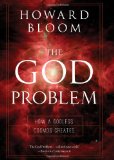
new book – ‘The God Problem: How A Godless Cosmos Creates’ by Howard Bloom

August 24, 2012

The God Problem

The God Problem: How A Godless Cosmos Creates by Howard Bloom (Prometheus, 2012)

(amazon.co.uk)

Book description from the publisher:

God’s war crimes, Aristotle’s sneaky tricks, Galileo’s creationism, Newton’s intelligent design, entropy’s errors, Einstein’s pajamas, John Conway’s game of loneliness, Information Theory’s blind spot, Stephen Wolfram’s New Kind Of Science, and six monkeys at six typewriters getting it wrong. What do these have to do with the birth of a universe and with your need for meaning? Everything, as you’re about to see.

In The God Problem you’ll take a scientific expedition into the secret heart of a cosmos you’ve never seen. An electrifyingly inventive cosmos. An obsessive-compulsive cosmos. A driven, ambitious cosmos. A cosmos of colossal shocks. A cosmos of screaming, stunning surprise. A cosmos that’s the biggest invention engine–the biggest breakthrough maker, the biggest creator–of all time.

See also: Review by Giulio Prisco at KurzweilAI.net, Author’s website

Comments (0) - new books,reality

new book – ‘Being, Humanity, and Understanding’ by G.E.R. Lloyd

August 23, 2012

Being, Humanity, & Understanding

Being, Humanity, and Understanding by G.E.R. Lloyd (Oxford University Press, USA, 2012)

(amazon.co.uk)

Book description from the publisher:

G. E. R. Lloyd explores the variety of ideas and assumptions that humans have entertained concerning three main topics: being, or what there is; humanity–what makes a human being a human; and understanding, both of the world and of one another. Amazingly diverse views have been held on these issues by different individuals and collectivities in both ancient and modern times. Lloyd juxtaposes the evidence available from ethnography and from the study of ancient societies, both to describe that diversity and to investigate the problems it poses. Many of the ideas in question are deeply puzzling, even paradoxical, to the point where they have often been described as irrational or frankly unintelligible. Many implicate fundamental moral issues and value judgements, where again we may seem to be faced with an impossible task in attempting to arrive at a fair-minded evaluation. How far does it seem that we are all the prisoners of the conceptual systems of the collectivities to which we happen to belong? To what extent and in what circumstances is it possible to challenge the basic concepts of such systems? Being, Humanity, and Understanding examines these questions cross-culturally and seeks to draw out the implications for the revisability of some of our habitual assumptions concerning such topics as ontology, morality, nature, relativism, incommensurability, the philosophy of language, and the pragmatics of communication.

Google Books preview:

Comments (0) - culture,new books