[ View menu ]

Archive for 'new books'

new book – ‘Happier at Home: Kiss More, Jump More, Abandon a Project, Read Samuel Johnson, and My Other Experiments in the Practice of Everyday Life’ by Gretchen Rubin

September 8, 2012
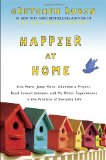
Happier at Home

Happier at Home: Kiss More, Jump More, Abandon a Project, Read Samuel Johnson, and My Other Experiments in the Practice of Everyday Life by Gretchen Rubin (Crown Archetype, 2012)

(kindle ed.), (amazon.co.uk – 13 Sep)

Book description from the publisher:

In the spirit of her blockbuster #1 New York Times bestseller The Happiness Project, Gretchen Rubin embarks on a new project to make home a happier place.

One Sunday afternoon, as she unloaded the dishwasher, Gretchen Rubin felt hit by a wave of homesickness. Homesick—why? She was standing right in her own kitchen. She felt homesick, she realized, with love for home itself. “Of all the elements of a happy life,” she thought, “my home is the most important.” In a flash, she decided to undertake a new happiness project, and this time, to focus on home.

And what did she want from her home? A place that calmed her, and energized her. A place that, by making her feel safe, would free her to take risks. Also, while Rubin wanted to be happier at home, she wanted to appreciate how much happiness was there already.

So, starting in September (the new January), Rubin dedicated a school year—September through May—to making her home a place of greater simplicity, comfort, and love.

In The Happiness Project, she worked out general theories of happiness. Here she goes deeper on factors that matter for home, such as possessions, marriage, time, and parenthood. How can she control the cubicle in her pocket? How might she spotlight her family’s treasured possessions? And it really was time to replace that dud toaster.

Each month, Rubin tackles a different theme as she experiments with concrete, manageable resolutions—and this time, she coaxes her family to try some resolutions, as well.

With her signature blend of memoir, science, philosophy, and experimentation, Rubin’s passion for her subject jumps off the page, and reading just a few chapters of this book will inspire readers to find more happiness in their own lives.

Google Books preview:

See also: Author’s website
Comments (1) - happiness,new books

new book – ‘The Universal Sense: How Hearing Shapes the Mind’ by Seth S. Horowitz

September 6, 2012

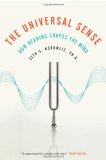
The Universal Sense

The Universal Sense: How Hearing Shapes the Mind by Seth S. Horowitz (Bloomsbury, 2012)

(kindle ed.), (amazon.co.uk)

Book description from the publisher:

The surprising truth about how the things our ears hear affect what’s between them.

Every day, we are surrounded by millions of sounds – ambient ones like the rumble of the train and the hum of air conditioner, as well as more attention-grabbing sounds, such as human speech, music, and sirens. But how do we process what we hear every day? And how does it affect our brains and our minds? This book answers such revealing questions as:

How do bats see in 3D with their ears and how did that lead to the development of medical ultrasound?
What is it about the sound of fingernails on a chalkboard that makes us cringe?
Why do city folks have trouble sleeping in the country, and vice versa?
Why can’t you get that song out of your head?

Starting with the basics of auditory biology, neuroscientist and musician Seth Horowitz explains how sound affects us, and in turn, how we’ve learned to manipulate sound: into music, commercial jingles, car horns, and modern inventions like cochlear implants, ultrasound scans, and the mosquito ringtone. Whether you’re standing in a crowded subway or a quiet meadow, you’ll never hear the same way after reading this book. The Universal Sense gives new insight into what the sounds of our world have to do with the way we think, feel, and interact.

Google Books preview:

See also: Author’s Facebook page

Comments (0) - cognitive science,new books

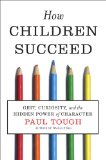
new book – ‘How Children Succeed: Grit, Curiosity, and the Hidden Power of Character’ by Paul Tough

September 4, 2012

How Children Succeed

How Children Succeed: Grit, Curiosity, and the Hidden Power of Character by Paul Tough (Houghton Mifflin Harcourt, 2012)

(kindle ed.), (amazon.co.uk)

Book description from the publisher:

Why do some children succeed while others fail?

The story we usually tell about childhood and success is the one about intelligence: success comes to those who score highest on tests, from preschool admissions to SATs.

But in How Children Succeed, Paul Tough argues that the qualities that matter most have more to do with character: skills like perseverance, curiosity, conscientiousness, optimism, and self-control.

How Children Succeed introduces us to a new generation of researchers and educators who, for the first time, are using the tools of science to peel back the mysteries of character. Through their stories—and the stories of the children they are trying to help—Tough traces the links between childhood stress and life success. He uncovers the surprising ways in which parents do—and do not—prepare their children for adulthood. And he provides us with new insights into how to help children growing up in poverty.

Early adversity, scientists have come to understand, can not only affect the conditions of children’s lives, it can alter the physical development of their brains as well. But now educators and doctors around the country are using that knowledge to develop innovative interventions that allow children to overcome the constraints of poverty. And with the help of these new strategies, as Tough’s extraordinary reporting makes clear, children who grow up in the most painful circumstances can go on to achieve amazing things.

This provocative and profoundly hopeful book has the potential to change how we raise our children, how we run our schools, and how we construct our social safety net. It will not only inspire and engage readers, it will also change our understanding of childhood itself.

See also: Author’s website

Comments (0) - new books,psychology

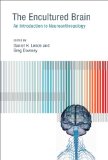
new book – ‘The Encultured Brain: An Introduction to Neuroanthropology,’ ed. by Daniel Lende & Greg Downey

Encultured Brain

The Encultured Brain: An Introduction to Neuroanthropology ed. by Daniel H. Lende and Greg Downey (MIT Press, 2012)

(kindle ed.), (amazon.co.uk)

Book description from the publisher:

The brain and the nervous system are our most cultural organs. Our nervous system is especially immature at birth, our brain disproportionately small in relation to its adult size and open to cultural sculpting at multiple levels. Recognizing this, the new field of neuroanthropology places the brain at the center of discussions about human nature and culture. Anthropology offers brain science more robust accounts of enculturation to explain observable difference in brain function; neuroscience offers anthropology evidence of neuroplasticity’s role in social and cultural dynamics. This book provides a foundational text for neuroanthropology, offering basic concepts and case studies at the intersection of brain and culture. After an overview of the field and background information on recent research in biology, a series of case studies demonstrate neuroanthropology in practice. Contributors first focus on capabilities and skills–including memory in medical practice, skill acquisition in martial arts, and the role of humor in coping with breast cancer treatment and recovery–then report on problems and pathologies that range from post-traumatic stress disorder among veterans to smoking as a part of college social life.

See also: Authors’ blog

Comments (0) - cognitive science,culture,new books

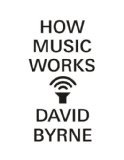
new book – ‘How Music Works’ by David Byrne

August 30, 2012

How Music Works

One of Amazon’s Best Books of September is already in stock: How Music Works by David Byrne (McSweeney’s, 2012)

(amazon.co.uk – 13 Sep)

Book description from the publisher:

How Music Works is David Byrne’s remarkable and buoyant celebration of a subject he has spent a lifetime thinking about. In it he explores how profoundly music is shaped by its time and place, and he explains how the advent of recording technology in the twentieth century forever changed our relationship to playing, performing, and listening to music.

Acting as historian and anthropologist, raconteur and social scientist, he searches for patterns—and shows how those patterns have affected his own work over the years with Talking Heads and his many collaborators, from Brian Eno to Caetano Veloso. Byrne sees music as part of a larger, almost Darwinian pattern of adaptations and responses to its cultural and physical context. His range is panoptic, taking us from Wagnerian opera houses to African villages, from his earliest high school reel-to-reel recordings to his latest work in a home music studio (and all the big studios in between).

Touching on the joy, the physics, and even the business of making music, How Music Works is a brainy, irresistible adventure and an impassioned argument about music’s liberating, life-affirming power.

See also: Author’s website

Comments (0) - culture,new books