September 23, 2012
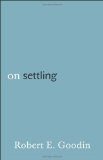
On Settling by Robert E. Goodin (Princeton University Press, 2012)
(kindle ed.),
(amazon.co.uk)
Book description from the publisher:
In a culture that worships ceaseless striving, “settling” seems like giving up. But is it? On Settling defends the positive value of settling, explaining why this disdained practice is not only more realistic but more useful than an excessive ideal of striving. In fact, the book makes the case that we’d all be lost without settling–and that even to strive, one must first settle.
We may admire strivers and love the ideal of striving, but who of us could get through a day without settling? Real people, confronted with a complex problem, simply make do, settling for some resolution that, while almost certainly not the best that one could find by devoting limitless time and attention to the problem, is nonetheless good enough. Robert Goodin explores the dynamics of this process. These involve taking as fixed, for now, things that we reserve the right to reopen later (nothing is fixed for good, although events might always overtake us). We settle on some things in order to concentrate better on others. At the same time we realize we may need to come back later and reconsider those decisions. From settling on and settling for, to settling down and settling in, On Settling explains why settling is useful for planning, creating trust, and strengthening the social fabric–and why settling is different from compromise and resignation.
So, the next time you’re faced with a thorny problem, just settle. It’s no failure.
Google Books preview:
Comments (0)
- new books,psychology
September 19, 2012
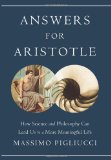
Answers for Aristotle: How Science and Philosophy Can Lead Us to A More Meaningful Life by Massimo Pigliucci (Basic Books, 2012)
(kindle ed.), (amazon.co.uk – 18 Oct 2012)
Book description from the publisher:
How should we live? According to philosopher and biologist Massimo Pigliucci, the greatest guidance to this essential question lies in combining the wisdom of 24 centuries of philosophy with the latest research from 21st century science.
In Answers for Aristotle, Pigliucci argues that the combination of science and philosophy first pioneered by Aristotle offers us the best possible tool for understanding the world and ourselves. As Aristotle knew, each mode of thought has the power to clarify the other: science provides facts, and philosophy helps us reflect on the values with which to assess them. But over the centuries, the two have become uncoupled, leaving us with questions—about morality, love, friendship, justice, and politics—that neither field could fully answer on its own. Pigliucci argues that only by rejoining each other can modern science and philosophy reach their full potential, while we harness them to help us reach ours.
Pigliucci discusses such essential issues as how to tell right from wrong, the nature of love and friendship, and whether we can really ever know ourselves—all in service of helping us find our path to the best possible life. Combining the two most powerful intellectual traditions in history, Answers for Aristotle is a remarkable guide to discovering what really matters and why.
See also: Author’s Website
Comments (0)
- happiness,new books
September 14, 2012
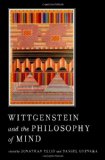
Wittgenstein and the Philosophy of Mind, ed. by Jonathan Ellis and Daniel Guevara (Oxford University Press, 2012)
(amazon.co.uk – Oct 2012)
Product description from the publisher:
Philosophical questions about the mind preoccupied much of Wittgenstein’s later writing, and his contribution to them is deep and wide-ranging, bearing upon philosophical issues concerning sense-experience, concept formation, perception, introspection, the science of psychology, aspect perception, the self, the understanding of rules, the relation between mind and brain, artificial intelligence, and many other subjects of current concern. According to a growing number of eminent philosophers, however, many of Wittgenstein’s most important insights have still not been properly absorbed by contemporary philosophical debates on these topics. If anything, work on these subjects is less informed by Wittgenstein’s examples and discussions than ever before. In this volume, philosophers from inside and outside of Wittgensteinian circles explore Wittgenstein’s treatment of philosophical questions about the mind and issues in contemporary philosophy of mind upon which Wittgenstein’s philosophy may have significance. Bringing to bear their broad range of perspectives on his philosophy, these philosophers collectively demonstrate its fundamental import for present-day philosophy of mind.
Google Books preview:
See also: Jonathan Ellis’s webpage
Comments (0)
- new books,philosophy of mind
September 12, 2012
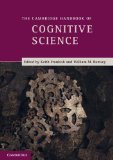
The Cambridge Handbook of Cognitive Science, ed. by Keith Frankish and William Ramsey (Cambridge University Press, 2012)
(kindle ed.), (amazon.co.uk)
Book description from the publisher:
Cognitive science is a cross-disciplinary enterprise devoted to understanding the nature of the mind. In recent years, investigators in philosophy, psychology, the neurosciences, artificial intelligence, and a host of other disciplines have come to appreciate how much they can learn from one another about the various dimensions of cognition. The result has been the emergence of one of the most exciting and fruitful areas of inter-disciplinary research in the history of science. This volume of original essays surveys foundational, theoretical, and philosophical issues across the discipline, and introduces the foundations of cognitive science, the principal areas of research, and the major research programs. With a focus on broad philosophical themes rather than detailed technical issues, the volume will be valuable not only to cognitive scientists and philosophers of cognitive science, but also to those in other disciplines looking for an authoritative and up-to-date introduction to the field.
See also: Keith Frankish’s website
Comments (0)
- cognitive science,new books
September 10, 2012
— Debbie A Foster (@mymindonbooks) September 11, 2012
Book description from the publisher:
As timely now as it was when it was first published in 1997, Darwin Among the Machines tells the story of humankind’s long journey into the digital age. Historian of technology George Dyson traces the course of the information revolution, illuminating the lives and work of visionaries—from Thomas Hobbes to John von Neumann—who foresaw the development of artificial intelligence, artificial life, and artificial mind. Weaving a convincing, occasionally frightening narrative of the evolution of the global network, Dyson explores the limits of Darwinian evolution to suggest what lies ahead. Computer programs and worldwide networks are combining to produce an evolutionary theater in which the distinctions between nature and technology are increasingly obscured, he argues. We are living in the midst of an experiment—one that echoes the prehistory of human intelligence and the origins of life. Now in a new paperback edition, this classic work on the emergence of collective mechanical intelligence will resonate for generations to come.
Comments (0)
- culture,human evolution,mind,new books