[ View menu ]

Archive for 'new books'

new book – ‘Mind Over Mind: The Surprising Power of Expectations’ by Chris Berdik

October 11, 2012
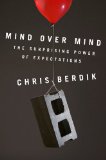
Mind Over Mind

Mind Over Mind: The Surprising Power of Expectations by Chris Berdik (Current)

(kindle ed.), (amazon.co.uk)

Book description from the publisher:

“Our brains can’t help but look forward. We spend very little of our mental lives completely in the here and now. Indeed, the power of expectations is so pervasive that we may notice only when somebody pulls back the curtain to reveal a few of the cogs and levers responsible for the big show.”

We all know expectations matter—in school, in sports, in the stock market. From a healing placebo to a run on the bank, hints of their self-fulfilling potential have been observed for years. But now researchers in fields ranging from medicine to education to criminal justice are moving beyond observation to investigate exactly how expectations work—and when they don’t.

In Mind Over Mind, journalist Chris Berdik offers a captivating look at the frontiers of expectations research, revealing how our brains work in the future tense and how our assumptions—about the next few milliseconds or the next few years—bend reality. We learn how placebo calories can fill us up, why wine judges can’t agree, how fake surgery can sometimes work better than real surgery, and how imaginary power can be corrupting. We meet scientists who have found that wearing taller and more attractive avatars in a virtual world boosts confidence in real life, gambling addicts whose brains make losing feel like winning, and coaches who put blurry glasses on athletes to lift them out of slumps.

Along the way, Berdik probes the paradox of expectations. Their influence seems based on illusion, even trickery, but they can create their own reality, for good or for ill.

Expectations can heal our bodies and make us stronger, smarter, and more successful, or they can leave us in agony, crush our spirit, and undermine our free will. If we can unlock their secrets, we may be able to harness their power and sidestep their pitfalls.
Drawing on psychology, neuroscience, history, and fascinating true stories of expectations in action, Mind Over Mind offers a spirited journey into one of the most exciting areas of brain research today.

See also: Author’s website
Comments (0) - cognitive science,new books,psychology

new book – ‘Inviting a Monkey to Tea: Befriending Your Mind and Discovering Lasting Contentment’ by Nancy Colier

October 4, 2012

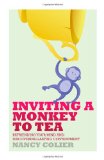
Inviting a Monkey to Tea

Inviting a Monkey to Tea: Befriending Your Mind and Discovering Lasting Contentment by Nancy Colier (Hohm Press, 2012)

(kindle ed.), (amazon.co.uk)

Book description from the publisher:

To “invite a monkey to tea” is to befriend your own mind—which is often compared to a drunken monkey for all its mad twists and turns. A wild monkey is full of irrepressible desires, and thus chases its own tail in its search for happiness! This book is about learning to welcome the mind as an ally without fear or resistance, thus relaxing that frantic search, discovering genuine contentment and resting in the joy of who you are.

As a psychotherapist, author Nancy Colier has accompanied hundreds of people in their “search for happiness” for nearly two decades. She has watched her clients try everything under the sun to be—and stay—happy. Witnessing and participating in this process, she has become an expert in happiness, or more specifically, in the monkeymind’s search and demand for it, and the unhappiness that all the striving ultimately creates. Along the way, the author has come to understand the workings of the mind—both from her clients and by her own diligent practice of meditation and self-observation. This book distills the wisdom and experience of her dedicated work, and offers readers a roadmap of the territory of mind, plus a toolbox of practical means for identifying and working gently with the unrealistic expectations that keep us from the enjoyment of who we are.

See also: Author’s website

Comments (0) - happiness,mind,new books,psychology

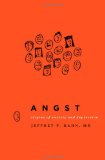
new book – ‘Angst: Origins of Anxiety and Depression’ by Jeffrey P. Kahn

October 2, 2012

Angst

Angst: Origins of Anxiety and Depression by Jeffrey P. Kahn (Oxford University Press, USA, 2012)

(amazon.co.uk)

Book description from the publisher:

Some twenty percent of us are afflicted with common anxiety and depressive disorders–not just brief bouts of nervousness or sorrow, but painful dysfunctions without obvious benefit. Why do so many people suffer from angst?

In this path-breaking volume, engagingly written for the general public, psychiatrist Jeffrey Kahn reveals that angst ultimately results from our transformation, over tens of thousands of years, from biologically shaped, almost herd-like prehistoric tribes, to rational and independent individuals in modern civilization. Kahn looks at five basic types of modern-day angst–Panic Anxiety, Social Anxiety, OCD, Atypical Depression, and Melancholic Depression–and shows how each derives from primeval social instincts that once helped our ancestors survive. For instance, the “panic disorder” which prevents some people from flying may have originally evolved to keep our tribal ancestors from traveling dangerously far from home. Likewise, the increased emotional sensitivity to social rejection that now triggers episodes of “atypical depression” may have helped maintain polite behavior and social harmony in our ancestors. Our distinctly human civilization and rational consciousness lets us defy these social instincts. But those over-ridden instincts can resurface as stressful emotional disorders. Kahn notes that some of us painfully tackle this distress head-on, in ways that can advance intellectual creativity, social performance and productivity. He also describes the interplay of instinct with the advance of civilization, and on how evolutionary perspective explains why modern treatments work.

Ranging from Darwin and Freud to the most cutting-edge medical and scientific findings–drawing from ancient writings, modern humor and popular lyrics, and with many amusing cartoons–Angst offers us an exciting new slant on some of the most pervasive mental health issues of our time.

Comments (0) - human evolution,new books,psychology

new Kindle Single – ‘Mind Amplifier: Can Our Digital Tools Make Us Smarter?’ by Howard Rheingold (TED Book)

September 28, 2012

Mind Amplifier

Mind Amplifier: Can Our Digital Tools Make Us Smarter? (Kindle Single) by Howard Rheingold (TED Conferences, 2012)

(amazon.co.uk)

Book description from the publisher:

Instead of asking whether the Web is making us stupid, Howard Rheingold turns that question around and asks how designing and using digital media mindfully could make us smarter. What if humans could build tools that leverage our ability to think, communicate, and cooperate? We invented social learning, speech, writing, alphabets, printing, computers, and the Internet, which means we should be systematically directing the evolution of intellectual augmentation. ‘Mind Amplifier: Can Our Digital Tools Make Us Smarter?’ examines the origins of digital mind-extending tools, and then lays out the foundations for their future. Rheingold proposes an applied, interdisciplinary science of mind amplification. He also unveils a new protocol for developing techno-cognitive-social technologies that embrace empathy, mindfulness, and compassion — elements lacking from existing digital mind-tools.

See also:

TED Blog post

Comments (0) - culture,new books

new book – ‘The Half-Life of Facts: Why Everything We Know Has an Expiration Date’ by Samuel Arbesman

September 27, 2012

Half-Life of Facts

The Half-life of Facts: Why Everything We Know Has an Expiration Date by Samuel Arbesman (Current)

(kindle ed.), (amazon.co.uk – 27 Sep 2012)

Book description from the publisher:

New insights from the science of science

Facts change all the time. Smoking has gone from doctor recommended to deadly. We used to think the Earth was the center of the universe and that Pluto was a planet. For decades, we were convinced that the brontosaurus was a real dinosaur. In short, what we know about the world is constantly changing.

But it turns out there’s an order to the state of knowledge, an explanation for how we know what we know. Samuel Arbesman is an expert in the field of scientometrics—literally the science of science. Knowl­edge in most fields evolves systematically and predict­ably, and this evolution unfolds in a fascinating way that can have a powerful impact on our lives.

Doctors with a rough idea of when their knowl­edge is likely to expire can be better equipped to keep up with the latest research. Companies and govern­ments that understand how long new discoveries take to develop can improve decisions about allocating resources. And by tracing how and when language changes, each of us can better bridge gen­erational gaps in slang and dialect.

Just as we know that a chunk of uranium can break down in a measurable amount of time—a radioactive half-life—so too any given field’s change in knowledge can be measured concretely. We can know when facts in aggregate are obsolete, the rate at which new facts are created, and even how facts spread.

Arbesman takes us through a wide variety of fields, including those that change quickly, over the course of a few years, or over the span of centuries. He shows that much of what we know consists of “mesofacts”—facts that change at a middle timescale, often over a single human lifetime. Throughout, he of­fers intriguing examples about the face of knowledge: what English majors can learn from a statistical analysis of The Canterbury Tales, why it’s so hard to measure a mountain, and why so many parents still tell kids to eat their spinach because it’s rich in iron.

The Half-life of Facts is a riveting journey into the counterintuitive fabric of knowledge. It can help us find new ways to measure the world while accepting the limits of how much we can know with certainty.

See also: Author’s website

Comments (0) - new books,reality