[ View menu ]

Archive for 'new books'

new book – ‘Why Do I Do That: Psychological Defense Mechanisms and the Hidden Ways They Shape Our Lives’ by Joseph Burgo

October 30, 2012
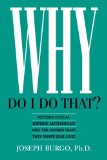
Why Do I Do That

Why Do I Do That?: Psychological Defense Mechanisms and the Hidden Ways They Shape Our Lives by Joseph Burgo (New Rise Press, 2012)

(kindle ed.), (amazon.co.uk)

Book description from the publisher:

Why Do I Do That? adapts the basic strategies of psychodynamic psychotherapy to a guided course in self-exploration, highlighting the universal role of defense mechanisms in warding off emotional pain. With easy-to-understand explanations, the first part teaches you about the unconscious mind and the role of psychological defenses in excluding difficult feelings from awareness. Individual chapters in the longer middle section explore the primary defense mechanisms one by one, with exercises to help you identify your own defenses at work. The final part offers guidance for how to “disarm” your defenses and cope more effectively with the unconscious feelings behind them. Psychological defense mechanisms are an inevitable and necessary part of the human experience; but when they become too pervasive or deeply entrenched, they may damage our personal relationships, restrict or distort our emotional lives and prevent us from behaving in ways that promote lasting self-esteem.

See also: Author’s website
Comments (0) - new books,psychology

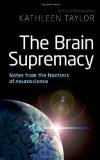
new book – ‘The Brain Supremacy: Notes from the Frontiers of Neuroscience’ by Kathleen Taylor

October 28, 2012

The Brain Supremacy

The Brain Supremacy: Notes from the Frontiers of Neuroscience by Kathleen Taylor (Oxford University Press, USA, 2012)

(amazon.co.uk)

Book description from the publisher:

Advances in physics, chemistry and other natural sciences have given us extraordinary control over our world. But today the balance of power in the sciences is changing, as research on the brain and mind has produced important breakthroughs in our understanding of ourselves and of our environment. As a result, funding and researchers are pouring into the field of neuroscience.

The Brain Supremacy is a lucid and rational guide to this exciting new world. Using recent examples from scientific research and from the popular media, it explores the science behind the hype, revealing how techniques like fMRI actually work and what claims about using them for mindreading really mean. Kathleen Taylor presents the implications of this amazingly powerful new research clearly and entertainingly. Science has already altered how we behave. Soon it will be able to change who we are. For the first time, we may be able to cure devastating diseases, take a pill to boost our own intelligence, and much more. Looking to this exhilarating but also troubling future, Taylor sets current neuroscience in its social and ethical context, as an increasingly important influence on how all of us live our lives. What will the new science mean for us, as individuals, consumers, parents, and citizens? Should we be excited, or alarmed, by the remarkable promises we read about in the media–promises of drugs that can boost our brain power, ever more subtle marketing techniques, even machines that can read minds? What is the neuroscience behind these claims, and how do scientists look inside living human brains to get their astonishing results?

An illuminating account of both cutting-edge neuroscience and the future of this field, The Brain Supremacy offers an eye-opening look at the astonishing power of science to affect our lives.

Google Books preview:

See also: Author blog at Huffington Post

Comments (1) - cognitive science,new books

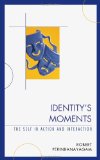
new book – ‘Identity’s Moments: The Self in Action and Interaction’ by Robert Perinbanayagam

October 26, 2012

Identity's Moments

Identity’s Moments: The Self in Action and Interaction by Robert Perinbanayagam (Lexington Books, 2012) – “Look Inside” the book at Amazon.com

(kindle ed.), (amazon.co.uk – 1 Dec 2012)

Book description from the publisher:

The work is an examination of the role of language in the constitution of self and in the presentation of identity. Following the path laid out by George Herbert Mead, Kenneth Burke and Mikhail Bakhtin the work presents self, identity and meaning as ongoing accomplishments between human actors who participate in what may be termed the dramas of human relations. Human agents use language as symbolic actions with which they transform themselves and others, as well as places and things, clothing and money etc into meanings with which they conduct their lives.

Comments (0) - new books,self

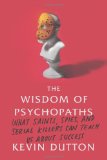
new book – ‘The Wisdom of Psychopaths: What Saints, Spies, and Serial Killers Can Teach Us About Success’ by Kevin Dutton

October 16, 2012

Wisdom of Psychopaths

The Wisdom of Psychopaths: What Saints, Spies, and Serial Killers Can Teach Us About Success by Kevin Dutton (Farrar, Straus & Giroux, 2012)

(kindle ed.), (amazon.co.uk)

Book description from the publisher:

In this engrossing journey into the lives of psychopaths and their infamously crafty behaviors, the renowned psychologist Kevin Dutton reveals that there is a scale of “madness” along which we all sit. Incorporating the latest advances in brain scanning and neuroscience, Dutton demonstrates that the brilliant neurosurgeon who lacks empathy has more in common with a Ted Bundy who kills for pleasure than we may wish to admit, and that a mugger in a dimly lit parking lot may well, in fact, have the same nerveless poise as a titan of industry.

Dutton argues that there are indeed “functional psychopaths” among us—different from their murderous counterparts—who use their detached, unflinching, and charismatic personalities to succeed in mainstream society, and that shockingly, in some fields, the more “psychopathic” people are, the more likely they are to succeed. Dutton deconstructs this often misunderstood diagnosis through bold on-the-ground reporting and original scientific research as he mingles with the criminally insane in a high-security ward, shares a drink with one of the world’s most successful con artists, and undergoes transcranial magnetic stimulation to discover firsthand exactly how it feels to see through the eyes of a psychopath.

As Dutton develops his theory that we all possess psychopathic tendencies, he puts forward the argument that society as a whole is more psychopathic than ever: after all, psychopaths tend to be fearless, confident, charming, ruthless, and focused—qualities that are tailor-made for success in the twenty-first century. Provocative at every turn, The Wisdom of Psychopaths is a riveting adventure that reveals that it’s our much-maligned dark side that often conceals the trump cards of success.

Google Books preview:

See also: Author’s website

Comments (0) - cognitive science,new books,psychology

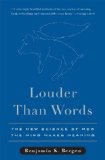
new book – ‘Louder Than Words: The New Science of How the Mind Makes Meaning’ by Benjamin K. Bergen

October 15, 2012

Louder Than Words

Louder Than Words: The New Science of How the Mind Makes Meaning by Benjamin K. Bergen (Basic Books, 2012)

(kindle ed.), (amazon.co.uk – 15 Nov 2012)

Book description from the publisher:

Whether it’s brusque, convincing, fraught with emotion, or dripping with innuendo, language is fundamentally a tool for conveying meaning—a uniquely human magic trick in which you vibrate your vocal cords to make your innermost thoughts pop up in someone else’s mind. You can use it to talk about all sorts of things—from your new labradoodle puppy to the expansive gardens at Versailles, from Roger Federer’s backhand to things that don’t exist at all, like flying pigs. And when you talk, your listener fills in lots of details you didn’t mention—the curliness of the dog’s fur or the vast statuary on the grounds of the French palace. What’s the trick behind this magic? How does meaning work?

In Louder than Words, cognitive scientist Benjamin Bergen draws together a decade’s worth of research in psychology, linguistics, and neuroscience to offer a new theory of how our minds make meaning. When we hear words and sentences, Bergen contends, we engage the parts of our brain that we use for perception and action, repurposing these evolutionarily older networks to create simulations in our minds. These embodied simulations, as they’re called, are what makes it possible for us to become better baseball players by merely visualizing a well-executed swing; what allows us to remember which cupboard the diapers are in without looking, and what makes it so hard to talk on a cell phone while we’re driving on the highway. Meaning is more than just knowing definitions of words, as others have previously argued. In understanding language, our brains engage in a creative process of constructing rich mental worlds in which we see, hear, feel, and act.

Through whimsical examples and ingenious experiments, Bergen leads us on a virtual tour of the new science of embodied cognition. A brilliant account of our human capacity to understand language, Louder than Words will profoundly change how you read, speak, and listen.

Google Books preview:

See also: Author’s webpage

Comments (0) - cognitive science,language,new books