[ View menu ]

Archive for 'new books'

new coffeetable book – ‘The Human Face of Big Data’ by Rick Smolan and Jennifer Erwitt

November 21, 2012
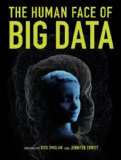
The Human Face of Big Data

The Human Face of Big Data by Rick Smolan and Jennifer Erwitt (Against All Odds Productions, 2012)

(amazon.co.uk – 7 Dec 2012)

Book description from the publisher:

The images and stories captured in The Human Face of Big Data are the result of an extraordinary artistic, technical, and logistical juggling act aimed at capturing the human face of the Big Data Revolution.

Big Data is defined as the real time collection, analyses, and visualization of vast amounts of the information.  In the hands of Data Scientists this raw information is fueling a revolution which many people believe may have as big an impact on humanity going forward as the Internet has over the past two decades. Its enable us to sense, measure, and understand aspects of our existence in ways never before possible.

The Human Face of Big Data captures, in glorious photographs and moving essays, an extraordinary revolution sweeping, almost invisibly, through business, academia, government, healthcare, and everyday life. It’s already enabling us to provide a healthier life for our children. To provide our seniors with independence while keeping them safe. To help us conserve precious resources like water and energy. To alert us to tiny changes in our health, weeks or years before we develop a life-threatening illness. To peer into our own individual genetic makeup. To create new forms of life.  And soon, as many predict, to re-engineer our own species. And we’ve barely scratched the surface . . .

Over the past decade, Rick Smolan and Jennifer Erwitt, co-founders of Against All Odds Productions, have produced a series of ambitious global projects in collaboration with hundreds of the world’s leading photographers, writers, and graphic designers. Their Day in the Life projects were credited for creating a mass market for large-format illustrated books (rare was the coffee table book without one).

Today their projects aim at sparking global conversations about emerging topics ranging from the Internet (24 Hours in Cyberspace), to Microprocessors (One Digital Day), to how the human race is learning to heal itself, (The Power to Heal) to the global water crisis (Blue Planet Run).

This year Smolan and Erwitt dispatched photographers and writers in every corner of the globe to explore the world of “Big Data” and to determine if it truly does, as many in the field claim, represent a brand new toolset for humanity, helping address the biggest challenges facing our species.

The book features 10 essays by noted writers:
Introduction: OCEANS OF DATA by Dan Gardner
Chapter 1: REFLECTIONS IN A DIGITAL MIRROR by Juan Enriquez, CEO, Biotechnomomy
Chapter 2: OUR DATA OURSELVES by Kate Green, the Economist
Chapter 3: QUANTIFYING MYSELF by AJ Jacobs, Esquire
Chapter 4: DARK DATA by Marc Goodman, Future Crime Institute
Chapter 5:  THE SENTIENT SENSOR MESH by Susan Karlin, Fast Company
Chapter 6: TAKING THE PULSE OF THE PLANET by Esther Dyson, EDventure
Chapter 7: CITIZEN SCIENCE by Gareth Cook, the Boston Globe
Chapter 8: A DEMOGRAPH OF ONE by Michael Malone, Forbes magazine
Chapter 9: THE ART OF DATA by Aaron Koblin, Google Artist in Residence
Chapter 10: DATA DRIVEN by Jonathan Harris, Cowbird

The book will also feature stunning info graphics from NIGEL HOLMES.
1) GOOGLING GOOGLE: all the ways Google uses Data to help humanity
2) DATA IS THE NEW OIL
3) THE WORLD ACCORDING TO TWITTER
4) AUCTIONING EYEBALLS: The world of Internet advertising
5) FACEBOOK: A Billion Friends

See also: Book website
Comments (0) - culture,new books

new book – ‘Mastery’ by Robert Greene

November 15, 2012

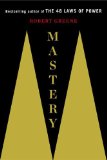
Mastery

Mastery by Robert Greene (Viking, 2012)

(kindle ed.), (amazon.co.uk)

Book description from the publisher:

The eagerly anticipated new book from the author of the bestselling The 48 Laws of Power

What did Charles Darwin, middling schoolboy and underachieving second son, do to become one of the earliest and greatest naturalists the world has known? What were the similar choices made by Mozart and by Caesar Rodriguez, the U.S. Air Force’s last ace fighter pilot? In Mastery, Robert Greene’s fifth book, he mines the biographies of great historical figures for clues about gaining control over our own lives and destinies. Picking up where The 48 Laws of Power left off, Greene culls years of research and original interviews to blend historical anecdote and psychological insight, distilling the universal ingredients of the world’s masters.

Temple Grandin, Martha Graham, Henry Ford, Buckminster Fuller—all have lessons to offer about how the love for doing one thing exceptionally well can lead to mastery. Yet the secret, Greene maintains, is already in our heads. Debunking long-held cultural myths, he demonstrates just how we, as humans, are hardwired for achievement and supremacy. Fans of Greene’s earlier work and Malcolm Gladwell’s Outliers will eagerly devour this canny and erudite explanation of just what it takes to be great.

Google Books preview:

See also: Author’s website

Comments (0) - new books,psychology

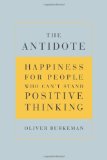
new book – ‘The Antidote: Happiness for People Who Can’t Stand Positive Thinking’ by Oliver Burkeman

November 14, 2012

The Antidote

The Antidote: Happiness for People Who Can’t Stand Positive Thinking by Oliver Burkeman (Faber & Faber, 2012)

(kindle ed.), (amazon.co.uk)

Book description from the publisher:

The Antidote is a series of journeys among people who share a single, surprising way of thinking about life. What they have in common is a hunch about human psychology: that it’s our constant effort to eliminate the negative that causes us to feel so anxious, insecure, and unhappy. And that there is an alternative “negative path” to happiness and success that involves embracing the things we spend our lives trying to avoid. It is a subversive, galvanizing message, which turns out to have a long and distinguished philosophical lineage ranging from ancient Roman Stoic philosophers to Buddhists. Oliver Burkeman talks to life coaches paid to make their clients’ lives a living hell, and to maverick security experts such as Bruce Schneier, who contends that the changes we’ve made to airport and aircraft security since the 9/11 attacks have actually made us less safe. And then there are the “backwards” business gurus, who suggest not having any goals at all and not planning for a company’s future.

Burkeman’s new book is a witty, fascinating, and counterintuitive read that turns decades of self-help advice on its head and forces us to rethink completely our attitudes toward failure, uncertainty, and death.

Google Books preview:

See also: Author’s website

Comments (0) - happiness,new books

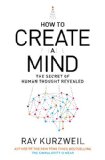
new book – ‘How to Create a Mind: The Secret of Human Thought Revealed’ by Ray Kurzweil

November 13, 2012

How to Create a Mind

How to Create a Mind: The Secret of Human Thought Revealed by Ray Kurzweil (Viking)

(kindle ed.), (amazon.co.uk – 2 Oct 2012)

The bold futurist and bestselling author explores the limitless potential of reverse-engineering the human brain

Ray Kurzweil is arguably today’s most influential—and often controversial—futurist. In How to Create a Mind, Kurzweil presents a provocative exploration of the most important project in human-machine civilization—reverse engineering the brain to understand precisely how it works and using that knowledge to create even more intelligent machines.

Kurzweil discusses how the brain functions, how the mind emerges from the brain, and the implications of vastly increasing the powers of our intelligence in addressing the world’s problems. He thoughtfully examines emotional and moral intelligence and the origins of consciousness and envisions the radical possibilities of our merging with the intelligent technology we are creating.

Certain to be one of the most widely discussed and debated science books of the year, How to Create a Mind is sure to take its place alongside Kurzweil’s previous classics.

Google Books preview:

See also: Book website

Comments (0) - cognitive science,mind,new books

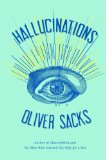
new book – ‘Hallucinations’ by Oliver Sacks

November 6, 2012

Hallucinations

Hallucinations by Oliver Sacks (Knopf, 2012)

(kindle ed.), (amazon.co.uk)


Book description from the publisher:

Have you ever seen something that wasn’t really there? Heard someone call your name in an empty house? Sensed someone following you and turned around to find nothing?

Hallucinations don’t belong wholly to the insane. Much more commonly, they are linked to sensory deprivation, intoxication, illness, or injury. People with migraines may see shimmering arcs of light or tiny, Lilliputian figures of animals and people. People with failing eyesight, paradoxically, may become immersed in a hallucinatory visual world. Hallucinations can be brought on by a simple fever or even the act of waking or falling asleep, when people have visions ranging from luminous blobs of color to beautifully detailed faces or terrifying ogres. Those who are bereaved may receive comforting “visits” from the departed. In some conditions, hallucinations can lead to religious epiphanies or even the feeling of leaving one’s own body.

Humans have always sought such life-changing visions, and for thousands of years have used hallucinogenic compounds to achieve them. As a young doctor in California in the 1960s, Oliver Sacks had both a personal and a professional interest in psychedelics. These, along with his early migraine experiences, launched a lifelong investigation into the varieties of hallucinatory experience.

Here, with his usual elegance, curiosity, and compassion, Dr. Sacks weaves together stories of his patients and of his own mind-altering experiences to illuminate what hallucinations tell us about the organization and structure of our brains, how they have influenced every culture’s folklore and art, and why the potential for hallucination is present in us all, a vital part of the human condition.

Google Books preview:

Comments (0) - cognitive science,new books